



Tours in Olbia Sardinia


Cruising to Olbia Sardinia in a group?
Skip the crowded ship excursion bus. One dedicated planner will design a private shore experience around exactly what your group wants — coordinated from first enquiry to the moment you're back on board. More memorable, more flexible, and more affordable than you might expect. Spend less time organising, more time enjoying.
Explore Group Travel →Cruising to Olbia Sardinia
Olbia sits at the northeastern tip of Sardinia, a town whose roots stretch back to Phoenician traders and later Roman colonists who recognised its deep natural harbour as strategically priceless. Today the port serves cruise passengers as the front door to one of the Mediterranean's most celebrated coastlines, yet the town itself often surprises first-time visitors with its own quiet authenticity — a compact historic centre, the Romanesque basilica of San Simplicio, and sun-bleached piazzas that have nothing to do with the tourist trade.
The real draw lies beyond the town limits. The Costa Smeralda — whose name evokes the colour of the sea — stretches across a succession of coves, granite headlands and beaches that rival anywhere in the Mediterranean. The coast was largely uninhabited until the early 1960s, when a consortium led by the Aga Khan IV transformed a wild stretch of maquis scrubland into what would become Europe's most exclusive resort zone, keeping architecture deliberately low and development tightly controlled. The result is a coastline that still feels almost wild, even with the superyachts at anchor.
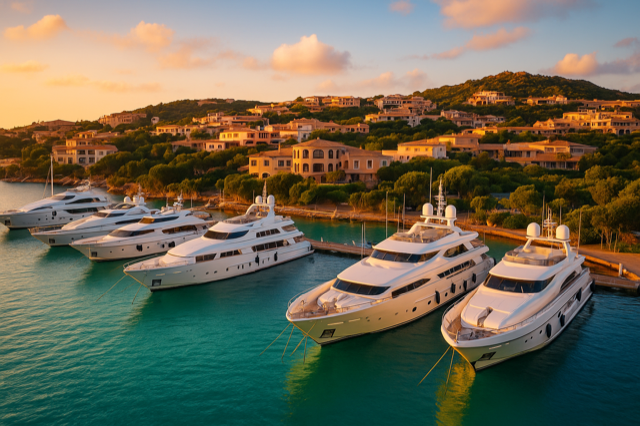
At the heart of the Costa Smeralda sits Porto Cervo, the yachting capital of the western Mediterranean during summer. The marina hosts vessels from every continent, while the pedestrian piazzetta above the waterfront offers designer boutiques and shaded cafes that feel a world apart from mainland Italy. A short drive inland, the granite village of San Pantaleo maintains a refreshingly unselfconscious character — an artisan market, a main square shaded by holm oaks, and restaurants serving genuinely local cooking rather than tourist-adjusted versions.
Sardinia's food culture is both proudly independent and deeply rooted. The island's cooking diverges markedly from mainland Italian traditions: bottarga (cured mullet roe), paper-thin pane carasau flatbread, and the island's own Vermentino whites define the table. Cruise passengers with six to ten hours ashore can meaningfully experience both the coastline's natural splendour and a genuine taste of everyday Sardinian life.
Top things to do in Olbia Sardinia on a cruise stopover
Costa Smeralda: The Mediterranean's Emerald Shore
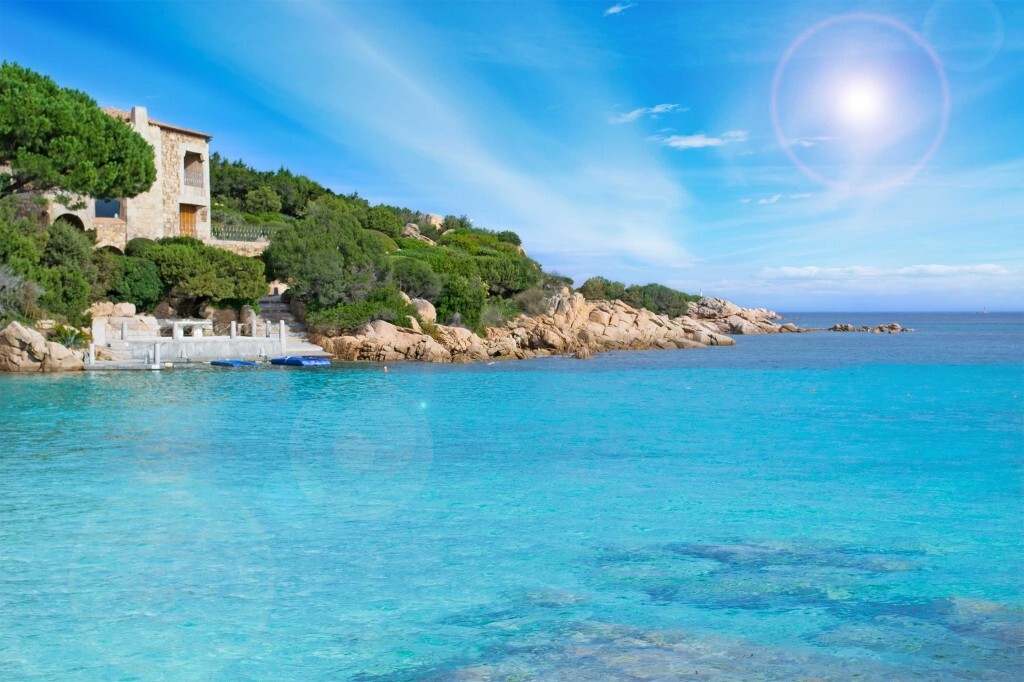
The Costa Smeralda is among the most visually arresting coastlines in the Mediterranean, a 55-kilometre arc of granite headlands, hidden coves and water of an almost implausible turquoise-green clarity. The coastline was deliberately preserved from overdevelopment in the 1960s by a private consortium whose architectural guidelines restricted building heights and mandated local materials — the result is a coast that still feels organic, even in peak season. From a boat or headland, the colours shift from deep navy to pale jade depending on depth and angle of light, and the famous beaches — Capriccioli, Pevero, Liscia Ruja — remain among the finest on any European island.
Porto Cervo: The Yachting Capital of the Western Mediterranean
Porto Cervo exists on a scale that manages to feel both intimate and spectacular. The marina, carved from a sheltered cove, accommodates some of the largest private yachts in the world alongside humbler sailing craft, and the quayside provides one of the most extraordinary tableaux of maritime wealth anywhere in Europe. Above the port, the pedestrian piazzetta is a compact square of designer boutiques, sun-drenched terraces and the distinctive church of Stella Maris — unpretentious architecture for such a glamorous setting. Strolling here costs nothing; the atmosphere and views are what draw visitors regardless of budget.
San Pantaleo: A Granite Village Beyond the Glamour
A short drive inland from the glittering coast, San Pantaleo offers a counterpoint to the superyacht world below. This small granite village clusters around a shaded main square lined with holm oak trees and a simple stone church. The weekly market draws artisans from across the Gallura region selling ceramics, textiles, jewellery and local food products — a genuinely good place to find Sardinian crafts at more honest prices than the coastal shops. The village restaurants serve local cooking rooted in Gallura traditions: thick vegetable soups, roasted meats and hand-rolled pasta. The views from the village over surrounding granite outcrops and scrubland are quietly beautiful.
Olbia's Historic Core: Roman Roots and Basilica San Simplicio
Olbia is one of Sardinia's oldest continuously inhabited settlements, founded by Phoenician traders and later an important Roman port. The ancient town lies beneath the modern city, and excavations have revealed Roman roads, baths and the remains of a significant port infrastructure. Above ground, the Basilica di San Simplicio — a Romanesque church built from local granite in the 11th century — is considered one of the finest medieval buildings on the island. The surrounding historic centre has a lived-in authenticity that distinguishes it from more tourist-oriented Sardinian towns. A morning wander through the old streets and market square is a worthwhile counterpoint to the coastal glamour.
Sardinian Beaches: Water Clarity That Defines the Mediterranean
Northeastern Sardinia possesses some of the clearest inshore water in the Mediterranean, a consequence of limited industrial development, restricted coastal construction and the particular geology of the granite coastline. The beaches vary in character from the famous stretches of the Costa Smeralda — powder-soft quartz sand shelving into shallow turquoise water — to smaller, rockier coves accessible only from the sea. Even in peak season, the sheer number and variety of beaches means that determined explorers can generally find a quieter spot. The water temperature reaches its peak in August and remains warm through September, making late-season port calls particularly rewarding for those who want to swim.
Vermentino and Bottarga: The Flavours of Gallura
Sardinia's food and wine culture is one of the island's best-kept secrets from visitors who never venture beyond the coast. The Gallura region behind Olbia produces Vermentino di Gallura DOCG, a white wine with a distinctive mineral character derived from the granite soils — dry, aromatic and bracingly fresh, it is considered Sardinia's finest white. Bottarga di Muggine, the cured roe of grey mullet, is the island's signature preserved food: shaved over pasta or eaten thinly sliced with bread and olive oil, it delivers an intense, briny depth that is nothing like the anchovy pastes of mainland Italy. Together, a glass of cold Vermentino and a plate of bottarga pasta constitute one of the most satisfying short introductions to Sardinian food.
Olbia Sardinia travel tips
Dress for the Heat — and the Water. July and August on Sardinia's northeastern coast mean intense midday sun with little shade on the best beaches. A high-factor sunscreen, a hat and lightweight cover-up are not optional extras — they are essentials. Pack swimwear regardless of whether you have planned beach time; the water clarity is exceptional and spontaneous swimming opportunities arise on any coastal excursion. A small dry bag to protect valuables at the beach is a practical addition.
Arrive at Porto Cervo Before the Afternoon Heat. Porto Cervo's piazzetta and marina are most atmospheric in the late morning, before the full midday heat sets in and tourist numbers peak. The light in the early part of the day is also better for photography of the marina and the church above it. If your excursion reaches Porto Cervo by 10:00–11:00, you will find parking areas accessible, terraces uncrowded and the overall experience significantly more pleasant than arriving at 13:00.
Try the Local Bread Before You Leave. Pane carasau, Sardinia's paper-thin twice-baked flatbread, is produced throughout the Gallura region and sold at markets, bakeries and virtually every restaurant. It is one of the genuinely distinct food experiences the island offers — light, crisp and utterly unlike any bread found on the Italian mainland. When drizzled with local olive oil and a little salt, it becomes the simplest and most satisfying snack available. Buy a sealed packet to take home; it travels well and keeps for weeks.
San Pantaleo Market Days Are Worth Timing Around. San Pantaleo holds its artisan market every Thursday from spring through autumn, drawing vendors from across the Gallura region with ceramics, handwoven textiles, coral jewellery and local food products. If your port call includes a Thursday, the market adds considerable character to a Costa Smeralda excursion. The prices for crafts here are notably more reasonable than in Porto Cervo's boutiques, and the market atmosphere gives a much better sense of local life.
The Coast Road Takes Longer Than the Map Suggests in Summer. The SS125 coastal road through northeastern Sardinia is scenic but narrow in places, and during July and August it carries significant traffic heading between Olbia, the major beach resorts and Porto Cervo. Journey times that look short on a map can double in peak summer traffic. Building at least 30 minutes of buffer into any coastal itinerary is prudent; it also allows for impromptu stops at roadside viewpoints that reveal the coast at its best.
Visit San Simplicio Basilica Before Heading to the Coast. The Basilica di San Simplicio — Olbia's finest historic building — is less than a 10-minute walk from the cruise terminal and takes no more than 20 minutes to visit properly. It is a genuine Romanesque structure with a spare, dignified interior built from local grey granite, and it provides a quiet moment of historical perspective before the coastal glamour begins. Modest dress (covered shoulders and knees) is expected inside the church.
Port Facts Every Cruiser Needs To Know
Olbia Sardinia shore excursion FAQs
Porto Cervo is approximately 30 kilometres south of the Olbia port, which translates to around 35–45 minutes by road under normal conditions. In peak summer traffic on the coastal roads, the journey can take 50–60 minutes. An organised excursion will account for this travel time within the itinerary.
The Costa Smeralda has a reputation for high prices, which is justified in its hotels, beach clubs and yacht charters. However, simply walking through Porto Cervo, admiring the marina and the piazzetta, costs nothing. Cafes and restaurants in San Pantaleo are priced for local residents as much as tourists. Day visitors can enjoy everything visually and atmospherically about the Costa Smeralda without spending at resort-level prices.
There are sandy beaches within a few kilometres of Olbia town, including Spiaggia di San Simplicio and Lido del Sole, accessible by local transport. These are pleasant and practical options for passengers who want a beach experience without travelling to the Costa Smeralda, though the most celebrated beaches and clearest water are found further along the coast.
The Costa Smeralda is a private consortium-managed stretch of coastline in northeastern Sardinia, spanning roughly 55 kilometres between the Gulf of Cugnana and the Archipelago della Maddalena. It was developed from the early 1960s under strict architectural and environmental guidelines that limited development and preserved the natural landscape. The name — meaning 'Emerald Coast' — refers to the distinctive green-blue colour of its waters.
Olbia town rewards a brief explore — the Basilica di San Simplicio, the Roman excavations near the church, and the main shopping street (Corso Umberto) give a sense of genuine Sardinian urban life rather than resort character. One to two hours is sufficient. For passengers with 6–10 hours ashore, combining a morning in Olbia with an afternoon on the Costa Smeralda makes excellent use of the time.
Bottarga is pressed and dried grey mullet roe, produced in small quantities along the Sardinian coast. It has a deep, savoury, briny flavour and is typically served shaved paper-thin over pasta with olive oil and lemon, or thinly sliced on bread as an antipasto. You can find it in almost any Sardinian restaurant, at market stalls in San Pantaleo, and in Olbia's delicatessens. It is also sold vacuum-packed as a food souvenir.
The peak of the Costa Smeralda season runs from mid-July to mid-August, when the major marinas, beach clubs and restaurants operate at full capacity and traffic on the coastal roads is at its heaviest. Late June and September offer nearly identical weather and water temperatures with a significantly calmer atmosphere. May and early October are quieter still, though some beach facilities may not be fully operational.
Some beaches near Olbia can be reached by local bus services — the ASPO network covers routes to nearby coastal areas including Pittulongu beach, about 6 kilometres from the port. However, frequencies are limited and timetables may not align well with cruise schedules. The most accessible beach option within easy walking distance of the terminal is along the town waterfront, which is pleasant if not spectacular.
English is spoken confidently in tourist-facing businesses throughout the Costa Smeralda, particularly in Porto Cervo where an international clientele is the norm. In Olbia town itself, English is less universal, though younger locals working in hospitality and retail generally communicate without difficulty. Italian is always appreciated as an opener, but English will get you through any practical situation in the main tourist areas.
Pane carasau flatbread travels well in sealed packets. Bottarga is available vacuum-packed and makes an unusual food gift. Vermentino di Gallura wine is distinctive to this specific region and widely available. Local artisans in San Pantaleo sell handmade coral jewellery, hand-woven textiles and ceramics in traditional Sardinian styles. Sardinian sea salt and local honey are good smaller options found at markets and delicatessens.
Filters
Select a filter to refine results.
Tour Type
Tour Activity
 Cart
Cart
 USD
USD GBP
GBP AUD
AUD EUR
EUR CAD
CAD