



Tours in Syracuse Sicily
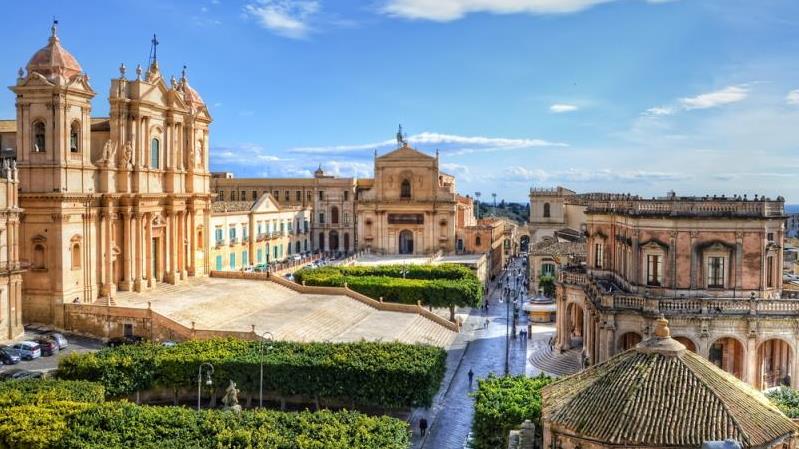


Cruising to Syracuse Sicily in a group?
Skip the crowded ship excursion bus. One dedicated planner will design a private shore experience around exactly what your group wants — coordinated from first enquiry to the moment you're back on board. More memorable, more flexible, and more affordable than you might expect. Spend less time organising, more time enjoying.
Explore Group Travel →Cruising to Syracuse Sicily
Syracuse — Siracusa in Italian — occupies a singular place in the history of Western civilisation. Founded by Corinthian Greeks around 734 BC, the city grew within two centuries into one of the ancient world's most powerful and populous urban centres, a direct rival to Athens in population, military strength and cultural achievement. Archimedes was born here. Plato visited and attempted to put his philosophy of ideal governance into practice here. Cicero, who served as a Roman magistrate in Sicily, described it simply as the greatest and most beautiful of all Greek cities. Arriving by sea, as cruise passengers do, is the way visitors have been arriving at Syracuse for 2,700 years.
The city divides naturally into two zones of extraordinary interest. Ortigia — a small island connected to the mainland by two bridges — contains the densest concentration of historic monuments. The Cathedral of Syracuse rises from the foundations of a fifth-century BC Doric Greek temple, its ancient columns still visible within the Baroque facade; the building has been continuously in use for 2,700 years in one form or another. Nearby, the Fountain of Arethusa marks one of antiquity's most famous landmarks: a freshwater spring at the sea's edge, inhabited by papyrus plants and surrounded by the myth of the nymph Arethusa's flight from the river god Alpheus. The surrounding streets layer Greek foundations, Roman villas, Arab-Norman arches and Baroque palaces into a sequence that takes the eye by surprise at every turn.
On the mainland, the Neapolis Archaeological Park holds Syracuse's most dramatic ancient monuments. A Greek theatre carved from living rock in the fifth century BC — one of the largest and best-preserved in the ancient world — overlooks a landscape of quarries and ruins. The vast Latomie del Paradiso, ancient stone quarries that served as a prison for Athenian soldiers after the catastrophic Sicilian Expedition of 413 BC, create a haunting counterpoint to the theatre's grandeur. The Ear of Dionysius, an ear-shaped cave named by the painter Caravaggio for its extraordinary acoustics, sits within the same complex and rewards a moment of quiet testing.
Sicily's southeastern corner also produces food and wine of genuine distinction. The Nero d'Avola grape, native to this part of the island, yields full-bodied reds that have earned international recognition; the white wines of the area, often made from Grillo and Catarratto, are equally compelling. Pachino cherry tomatoes — cultivated in volcanic soil with intense sun — are considered among Italy's finest and appear throughout the regional kitchen. A visit to a local winery is as much a cultural experience as a culinary one, connecting the landscape, the history and the table in a way that defines Sicilian hospitality.
Top things to do in Syracuse Sicily on a cruise stopover
Ortigia: The Island Heart of Ancient Syracuse
Ortigia is Syracuse's historic core — a small island of extraordinary density, where 2,700 years of continuous habitation have produced a layering of architectural styles that exists almost nowhere else in the Mediterranean. Greek temple foundations support Norman churches topped with Baroque facades; Arab-influenced arches frame views over harbours that have sheltered fleets since antiquity. The main piazza, Piazza del Duomo, is widely considered one of the finest Baroque urban spaces in Italy, its elliptical shape framed by palaces and the extraordinary Cathedral. Narrow lanes lead off the square past Aragonese fortifications, Ottoman-influenced windows and medieval food markets. Ortigia rewards extended wandering — the island is small enough to traverse entirely on foot but rich enough to absorb hours of exploration.
The Cathedral of Syracuse: 2,700 Years of Continuous Worship
No building in Syracuse encapsulates the city's extraordinary historical depth more completely than the Cathedral. Constructed in the 7th century AD around the standing columns of a fifth-century BC Doric temple dedicated to Athena — one of the finest Greek temples in the ancient world — the Cathedral has been continuously used for religious purposes for nearly three millennia in one form or another. The ancient Greek columns are visible within the Baroque interior and embedded in the side walls of the facade, creating a direct physical connection to the ancient world that is genuinely startling. The treasury of the Cathedral once held shields of pure gold described by Cicero; the building itself remains one of the most remarkable architectural palimpsests in European history.
The Fountain of Arethusa: A Mythological Freshwater Spring at the Sea
At the southern tip of Ortigia, a natural freshwater spring wells up at the edge of the sea — a geographical phenomenon that inspired one of antiquity's most enduring myths. The nymph Arethusa, fleeing the advances of the river god Alpheus, was transformed by the goddess Artemis into this spring, which emerges improbably from beneath the salt water of the harbour. Today the Fountain of Arethusa is a tranquil pool filled with papyrus plants — one of the few places outside Africa where papyrus grows naturally in Europe — and inhabited by ducks. The surrounding terrace overlooks the Porto Grande harbour and provides one of the most picturesque viewpoints on Ortigia. The fountain has been a pilgrimage site for travellers since antiquity and remains one of the city's most emotionally resonant spots.
The Neapolis Archaeological Park: Ancient Theatre and the Ear of Dionysius
On the mainland northwest of Ortigia, the Neapolis Archaeological Park contains some of the most impressive ancient monuments in the entire Mediterranean. The Greek Theatre, carved from the living rock of a hillside in the fifth century BC, seated up to 15,000 spectators and was used continuously through the Greek, Roman and Byzantine periods. It remains extraordinary — not merely as a ruin but as a space that still functions, hosting classical drama performances every spring in a tradition maintained since 1914. Below the theatre, the vast Latomie del Paradiso quarries — deep, garden-filled depressions where Athenian prisoners languished after 413 BC — create an unexpectedly lush and haunting landscape. The Ear of Dionysius cave within the quarry, named by Caravaggio for its shape and tested for acoustics by visitors ever since, rewards a moment of experimentation.
The Temple of Apollo: Syracuse's Oldest Greek Monument
Standing at the entrance to Ortigia, the Temple of Apollo is the oldest Doric peristyle temple in Sicily, constructed around 580 BC — predating even the Parthenon by well over a century. Though only two columns and fragments of the stylobate remain standing above ground, the site is charged with historical significance. The temple was converted into a Byzantine church, then a mosque under Arab rule, then a church again under the Normans — a sequence that mirrors the extraordinary layered history of Sicily itself. The site sits in the open air at Largo XXV Luglio, just inside the bridge from the mainland, and is freely accessible, making it a natural and historically appropriate gateway to Ortigia's exploration.
Sicilian Wine and the Landscape That Shapes It
The landscape around Syracuse produces some of Sicily's most celebrated wines, rooted in volcanic soils, intense sun and an ancient viticultural tradition that predates Roman occupation. The Nero d'Avola grape — deep, structured and native to this southeastern corner of the island — has emerged as one of Italy's most distinctive red varieties. Local wineries in the Noto DOC area offer an immersion into this tradition that connects tasting directly to landscape and history. A winery visit here is rarely simply about wine: it encompasses the family stories behind centuries-old estates, the agricultural rhythms of the Sicilian interior and a table of local food that matches the glass in complexity. The combination of archaeological grandeur and agricultural hospitality is what makes a full day in Syracuse uniquely satisfying.
Syracuse Sicily travel tips
Pre-Book the Neapolis Archaeological Park Tickets. The Neapolis Archaeological Park can attract significant queues in high season, particularly when multiple cruise ships are in port simultaneously. Booking tickets online before your visit guarantees entry and avoids wasted time at the gate. Note that the park is larger than it appears on maps — comfortable walking shoes and sun protection are essential, particularly in summer when the stone pathways absorb and reflect considerable heat. Allow a minimum of two hours to do the site justice, and three hours for a thorough exploration.
Start Your Day in Ortigia Before the Midday Heat. Ortigia's narrow streets offer little shade in the heat of a Sicilian afternoon, and summer temperatures regularly exceed 32°C. Beginning your exploration of the island early — ideally by 9am — allows you to enjoy the morning light, quieter streets and cooler temperatures before the bulk of day visitors arrive. The Piazza del Duomo in particular is magical in the morning, when the limestone facades catch the low eastern light and the café tables are just setting up for the day.
Visit the Ortigia Market for an Authentic Local Experience. The daily market in Via Trento and Via Triest, at the northern end of Ortigia, is one of the most atmospheric in Sicily — a vivid, fragrant assembly of local fish, vegetables, citrus, spices and street food that opens from early morning and winds down by early afternoon. The Pachino cherry tomatoes, almond products, capers from Pantelleria and fresh-caught swordfish give a direct impression of the local food culture that no restaurant menu fully replicates. Arriving early ensures the best selection and the liveliest atmosphere.
Allow Time to Simply Sit in Piazza del Duomo. Piazza del Duomo is regularly cited as one of the finest Baroque squares in Italy, and it earns the description. The elliptical space, lined with palace facades and anchored by the Cathedral, operates as the social heart of Ortigia at every hour of the day. Sitting at a café table for half an hour with a granita or Sicilian coffee costs very little and returns a disproportionate sense of the place. Rushing through the piazza on the way to the next site misses the quality that distinguishes Ortigia from a mere open-air museum.
Check Whether the Greek Theatre Is Hosting Performances. The Syracuse Greek Theatre hosts classical drama performances — ancient Greek tragedies and comedies in Italian-language productions — during its spring season, which typically runs from May to late June. If your cruise calls at Syracuse during this period, it is worth checking whether a performance coincides with your visit. The experience of watching ancient drama in the theatre for which it was written, on the hillside above the modern city, is one of the most extraordinary cultural encounters available anywhere in Europe.
Pair the Archaeological Sights with a Sicilian Lunch. Syracuse and its surrounding countryside are serious wine and food territory — the same volcanic soils that preserved the ancient monuments also produce exceptional Nero d'Avola reds, Grillo whites and the concentrated flavours of local produce. A proper Sicilian lunch — pasta followed by grilled fish, local cheese and a glass of regional wine — taken at a restaurant in Ortigia or at a country winery adds a sensory dimension to the day's historical exploration that makes the visit more complete. Restaurants in the streets immediately behind Piazza del Duomo tend to offer better value and quality than those directly on the main square.
Port Facts Every Cruiser Needs To Know
Syracuse Sicily shore excursion FAQs
Cruise ships dock at the Porto Grande, Syracuse's natural harbour. The dock is well-positioned — Ortigia island, the historic heart of the city, is within walking distance of the port, approximately 10–15 minutes on foot. The Neapolis Archaeological Park on the mainland is about 2 km from the port, manageable on foot or by local bus.
The two essential zones are Ortigia island (Cathedral, Fountain of Arethusa, Temple of Apollo, Piazza del Duomo) and the Neapolis Archaeological Park (Greek Theatre, Ear of Dionysius, Latomie del Paradiso quarries). Both merit at least two to three hours each. With a full day ashore, covering both thoroughly — especially with a guided excursion — is very achievable.
Yes. The Syracuse Greek Theatre hosts a classical drama festival each spring, typically from May to late June, featuring ancient Greek tragedies and comedies performed in Italian by major theatre companies. The site is one of the best-preserved ancient theatres in the world and still functions as a performance venue essentially as intended — an extraordinary continuity spanning 25 centuries.
A thorough visit to the Neapolis Archaeological Park takes between two and four hours depending on pace and interest. The main sites — the Greek Theatre, Ear of Dionysius and the Latomie quarries — are spread across an open-air hillside setting. The park is exposed to the elements, so sun protection, a hat and water are important in warm weather. Pre-booking tickets online is recommended to avoid queues.
The Ear of Dionysius is an artificial cave in the Latomie del Paradiso quarry within the Neapolis Archaeological Park. Named by the Baroque painter Caravaggio during a visit in 1608, the cave is S-shaped and roughly ear-like in cross-section. It is famed for its remarkable acoustics — a whisper at one end is amplified to an impressive level throughout. Legend holds that the tyrant Dionysius used it to overhear prisoners; more prosaically, it was almost certainly a quarry tool storage or shelter.
Syracuse and the surrounding Noto area are among Sicily's most rewarding food and wine destinations. Nero d'Avola red wine, native to this corner of the island, is an essential try — full-bodied, with dark fruit and considerable character. In terms of food: arancini (fried rice balls), pasta alla Norma (aubergine, ricotta salata, tomato), fresh grilled swordfish and granita with warm brioche are all regional staples. The morning market on Ortigia offers the most direct encounter with local produce.
Ortigia's historic centre has uneven stone surfaces, cobblestones and occasional steps that can be challenging for wheelchair users or those with significant mobility limitations. The main piazza and wider streets are generally manageable, but the narrower lanes and the Neapolis Archaeological Park's hillside terrain present more difficulty. Discussing specific mobility requirements when arranging excursions allows for appropriate itinerary adjustments.
April, May, September and October offer the most comfortable conditions — warm and sunny without the intense heat of summer. July and August are hot (regularly 32–36°C) and crowded with Italian summer tourists. The spring classical drama season at the Greek Theatre (typically May–June) adds a cultural dimension that makes spring particularly attractive. The cruise season aligns well with all these favourable windows.
Ortigia is compact enough to explore independently with a good map — the main sights are clearly signposted and the island is difficult to get seriously lost on. The Neapolis Archaeological Park, however, benefits considerably from guided interpretation: the context of Greek theatre conventions, the history of the Athenian siege and the geological story of the quarries all add depth that posted information boards alone do not fully convey. A guided excursion that covers both zones maximises the experience within a limited day.
Catania is approximately 60 km north of Syracuse, roughly an hour by road. Taormina is about 90 km north, taking around 90 minutes by road. While these destinations are accessible in principle, travelling to them and back within a single port day significantly reduces time available in Syracuse itself. Given the depth and quality of what Syracuse alone offers, most visitors find that the city and its immediate surroundings fully reward a complete day without the need to look further afield.
Filters
Select a filter to refine results.
Tour Type
Tour Activity
 Cart
Cart
 USD
USD GBP
GBP AUD
AUD EUR
EUR CAD
CAD