



Tours in Aburatsu


Cruising to Aburatsu in a group?
Skip the crowded ship excursion bus. One dedicated planner will design a private shore experience around exactly what your group wants — coordinated from first enquiry to the moment you're back on board. More memorable, more flexible, and more affordable than you might expect. Spend less time organising, more time enjoying.
Explore Group Travel →Cruising to Aburatsu
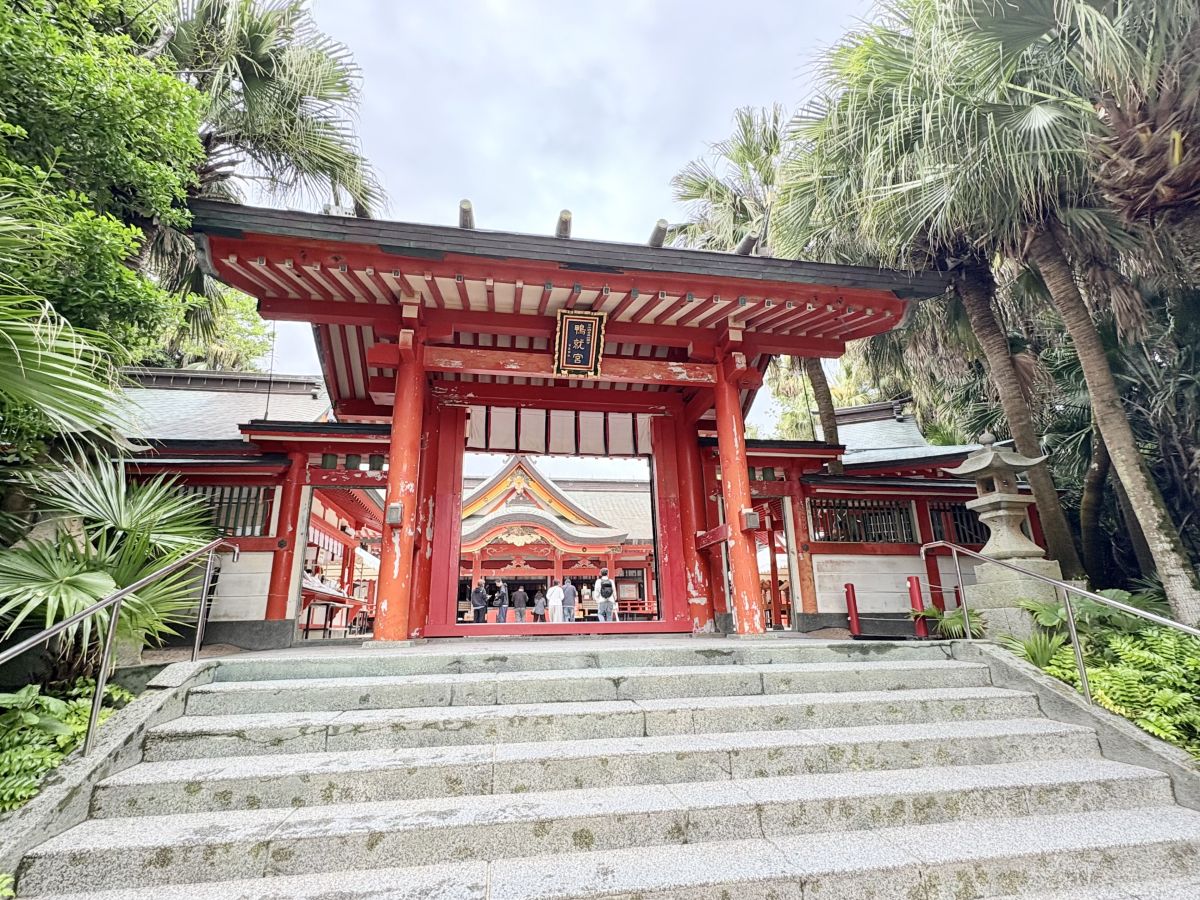
Aburatsu Port sits at the edge of Nichinan, a stretch of Kyushu's Pacific coast defined by palm trees, subtropical warmth, and a slower rhythm than Japan's larger cities. Cruise visitors arriving here find a region built around dramatic natural scenery and a samurai-era heritage that survived Japan's twentieth century largely undisturbed. Twenty minutes north sits Obi, a former castle town so faithfully preserved that it is often called "Kyushu's Little Kyoto" — its earthen walls, samurai residences, and quiet lanes offer a window into feudal-era Japan without the crowds of better-known heritage sites. Along the coast, Aoshima Island rises from a ring of striated sandstone locals call the Devil's Washboard, while Udo Shrine perches inside a wave-carved sea cave, its vermilion buildings clinging to the cliffside above the crashing Pacific. Miyazaki City itself lies about an hour's drive north, making a full sweep of the prefecture's highlights an ambitious but rewarding day. The pace here is unhurried and the scenery consistently striking, from the Horikiri Pass's coastal palm groves to the volcanic rock pools along the shore.
Top things to do in Aburatsu on a cruise stopover
Obi Castle Town — Kyushu's Little Kyoto
A remarkably intact feudal-era town, Obi preserves its samurai quarter almost exactly as it stood under the Ito clan for nearly 300 years. Earthen walls, preserved samurai residences, and a reconstructed castle gate line the town's quiet lanes, and the Komatsu-tei former merchant house offers a rare look inside a preserved Edo-period interior. The town moves at a walking pace, with none of the crowds found at Japan's more famous historical sites.
Aoshima Island and the Devil's Washboard
A small, forested island connected to the mainland by a footbridge, Aoshima is ringed by an extraordinary natural formation of striated sandstone and mudstone known locally as the Devil's Washboard, created by uneven erosion over millions of years. Aoshima Shrine sits at the island's center amid a subtropical forest of some 5,000 palm trees — a striking contrast of jungle green against the pale, ridged rock.
Udo Shrine's Cliffside Cave Sanctuary
Few shrines in Japan occupy a setting as dramatic as Udo — its vermilion halls are built directly inside a sea cave carved into ocean cliffs, with waves breaking just below. Visitors traditionally try to toss small clay luck-balls into a rock formation offshore for good fortune. The approach along the cliff path, with the Pacific stretching to the horizon, is one of the most photographed scenes on Kyushu's coast.
Nichinan Coast Scenic Drive
The coastal road linking the port to Aoshima and Udo Shrine winds through the Horikiri Pass, where dense palm groves frame sweeping ocean views — a stretch so distinctive it has been used as a filming location for its resemblance to the South Pacific. A slow drive along this route, with stops at scenic overlooks, is a highlight in its own right.
Heiwadai Park and the Haniwa Garden
On the edge of Miyazaki City, this park centers on the 37-meter Tower of Peace and a garden filled with reproductions of haniwa — the enigmatic clay figures placed on ancient burial mounds across Japan. It's an easy, contemplative stop for visitors making the full drive into Miyazaki City.
Full-Day Miyazaki Highlights Tour
For visitors willing to commit to the longer drive, a full-day itinerary combining Aoshima Island, Udo Shrine, and central Miyazaki City covers the prefecture's signature sights in one sweep. This format suits first-time visitors who want the complete picture of subtropical Kyushu without having to choose between the coast and the city.
Aburatsu travel tips
Plan Around the Distances, Not the Clock. Aburatsu's attractions are spread across a wide stretch of coastline with no walkable cluster near the pier. Decide before you disembark whether your day is built around Obi's samurai quarter or the Aoshima/Udo coastal loop — attempting both, plus Miyazaki City, in a single call is rarely realistic.
Carry Cash. This is a rural, cash-based region. Shrine offerings, small shops in Obi, and local food stalls near Aoshima rarely accept cards. Withdraw yen before heading out, or use a 7-Eleven or post office ATM if you pass one.
Dress for Humidity and Sun. Nichinan is Kyushu's warmest coast, and the subtropical sun is intense even outside summer. Light, breathable clothing, a hat, and sunscreen make the coastal walks at Aoshima and Udo far more comfortable.
Watch the Tide at the Devil's Washboard. The striated rock formations around Aoshima Island are best seen and walked at low tide; at high tide, much of the formation disappears underwater. Check tide times before planning your visit if seeing the rock pattern is a priority.
Wear Sturdy, Grippy Shoes. The rock surface at Aoshima's Devil's Washboard is uneven and can be slick when wet, and the cliffside path down to Udo Shrine involves stairs. Comfortable, closed-toe shoes with good traction are worth the trade-off over sandals.
Confirm Your Return Window Before You Leave the Pier. With the region's furthest highlights nearly an hour from the ship, build in a generous buffer for the return drive — coastal roads can slow during festival dates or local events, and Aburatsu Port is not a place to arrive back at the last minute.
Port Facts Every Cruiser Needs To Know
Aburatsu shore excursion FAQs
Miyazaki City is roughly 50–60 minutes by road from the port. Many visitors instead focus on the closer Nichinan coast — Obi Castle Town (20–30 minutes) or Aoshima Island and Udo Shrine (30–45 minutes) — rather than adding the full drive into the city.
Aburatsu Port itself is a working harbor with limited independent tourist infrastructure right at the dock. Its historic lighthouse and a small aquarium building are nearby, but the region's signature sights — Obi, Aoshima, Udo Shrine — all require a taxi, bus, or organized tour to reach.
It's a natural rock formation ringing Aoshima Island, created by the uneven erosion of alternating hard and soft sedimentary layers over millions of years, producing a striped, ridged pattern that looks almost man-made. It's most visible and walkable at low tide.
Yes — it's one of Kyushu's best-preserved feudal towns, with intact earthen walls, a reconstructed castle gate, and samurai-era residences open to visitors. Unlike many historic districts in Japan, Obi sees relatively few tourists, so the streets stay quiet even during peak travel seasons.
Yes, though it requires a taxi or organized tour from the port since there is no direct train service. Once there, the shrine itself is reached via a short, partly stepped cliffside path from the parking and bus area — manageable for most visitors but not stroller- or wheelchair-friendly.
Japanese Yen is essential. This is a cash-first region — many shops, shrine stalls, and small restaurants around Obi and Aoshima do not accept credit cards. ATMs at convenience stores and post offices accept most foreign cards.
Very little. This is a rural part of Kyushu with limited tourist infrastructure compared to Tokyo, Osaka, or Kyoto. Major sights have some English signage, but day-to-day interactions with shop and restaurant staff will likely require gestures, translation apps, or a guide.
Typhoon season runs roughly August through October, and Kyushu's southeastern coast is directly exposed to storms tracking up from the Pacific. Itineraries during these months carry a higher chance of schedule changes; check your cruise line's contingency plans if traveling in late summer or autumn.
Aoshima has a small beach area popular with local surfers and swimmers in summer, though most cruise visitors come primarily for the Devil's Washboard formation and Aoshima Shrine rather than swimming, given the limited time ashore.
Yes — the JR Nichinan Line runs along the coastline between Aburatsu and Miyazaki, offering ocean views for travelers who prefer rail over road, though services are infrequent and best checked in advance rather than relied on for a tight cruise schedule.
Filters
Select a filter to refine results.
Tour Type
Tour Activity
 Cart
Cart
 USD
USD GBP
GBP AUD
AUD EUR
EUR CAD
CAD