



Tours in Kaohsiung
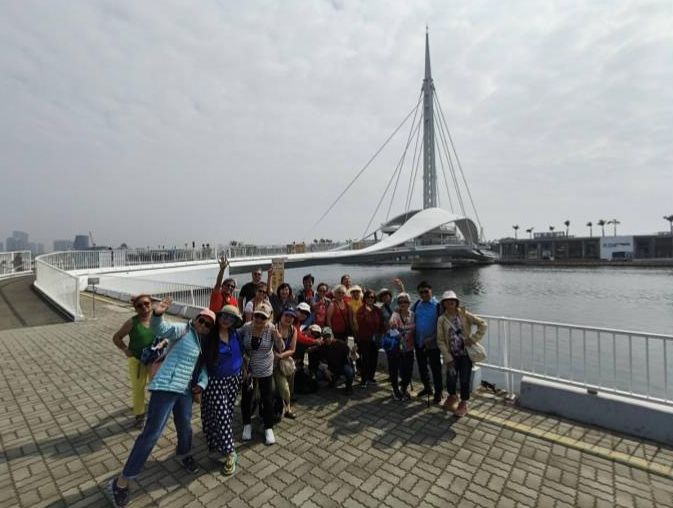


Cruising to Kaohsiung in a group?
Skip the crowded ship excursion bus. One dedicated planner will design a private shore experience around exactly what your group wants — coordinated from first enquiry to the moment you're back on board. More memorable, more flexible, and more affordable than you might expect. Spend less time organising, more time enjoying.
Explore Group Travel →Cruising to Kaohsiung
Kaohsiung does not trade in the same refined aesthetics as Taipei, and makes no apologies for it. Taiwan's second city and its primary deep-water port has the energy of a place that built itself through commerce and labour, and while recent decades have added design museums and landscaped promenades to the waterfront, the city's identity remains fundamentally practical and direct. The streets have a lived-in density, the food is serious rather than precious, and the scale — broad avenues, a major river delta, a harbour stretching to the horizon — makes a visitor feel the industrial weight of a city that moves goods for a significant portion of the world.
The physical transformation of the Pier-2 Art District captures Kaohsiung's recent trajectory well. Disused port warehouses that once stored salt and sugar have been converted into gallery spaces, independent shops, and event venues without losing the texture of their industrial bones. The elevated light rail that curves along the waterfront connects Pier-2 to the cruise terminal and on to the Love River, which was, until the 1990s, one of Taiwan's most polluted waterways. A sustained clean-up effort has made it a genuinely pleasant place — lined with café terraces, small boats for hire, and the kind of evening foot traffic that suggests the city has actually reclaimed something rather than just rebranded it.
A short distance inland, Lotus Pond presents a different register entirely: a shallow lake in the Zuoying district ringed with temples, pavilions, and the extraordinary Dragon and Tiger Pagodas rising from the water on coloured stilts. The tradition here is to enter through the dragon's mouth and exit through the tiger's — a ritual route through painted ceramic corridors that is simultaneously earnest religious practice and spectacular folk art. Nearby, the Confucius Temple and the Spring and Autumn Pavilions add further layers to what is genuinely one of Taiwan's denser concentrations of traditional religious architecture.
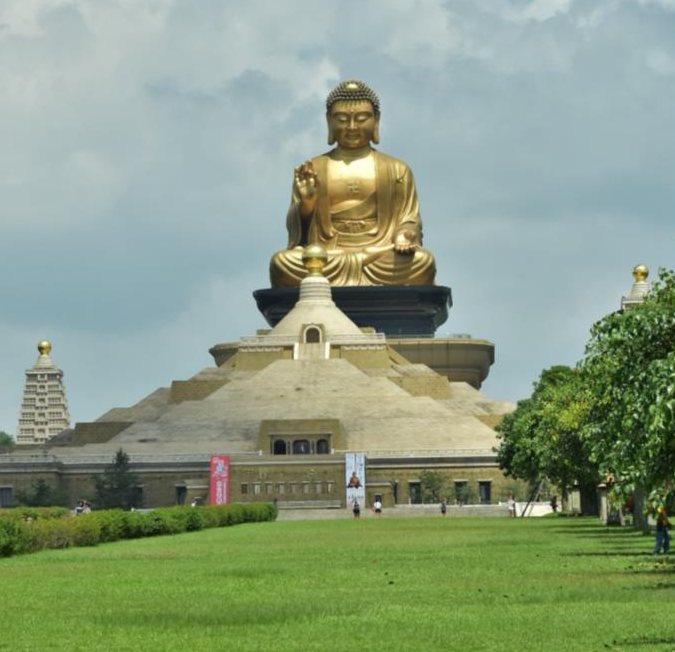
Kaohsiung's food scene operates primarily after dark, which creates a mild challenge for cruise visitors on a daytime schedule, but the city's markets and local restaurants serve versions of Taiwan's greatest hits — oyster vermicelli, braised pork rice, milkfish soup, taro balls, shaved ice — at lunch with no loss of quality. The Fo Guang Shan Buddhist monastery complex, about 45 minutes inland, adds a spiritual and architectural dimension that most port cities cannot match: a monastery housing hundreds of monks and nuns, elaborate temple halls, a massive reclining Buddha, and museum galleries that take Buddhist art seriously as art.
Top things to do in Kaohsiung on a cruise stopover
Pier-2 Art District: Industrial Heritage Repurposed
The former warehouses of Kaohsiung's working port — low-slung corrugated structures dating to the Japanese colonial period — have been converted into one of Taiwan's more interesting creative precincts without the sanitised quality that often characterises such transformations. The spaces retain their industrial bones: exposed steel, raw concrete, the scale of buildings designed to store thousands of tonnes of cargo. Within them are galleries exhibiting Taiwanese contemporary art, independent designers selling work that doesn't appear in mainstream shops, a railway museum in the old sugar-transport carriages, and a children's creative centre. The outdoor areas between buildings are used for street art installations, food trucks, and weekend markets. It is a 10-minute walk from the cruise terminal — the most immediate and effort-free introduction to what the city has done with its waterfront in the past two decades.
Lotus Pond: Temples Rising from the Water
Zuoying's Lotus Pond is a 1.4-square-kilometre shallow lake ringed with temples that range in scale from modest neighbourhood shrines to the extraordinary Dragon and Tiger Pagodas — two seven-storey towers decorated in vivid painted ceramics and connected to the shore by long pontoon walkways. The ritual approach is specific: enter through the dragon's mouth, walk through its painted interior corridors (depicting Buddhist and Taoist moral tales in ceramic relief), and exit through the tiger. This is not a performance for tourists; worshippers make the same circuit. The Spring and Autumn Pavilions sit further along the lake, connected by a zigzag bridge, and the Confucius Temple occupies a quieter corner nearby. The ensemble is genuinely unlike anything in Japanese or mainland Chinese temple traditions — unmistakably Taiwanese folk religious architecture at its most exuberant.
Fo Guang Shan: A Monastery on a Grand Scale
About 45 kilometres inland from Kaohsiung's port, the Fo Guang Shan Buddhist monastery was founded in 1967 and has grown into one of the largest Buddhist complexes in the world — home to hundreds of resident monastics and a major centre for humanistic Buddhism that operates universities, hospitals, and cultural institutions globally. The main temple compound centres on the Hall of Great Compassion, flanked by 480 golden Buddha statues on tiered hillside terraces leading to a 36-metre standing Buddha visible from kilometres away. The Buddha Museum, opened in 2011, houses one of the world's significant collections of Buddhist art in a contemporary building that takes the subject seriously. Entry to the grounds is free. The scale can feel overwhelming — a map from the entrance pavilion helps orient the visit. Allow at least two hours.
Love River: From Contamination to Café Culture
The Love River flows through central Kaohsiung and into the harbour, and its story is one of Taiwan's more concrete environmental success stories. By the late 1980s it was biologically dead, heavily contaminated by industrial discharge and untreated sewage. A decade-long clean-up project that concluded in the early 2000s removed the contamination, restored flow, and lined the banks with a walking and cycling promenade. Today the river is flanked by café terraces, exhibition spaces, small boat-hire operations, and palm-shaded walkways that connect the Singuang Wharf area to the interior of the city. The kilometre or so between the Pier-2 end and the old Yuancheng Road bridge makes a pleasant 30-minute walk with good views of the city's changing architecture — from Dutch-era to Japanese colonial to contemporary.
Night Market Food Culture (Adapted for Daylight)
Kaohsiung's night market scene is legendary even by Taiwanese standards — the Liuhe Night Market and Ruifeng Night Market draw thousands of visitors after dark for stalls serving oyster omelettes, coffin bread (thick toast filled with savoury or sweet fillings), shaved ice with taro, grilled squid, and the full repertoire of Taiwanese street food. Cruise visitors on a daytime schedule cannot access this after-dark culture directly, but the city's lunch scene offers the same dishes in sit-down restaurants and covered day markets. The Cianjin Fish Market area, within walking distance of the port, operates through the morning and serves milkfish (an important local ingredient) in several forms — congee, soup, and grilled — alongside other coastal Taiwanese staples.
The National Science and Technology Museum
Kaohsiung's National Science and Technology Museum sits in the Sanmin district — about 20 minutes by MRT from the waterfront — and is among the largest science museums in Asia by floor area. The permanent collection covers aerospace, materials science, telecommunications, energy, and industrial history with a Taiwan-specific lens (the country's semiconductor and electronics industries receive considerable attention). Temporary exhibitions have covered topics from robotics to climate science. It is emphatically not a children's museum in the reductive sense — the content is substantive enough for adult visitors with an interest in technology and industry. For those seeking an alternative to temple visits and food markets, it offers a genuinely different dimension of the city.
Kaohsiung travel tips
The Light Rail Connects the Pier Directly to Pier-2. The Kaohsiung Light Rail (LRT) runs along the waterfront and has a stop — Haijun Pier — immediately adjacent to the cruise terminal. A single fare costs NT$30 and the journey to the Pier-2 Art District takes under ten minutes. The same light rail continues to the Love River and connects with the MRT network at multiple interchange stations. Buy a stored-value EasyCard from the machine at the terminal exit (NT$100 card deposit, loadable in NT$100 increments) and use it on both the LRT and MRT without fumbling for exact change. The card is also accepted at 7-Eleven and Family Mart stores across the city, which makes it useful for buying food and drinks throughout the day.
Visit Lotus Pond Before 10:30am. Lotus Pond receives significant tour group traffic from mid-morning onward, particularly the Dragon and Tiger Pagodas, which have a relatively narrow entry passage. Arriving before 10:30am — achievable from the port by MRT (take Line R to Zuoying, then taxi or a 15-minute walk) — means you encounter the site at its quietest and most atmospheric, with local worshippers going about their practice without the overlay of large group visits. The light on the water is also best in the morning. If you are continuing to Fo Guang Shan in the same day, doing Lotus Pond first is the logical sequence — the monastery is further inland in the same general direction.
Carry Cash for Anything That Tastes Good. The city's most interesting food — local breakfast shops, covered market stalls, temple area noodle vendors, traditional bakeries — operates entirely on cash. Credit card acceptance at these places is essentially zero. NT$500–1,000 in cash per person covers a full day of eating at the city's better street-level food comfortably, including oyster vermicelli (around NT$50–80 a bowl), braised pork rice (NT$40–60), taro ball dessert (NT$60–100), and fresh fruit from market vendors. The 7-Eleven on virtually every second block serves as both an ATM and a reasonable backup option for snacks if you exhaust your cash before lunch.
Fo Guang Shan Requires a Taxi — Budget Time and Money Accordingly. Public transport to Fo Guang Shan is possible but involves multiple transfers and takes around 75–90 minutes each way, consuming too large a portion of a limited day ashore. A taxi from the cruise terminal costs approximately NT$700–900 each way and takes 45–55 minutes depending on traffic. If you plan to visit, pre-arrange a taxi driver who will wait for you (negotiate waiting fee: usually NT$200–300 per hour) or use the monastery's bus service from Zuoying Station (runs hourly, takes around 40 minutes, NT$70 each way). For a 9–10 hour day, the monastery is a worthwhile commitment. For a 6–7 hour day, the logistics are too compressed to be comfortable.
Milkfish Is the Local Seafood — Order It Deliberately. Milkfish (虱目魚, sā-ba̍k-hî in Taiwanese) is the signature ingredient of southern Taiwan's coastal cuisine and is particularly central to Kaohsiung's food identity. The fish is rich and slightly oily, with a distinctive flavour quite unlike the white fish common in European or East Asian cuisines generally. It appears in congee (fish porridge, best for breakfast), clear soup with rice, and grilled form. The Cianjin Fish Market area near the port is a reasonable starting point for finding it at lunch. When ordering, specify 'milkfish soup' (虱目魚湯) or 'milkfish porridge' (虱目魚粥) — both are typically under NT$100 and served with pickled vegetables and rice on the side.
The MRT Is Fast, Clean, and Easy to Navigate. Kaohsiung's metro system is one of the more pleasant in Asia to use as a visitor — maps are in English, announcements are in Mandarin, Taiwanese, and English, and the system is genuinely intuitive once you identify the colour-coded lines (Red Line runs north-south through the city centre; Orange Line crosses east-west). For the main tourist circuit, the relevant stations are: Sizihwan (near Pier-2 and the waterfront), Formosa Boulevard (central interchange, known for its spectacular glass dome ceiling — worth stepping outside to see), and Zuoying (for Lotus Pond connections and the high-speed rail station). Single journey fares range from NT$20–55. The system is clean, air-conditioned, and punctual.
Port Facts Every Cruiser Needs To Know
Kaohsiung shore excursion FAQs
The Dragon and Tiger Pagodas are two seven-storey towers built on stilts in Lotus Pond in Zuoying, constructed in 1953. They are among Taiwan's most distinctive examples of folk religious architecture — brightly painted in red, gold, and green, with ceramic tile surfaces depicting scenes from Buddhist and Taoist moral stories. The towers are connected to the shore by covered walkways and to each other by a bridge at the upper level. The established way to visit is to enter through the open mouth of the dragon on the left tower, walk through the interior corridor (lined with painted ceramic murals depicting rewards for virtuous behaviour), cross to the tiger tower, and exit through the tiger's mouth. The folk belief is that this circuit cleanses sins and brings good fortune. The experience is simultaneously sacred practice and extraordinary visual spectacle — the ceramic tile work, some of it decades old, is detailed and vivid in a way that rewards slow attention. Entry is free.
For visitors with 8–10 hours ashore and an interest in Buddhist culture, architecture, or serious museum collections, Fo Guang Shan is among the most rewarding half-day excursions available from any Asian cruise port. The monastery is genuinely operating — not a tourist reconstruction — and the scale of the complex gives it a grandeur that photographs don't fully convey. The Buddha Museum, opened in 2011 and designed in part to house a relic brought from Sri Lanka, contains Buddhist art and cultural objects spanning multiple centuries and traditions with rigorous curatorial approach. Entry to both the grounds and museum is free. The journey time (45–55 minutes by taxi each way) is the primary constraint. For a 6-hour day, this excursion is not recommended — the logistics leave too little margin. For a 9–10 hour day with an early departure from the ship, it is manageable and worthwhile.
Kaohsiung's food identity is rooted in the coastal and southern Taiwanese tradition, which is somewhat heavier, more savoury, and less delicate than northern Taiwanese or Chinese restaurant cooking. Key things to try: milkfish (虱目魚) in soup or congee form — a rich, oily, locally farmed fish central to southern Taiwan's food culture; oyster vermicelli (蚵仔麵線) — thin noodles in a starchy, flavourful sauce with oysters; braised pork rice (滷肉飯) — a benchmark dish that varies in quality and character from shop to shop and is worth ordering twice to compare; coffin bread (棺材板) — a Taiwanese invention from Tainan, also common in Kaohsiung, consisting of thick toast filled with savoury stew or sweet custard; shaved ice (剉冰) with taro balls, sweet beans, and condensed milk — the standard dessert in warm weather. Night market food is the primary context for all of this, but lunch restaurants and covered day markets serve the same dishes from around 11am.
Pier-2 is a converted industrial waterfront zone — former port warehouses from the Japanese colonial period — that now houses galleries, independent shops, creative studios, a children's space, and outdoor areas used for markets and events. It is worth visiting even without specific interest in contemporary art because the space itself is interesting: the buildings retain their industrial character, the outdoor areas between them are pleasant, and the adjacent railway museum (in original sugar-transport carriages) is genuinely engaging without requiring prior knowledge. The precinct is directly connected to the cruise terminal by the light rail and easily combined with a walk along the Love River. It functions as a good first hour of any day ashore in Kaohsiung — an orientation to the city's physical transformation — before moving on to other areas.
Taiwan consistently ranks among the safest travel destinations in Asia by conventional measures — low violent crime rates, high civic orderliness, and a general culture of honesty in commercial interactions. Kaohsiung specifically is a large, busy city and carries the usual low-level considerations of any urban environment (pickpocketing in crowded markets, traffic at pedestrian crossings, which is genuinely fast and requires attention). Taxis are metered and honest; the MRT system is well-monitored. Night market areas draw large crowds but have long-established safety reputations. The primary practical concern for cruise visitors is traffic crossing the road — Kaohsiung drivers treat pedestrian crossings as advisory rather than mandatory, and looking both ways before crossing even on a green signal is sensible practice.
Yes, easily. Taiwan's three main carriers (Chunghwa Telecom, Taiwan Mobile, FarEasTone) sell tourist SIM cards at the port area and at any convenience store. A one-day data SIM costs approximately NT$200–300 and provides 4G data sufficient for maps, translation, and communication. Alternatively, the EasyCard (the stored-value transit card) includes small amounts of data roaming through some plans — check your home carrier's Taiwan roaming rates before purchasing. Free Wi-Fi is available at major MRT stations, Starbucks branches, and the 7-Eleven and Family Mart convenience stores throughout the city — sufficient for maps and translation without a purchased SIM if you plan around the connectivity gaps.
Kaohsiung's development as a major port city began under Japanese colonial administration (1895–1945), when the harbour was deepened and expanded to serve as the primary shipping hub for Taiwan's agricultural exports — sugar, rice, bananas, and timber. The Japanese constructed the first industrial facilities, the rail network serving the port, and the basic urban grid that still organises the city. After 1945 under the Republic of China government, Kaohsiung became the centre of Taiwan's heavy industrialisation drive — steel, petrochemicals, shipbuilding — and hosted Export Processing Zones from the 1960s that were among the first of their kind in Asia. The city's character was formed by this industrial labour history: working class, pragmatic, and somewhat apart from the political and cultural centre of Taipei. The Pier-2 Art District and the Love River transformation represent a 21st-century attempt to reshape the city's relationship with its waterfront, though the port itself remains one of the largest container terminals in the world.
Taiwanese folk religious temples (the type found at Lotus Pond) are generally welcoming of respectful visitors regardless of religious affiliation. Useful etiquette: dress modestly (shoulders and knees covered is appreciated, though strictly enforced only at the more formal Buddhist monasteries like Fo Guang Shan); remove shoes when entering inner sanctums where signs indicate; avoid walking directly in front of people at prayer; do not touch religious statues or offerings; speaking quietly is appreciated. Photography is generally permitted in temple grounds and interiors at the Lotus Pond sites, but observe whether signs prohibit it and follow the lead of other visitors. At Fo Guang Shan, which is a functioning monastery, quieter behaviour is expected — the monastery hosts genuine religious practice and the visiting infrastructure is designed to accommodate both devotees and tourists simultaneously without conflict.
The Love River (愛河, Ài Hé) holds a somewhat mythologised place in Kaohsiung's self-image — it was the subject of a famous 1950s Taiwanese song that romanticised the city, even as the actual river became increasingly polluted through the following decades of industrial growth. The clean-up project that ran from the 1990s through the early 2000s restored water quality and created the promenade that now lines both banks. For visitors, it is pleasant without being spectacular — a linear park with café terraces, small bridges, and views of the city's mixed architectural fabric. Its value is primarily as a walking route connecting Pier-2 with the city's interior, rather than as a destination in itself. The stretch from Singuang Wharf to the Yuancheng Road bridge (about one kilometre) passes through the most developed section. Evening boat tours operate from the Pier-2 end, though these are outside cruise visitors' practical window.
Taiwan operates as a fully functioning democratic state with its own government, military, currency, passport system, and legal framework, and has done so since 1949. The political relationship between Taiwan and the People's Republic of China (mainland China) is a long-standing and complex diplomatic matter — Taiwan is not recognised by most countries at the level of formal diplomatic relations, though it maintains extensive unofficial ties and bilateral arrangements with most of the world. For cruise visitors, none of this has practical implications: entry requirements for Taiwan are distinct from mainland China (check your nationality's visa exemption or visa-on-arrival status at Taiwan's Bureau of Consular Affairs website before travel), the currency is different (New Taiwan Dollar, not Renminbi), and the country functions with complete normalcy. Kaohsiung is a safe, stable, and visitor-friendly destination where geopolitical considerations do not impinge on a day ashore.
Filters
Select a filter to refine results.
Tour Type
Tour Activity
 Cart
Cart
 USD
USD GBP
GBP AUD
AUD EUR
EUR CAD
CAD