



Tours in Krabi


Cruising to Krabi in a group?
Skip the crowded ship excursion bus. One dedicated planner will design a private shore experience around exactly what your group wants — coordinated from first enquiry to the moment you're back on board. More memorable, more flexible, and more affordable than you might expect. Spend less time organising, more time enjoying.
Explore Group Travel →Cruising to Krabi
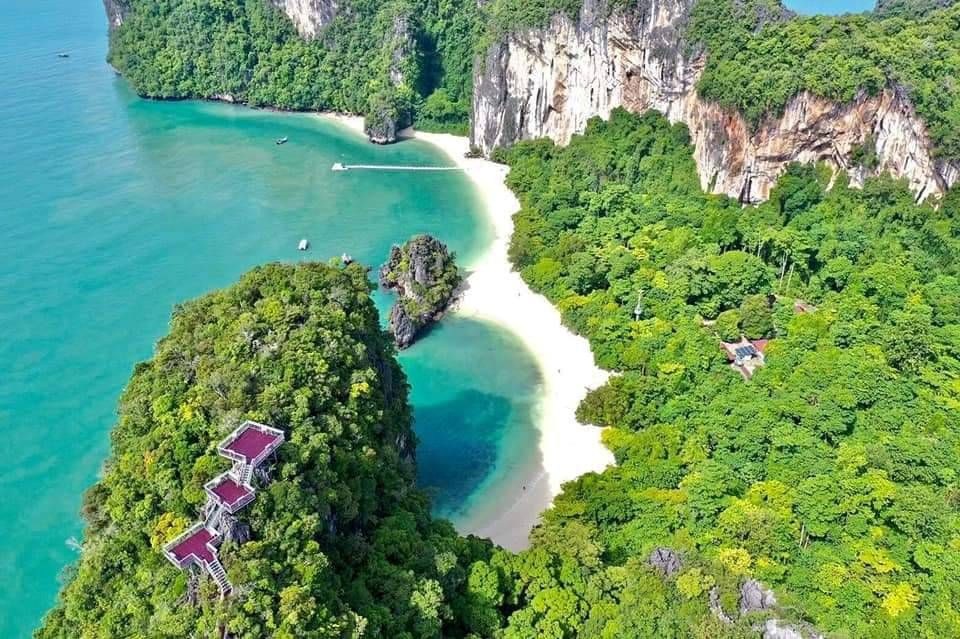
The Krabi coastline operates on a different scale from most of southern Thailand. The limestone karst formations that define this corner of the Andaman Sea are not gradual hills but vertical eruptions — sheer towers and walls draped in jungle, rising from shallow turquoise bays with an abruptness that makes the landscape feel theatrical, almost implausible. From the water approaching Railay Peninsula, the effect is startling: a crescent of white sand hemmed on three sides by karst walls so complete that no road can enter, only longtail boats.
Krabi Province covers a substantial stretch of coastline and interior, taking in the karst-studded Phang Nga Bay to the north, the Phi Phi Islands to the south (a protected marine park), and dozens of islands scattered through Krabi's own coastal waters. The variety within reach of a single port day is considerable: jungle-clad hillsides, mangrove channels, limestone caves, open ocean beaches, and the offshore limestone pinnacles that have made Krabi one of Asia's most popular destinations for sea kayaking and deep-water soloing.
Krabi Town, the provincial capital on the Krabi River estuary, provides a functional base with a genuine local character — morning markets, coffee shops, and a waterfront that retains some of its fishing village DNA despite the tourist economy. Most visitors, however, bypass the town for the beaches: Ao Nang, the main resort strip with direct boat connections to Railay; Railay itself; and the quieter bays of Koh Lanta to the south.
For those arriving by sea, the combination of dramatic scenery, excellent snorkelling on nearby reefs, the unique experience of reaching Railay by longtail boat, and the climb to Tiger Cave Temple's mountain summit creates a port day with genuine range — from physical challenge to meditative beauty — without requiring long overland transfers.
Top things to do in Krabi on a cruise stopover
Railay Beach: Thailand's Most Dramatic Shoreline
Railay Beach is, by geography, an island — though technically a peninsula — because the karst walls behind it are too steep for any road to cross. The only way in is by longtail boat, a 10-minute crossing from Ao Nang that immediately filters out the traffic and noise of the main resort area. What remains is a crescent of fine white sand with limestone cliffs on three sides, clear water stretching to offshore towers, and an atmosphere that retains some of the quality that made this coastline famous before mass tourism arrived. Railay West is the main beach, calmer and suited to swimming; Railay East is the mangrove-edged boat landing. The short walk between them passes through a cave system with a notable spirit shrine. Phra Nang Beach, at the southern tip, is arguably the most beautiful of the three and involves a short walk or kayak.
Tiger Cave Temple: 1,237 Steps to the Summit
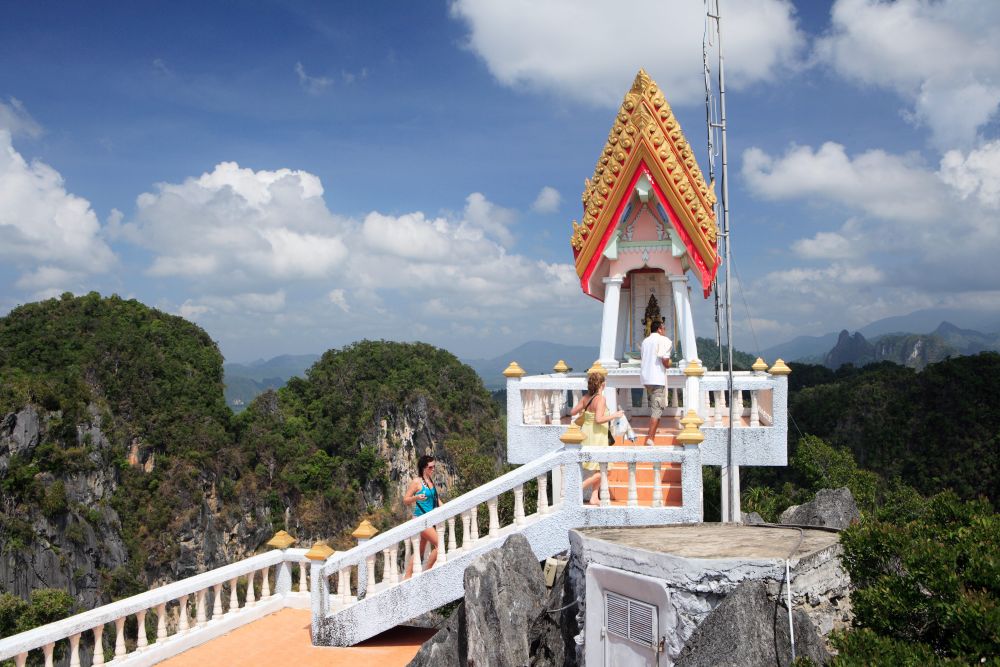
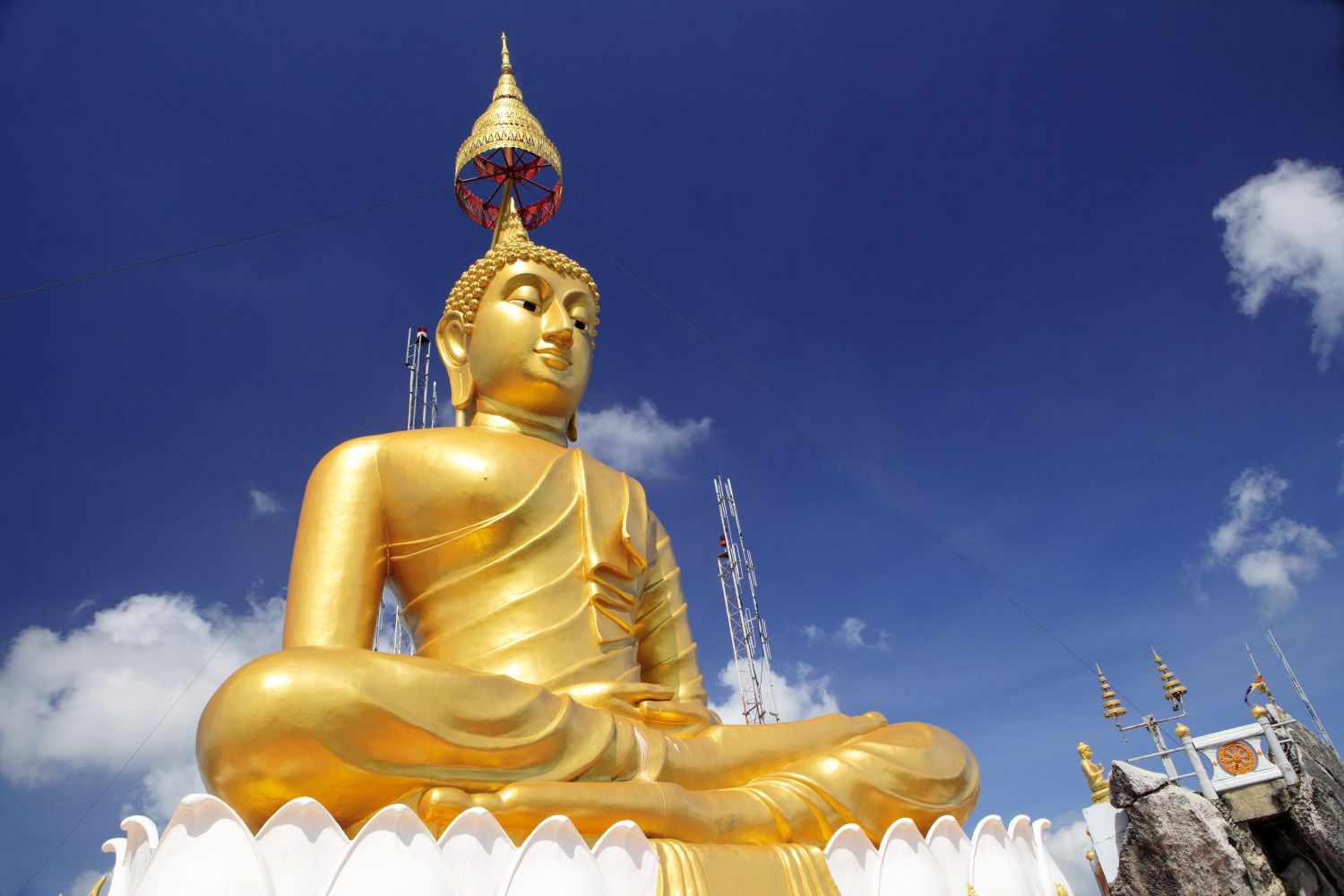
Wat Tham Suea — Tiger Cave Temple — sits at the edge of Krabi Town and offers what is possibly the most demanding and rewarding short climb available in the province. The 1,237 steep concrete steps to the summit take 45–60 minutes of sustained effort, passing golden Buddha images and monkey-inhabited ledges before arriving at a mountaintop platform where a large gold Buddha sits overlooking a 360-degree panorama of karst towers, mangroves, and the Andaman coast. The climb is genuinely strenuous in the heat; start as early as possible. At the base, a forest cave temple with a resident monk community and enormous fig tree roots is worth exploring before or after the ascent. Visitors should dress modestly — knees and shoulders covered.
Four Islands Snorkel Tour: Krabi's Marine Highlights
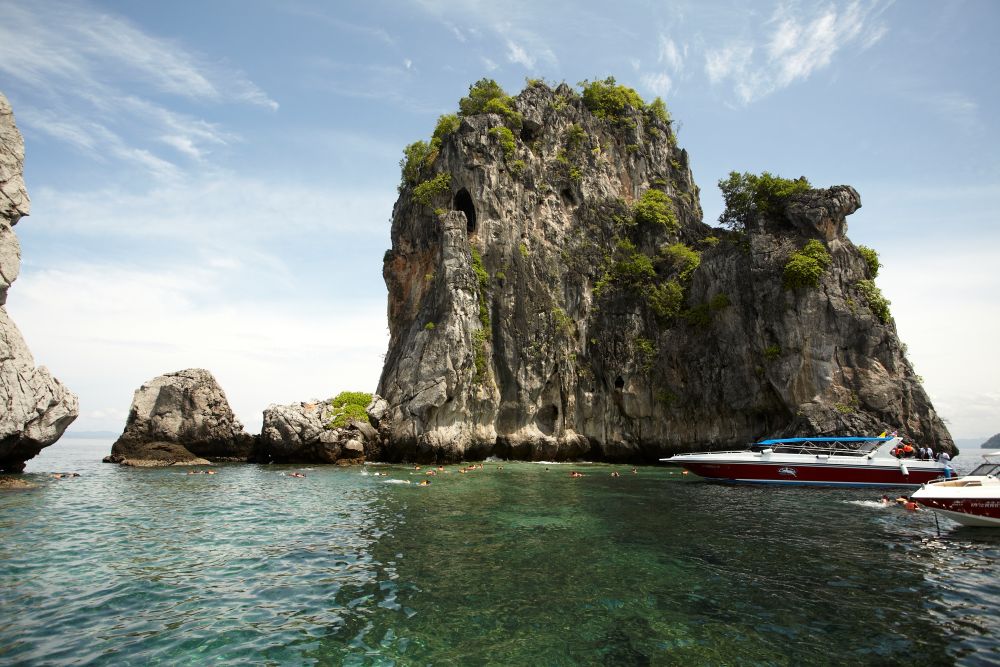
The Four Islands tour is the standard half-day boat excursion from Ao Nang, visiting Koh Poda, Koh Gai (Chicken Island), Koh Tub, and Koh Mor — a circuit of limestone islands and sandbars with snorkel stops at coral gardens harbouring parrotfish, butterflyfish, and occasional reef sharks. The famous sandbar connecting Koh Tub to Koh Mor appears and disappears with the tide, and the timing of your visit determines whether you walk across an exposed strip of sand or swim through what was, an hour earlier, dry land. Tours run by longtail or speedboat; the latter covers more distance in less time but with less atmosphere. Morning departures offer calmer seas and better snorkel visibility.
Sea Kayaking Through Limestone Caves and Mangroves
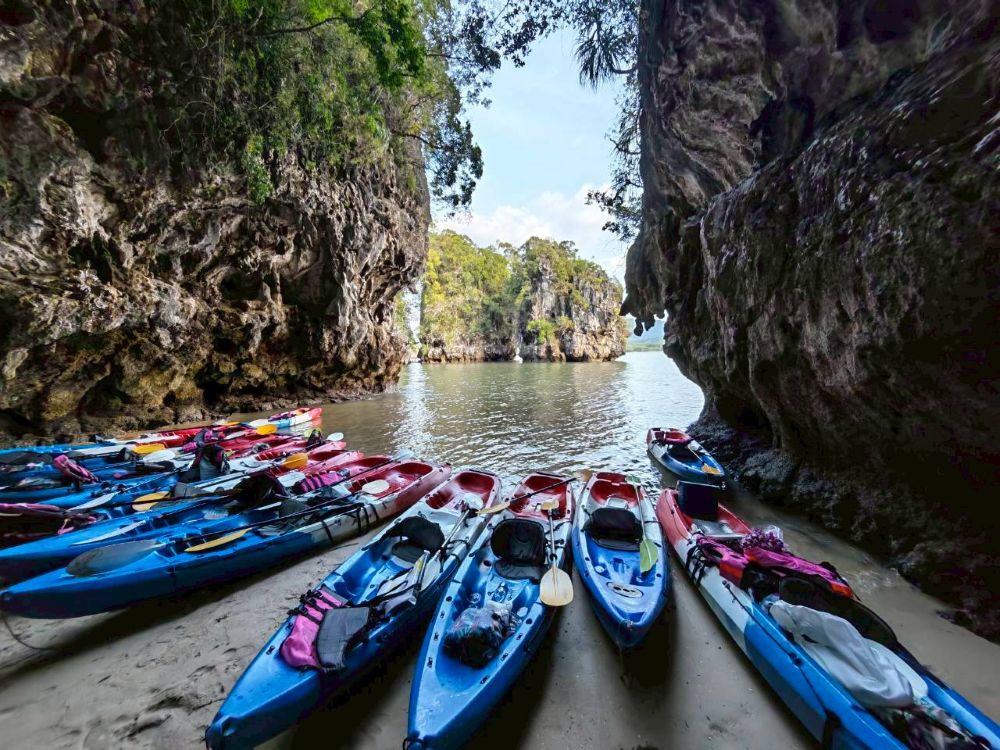
The coastline around Krabi is riddled with sea caves that open into enclosed tidal lagoons — hongs — accessible only by kayak at certain tide levels. Ao Thalane, a sheltered bay 25 kilometres north of Krabi Town, is the primary kayaking base, with mangrove channels threading between karst walls that turn orange and purple in the afternoon light. Guided kayak tours navigate routes that are impossible by any other means, entering cave mouths low to the water on an incoming tide, emerging into pools open to the sky and ringed by vertical rock. The experience is quiet, physically manageable for most fitness levels, and offers a perspective on the karst landscape unavailable from land or from a speedboat.
Krabi Elephant Sanctuary: Ethical Encounter in a Forest Setting
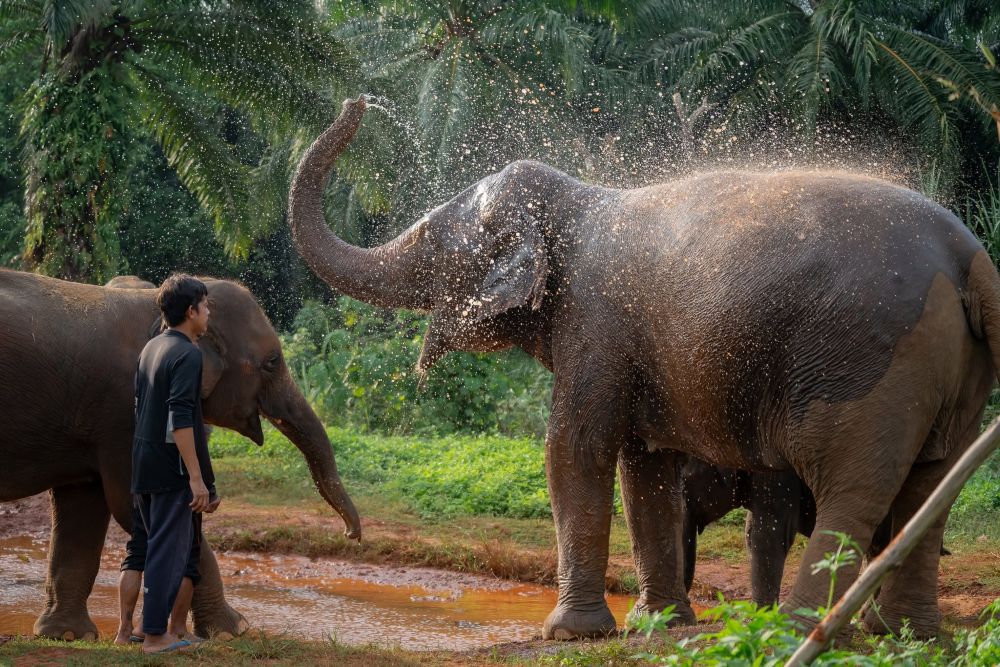
Krabi's elephant sanctuary provides rescued elephants — many retired from tourist riding camps or logging operations — with a large forested habitat where they live in social groups without chains, performance demands, or forced contact. Visitors observe, feed, and walk alongside the herd under guide supervision, learning each elephant's individual history and the conditions from which they were rescued. The sanctuary's setting in Krabi's tropical forest interior is itself remarkable: dense jungle, birdsong, and the scale of the animals against natural vegetation creates a sense of genuine encounter rather than managed spectacle. Ethical elephant sanctuaries in Thailand differ meaningfully from venues that retain riding or performance elements — the absence of hooks (ankus), the animals' freedom of movement, and their evident ease around humans are the most reliable indicators of genuine welfare-oriented practice.
Hong Islands: Enclosed Lagoon and Pristine Snorkelling
Koh Hong — 'room island' in Thai — takes its name from a dramatic enclosed lagoon accessible only by swimming through a low sea arch at certain tide levels, entering what amounts to a roofless limestone chamber with emerald water and walls rising sheer on all sides. The surrounding island group includes Koh Pak Bia, Koh Lading, and several smaller formations, each offering reef snorkelling of a different character: shallow coral gardens, sea-grass beds hosting sea turtles, and deeper walls dropping away from the base of the karst. The speedboat journey from Ao Nang through the limestone archipelago is itself scenic — formations rise from flat water at intervals that would feel theatrical if they were not entirely natural. The islands are accessible only by boat and the sites are significantly less crowded than the Four Islands circuit, making them worthwhile for those seeking quieter water and more undisturbed marine life.
Krabi travel tips
Start Tiger Cave Temple Before 9am. The 1,237-step climb to the Tiger Cave Temple summit is significantly more pleasant in the cooler morning air than at midday. The staircase is exposed to sun for much of its length, and the combination of humidity and heat later in the day makes what is already a demanding ascent genuinely miserable. Arriving at the base by 8am means reaching the summit before tour groups from the resort areas arrive. The descent is harder on the knees than the ascent; take your time and use the handrails.
Take the Last Longtail Back from Railay, Not the First. Railay Beach is most crowded between 10am and 2pm when day-trippers from Ao Nang arrive in volume. If your ship's schedule allows, reaching Railay early (before 9am) and departing mid-afternoon, rather than arriving with the main wave, produces a meaningfully different experience of the beach. The last longtails back to Ao Nang run around 6pm; check timing with operators on the day. The beach in the late afternoon, when the light shifts and the crowd thins, is substantially more peaceful.
Confirm Monsoon Season Boat Operations in Advance. Between May and October, Andaman seas can be rough enough to suspend longtail boat services to Railay and cancel island-hopping tours. Operations resume when seas calm, sometimes within the same day, but cruise visitors cannot predict this in advance. Check sea conditions through your ship's shore excursion team before committing to boat-dependent activities. In rough conditions, Krabi Town itself, Tiger Cave Temple, and the mangrove kayaking at Ao Thalane (a sheltered bay) remain viable alternatives.
Dress Modestly for Temple Visits. Tiger Cave Temple is an active Buddhist monastery and requires appropriate dress: shoulders covered and knees covered for both men and women. Scarves or sarongs available for purchase or loan near the entrance can cover bare shoulders. Shoes are removed before entering temple buildings. The dress code is enforced and applies even when the focus of the visit is the summit climb rather than the temple itself.
Southern Thai Cuisine: Krabi's Distinct Culinary Identity. Southern Thai cooking is distinctly different from the central Thai food most visitors encounter abroad — bolder, hotter, more heavily spiced, and reliant on fresh turmeric, galangal, and dried shrimp. Khao yam, a rice salad dressed with budu (fermented fish sauce) and mixed with toasted coconut, lemongrass, and fresh herbs, is the signature dish. Massaman and yellow curries taste richer and more complex in their southern home. Seafood is abundant and fresh: grilled whole fish with garlic and coriander, crab stir-fried with curry paste, or steamed prawns with chilli dipping sauce. For an authentic meal, look for small restaurants displaying dishes in pots by the entrance, frequented by local workers — the quality gap between these and tourist-strip establishments is often significant. Southern Thai food is not mild; if you prefer less heat, ask for 'phet nit noi' (a little spicy).
Protect Against Jellyfish in Monsoon Season. Box jellyfish and other stinging species are more prevalent in Krabi waters during the monsoon months (May–October). A full-length lycra rash guard provides significant protection for snorkellers. Beaches in southern Thailand post warning flags when jellyfish are sighted; take these seriously. Vinegar (available at most beaches) is the recommended first treatment for jellyfish stings. Outside peak jellyfish months, the risk is low but worth remaining aware of.
Port Facts Every Cruiser Needs To Know
Krabi shore excursion FAQs
Cruise ships visiting Krabi anchor offshore and tender passengers ashore, typically to Ao Nang Beach or to Krabi Town pier, depending on the vessel and its itinerary. The tender ride takes approximately 15–30 minutes depending on anchor position. From Ao Nang, all major attractions are accessible: Railay by longtail (10–15 minutes), islands by speedboat or longtail, and Krabi Town by songthaew (30–40 minutes). From Krabi Town pier, taxis and songthaews connect to Ao Nang and Tiger Cave Temple. Confirm your ship's landing point before planning your day, as it significantly affects logistics.
Technically yes, but it requires careful time management. The Phi Phi Islands are 1–1.5 hours from Ao Nang by speedboat each way, leaving 3–5 hours on the islands. This is feasible for a cruise port day of 8 hours or more ashore, but leaves almost no margin for tender delays or rough sea conditions slowing the return. If your ship offers a Phi Phi excursion, the logistics will be calculated for you. If arranging independently, book a speedboat leaving Ao Nang no later than 8:30am and returning by 4pm to allow buffer time before the last tender. Koh Phi Phi Don's main village (Ton Sai) and the viewpoint are the primary draws; Maya Bay on Phi Phi Leh has restricted access.
The climb is genuinely demanding — 1,237 steps, many of them steep, with limited shade and significant heat at most times of day. Most reasonably fit adults in good health can complete it, though it should not be underestimated. People with knee problems, heart conditions, or those unaccustomed to exertion in heat should consider the lower-level forest temple, which is beautiful and accessible without the climb. The summit is not wheelchair or pushchair accessible. Completing the ascent in 45–60 minutes is typical; the descent takes slightly less time but is harder on the joints. Water is available for purchase at the base; bring your own to carry up.
Railay West is the main swimming beach — wide, white-sand, and fronted by calm water that is generally suitable for swimming throughout the dry season. Longtails from Ao Nang arrive and depart from the northern end of this beach. Railay East is the other side of the narrow peninsula, facing the mangroves and Krabi River estuary; it is muddier and not suitable for swimming, but it is where boats from Koh Lanta and other southern destinations arrive. Between the two, the peninsula path passes through a cave. Phra Nang Beach, at the southern tip of Railay, is accessible by a 10-minute walk from Railay West and is widely considered the most beautiful of the three — a bay dominated by a cave shrine where local fishermen make offerings. Access is also possible by kayak.
Long-tailed macaques are ubiquitous throughout the karst landscape, particularly on Railay and near the Tiger Cave Temple — entertaining but capable of snatching food, bags, and glasses, so remain alert. The forests around Krabi Town and the National Park areas support hornbills, monitor lizards, and occasional dusky langur (leaf monkeys). Underwater, the reef systems off Koh Poda and around Phi Phi support reef sharks, sea turtles, moray eels, lionfish, and a wide variety of reef fish. Whale sharks are occasionally sighted at outer reef sites, though not reliably enough to plan around. Sea eagles hunt the mangrove channels and can be seen from kayaks at Ao Thalane.
Yes. Tiger Cave Temple is entirely land-based and provides a substantial half-day activity combining cultural significance with physical challenge and panoramic rewards. Krabi Town itself rewards walking: the old town has a small but characterful Sino-Portuguese quarter, a vibrant morning market, and the Chao Fa Park waterfront where longtail boats are moored and the mangrove-edged river creates a different sense of place from the beach resorts. The night market (evenings) or afternoon market in Ao Nang is accessible by songthaew. The Emerald Pool and Hot Springs in Khao Phra Bang Khram Wildlife Sanctuary are about an hour from Krabi Town and offer jungle walking and natural bathing.
Sea kayaking in Krabi is well-suited to beginners, particularly on sheltered routes through the mangroves of Ao Thalane or the enclosed bays of Bor Thor. Guided tours use stable sit-on-top kayaks and cover flat water; no prior kayaking experience is required. The main hong (tidal lagoon) routes require paddling through low cave entrances — a genuinely exciting passage where the ceiling can be very close to the water surface at higher tides. Guides time entries to conditions. Tours typically last 3–4 hours including transport from Ao Nang. Open-water crossings to more exposed islands are available for those who want more challenge, but are not the standard beginner offering.
Southern Thai cuisine is the thing to seek out, and it differs meaningfully from the central Thai food that dominates most international restaurants. Key dishes: Gaeng tai pla — fermented fish kidney curry with vegetables, intense and complex; Khao yam — a cold rice salad with shredded herbs, dried shrimp, toasted coconut, and a tamarind dressing, served at breakfast in Krabi Town's market; Massaman curry, originally from the Muslim south, richer and more aromatic than most Thai curries; and hoi tod — pan-fried oysters in egg batter. For practical eating near the beach, the afternoon market near Ao Nang Circle and the vendors around Krabi Town's Maharaj Road offer the best access to genuinely local food at reasonable prices.
Krabi works well for families. The longtail boat ride to Railay is exciting for children and the beach is safe for swimming in calm conditions. The Four Islands snorkel tour is suitable for confident child swimmers. Tiger Cave Temple's summit is achievable for children of school age in reasonable fitness, though parents should assess the steepness and heat honestly. Kayaking tours can accommodate children in tandem kayaks with adult paddlers. The main consideration in dry season is sun exposure — the beaches offer limited shade, and sun protection should be thorough. In monsoon season, sea conditions require more caution for families with young children on boat trips.
Start with Tiger Cave Temple. Take a songthaew or taxi from wherever your tender lands to the temple base (30–45 minutes from Ao Nang, 15 minutes from Krabi Town pier). Begin the climb by 8:00–8:30am to reach the summit before full heat. Allow 2.5–3 hours total for the experience including the lower forest temple. Return to Ao Nang by late morning and take a longtail to Railay for lunch and afternoon on the beach, departing Railay no later than 4:30pm to allow time for the tender back to your ship. This sequence works well because the climb is done in cooler morning air, and Railay is less crowded in the early afternoon after the main midday rush begins to subside.
Filters
Select a filter to refine results.
Tour Type
Tour Activity
 Cart
Cart
 USD
USD GBP
GBP AUD
AUD EUR
EUR CAD
CAD