



Tours in Bora Bora


Cruising to Bora Bora in a group?
Skip the crowded ship excursion bus. One dedicated planner will design a private shore experience around exactly what your group wants — coordinated from first enquiry to the moment you're back on board. More memorable, more flexible, and more affordable than you might expect. Spend less time organising, more time enjoying.
Explore Group Travel →Cruising to Bora Bora
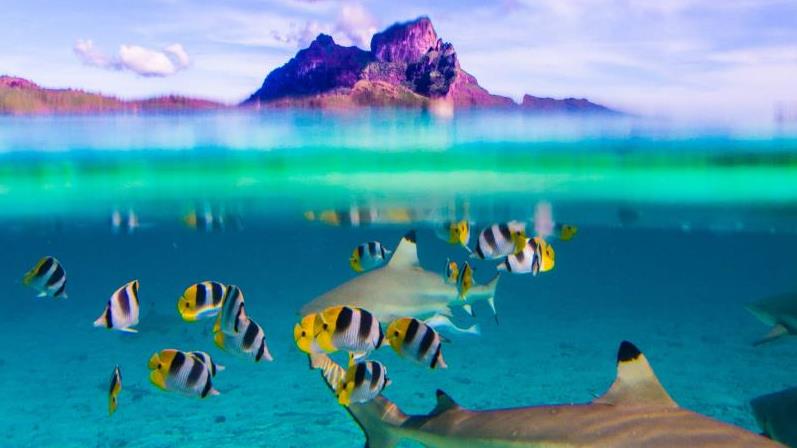
Bora Bora sits within French Polynesia's Society Islands, roughly 260 kilometres northwest of Tahiti — a volcanic remnant ringed by a coral reef that encloses one of the Pacific's most celebrated lagoons. Cruise ships anchor offshore and tender passengers to Vaitape, the main settlement on the island's western shore. The lagoon's colour is not a photographic invention: it genuinely cycles from pale jade in the shallows to deep cobalt where the reef drops away. Mount Otemanu, the eroded core of an ancient volcano, rises 727 metres above the water and dominates every view from land or sea. The reef harbours blacktip sharks, eagle rays, and coral gardens accessible by snorkelling from the surface. On land, a single paved road circles the main island through small villages, cultural sites, and viewpoints. French influence shapes the food, language, and some of the architecture, while Polynesian traditions define the culture underneath. Six to eight hours ashore is enough to experience the lagoon properly, though the temptation to linger is well founded.
Top things to do in Bora Bora on a cruise stopover
Bora Bora's Volcanic Interior and Coastal Road — An Island Explored by 4x4
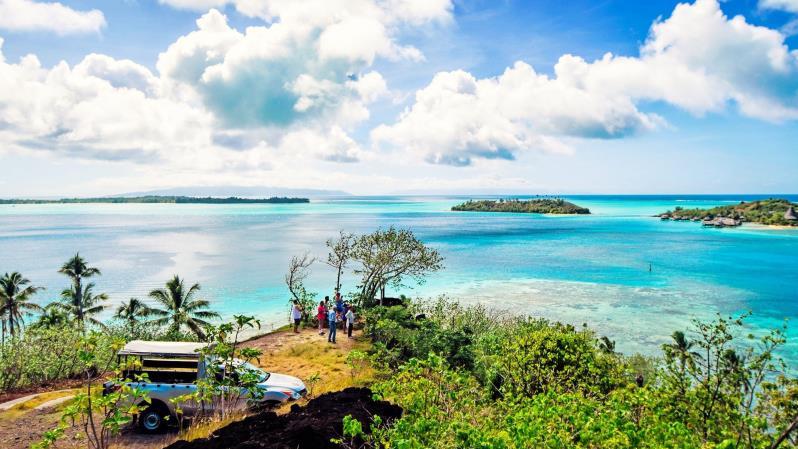
The single road circling Bora Bora's main island traces a near-complete loop of around 32 kilometres, passing through fishing villages, gardens of tiare and hibiscus, and viewpoints that frame the lagoon from above. Doing this circuit by 4x4 vehicle opens access to rougher inland tracks that climb toward the mountain's lower slopes, revealing panoramas across the reef and outer motus not visible from the water. Marae — ancient Polynesian sacred stone platforms — are scattered across the island, offering direct contact with the religious and social life of Bora Bora before European contact. A circuit typically includes stops at cultural sites, coastal viewpoints, and vanilla plantation areas. This is the most effective way to understand Bora Bora as a place with a lived landscape rather than simply a backdrop to the lagoon.
The Lagoon's Shallows — Half a Day Among Reef Sharks, Rays, and Coral
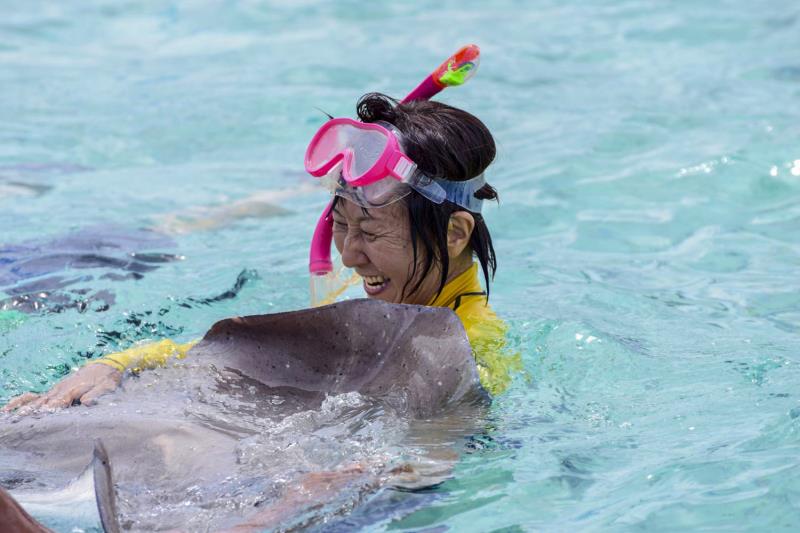
A half-day on Bora Bora's lagoon covers the reef's most accessible snorkelling sites within a compact window of three to four hours on the water. Blacktip reef sharks frequent the sandy-bottomed shallows in numbers that surprise first-time visitors — they are small, non-aggressive, and entirely habituated to the presence of boats and swimmers. Eagle rays and, less predictably, manta rays patrol the reef's inner slope. Coral gardens in the protected sections of the lagoon support dense populations of tropical fish, with water clarity on calm mornings reaching ten to fifteen metres or more. A half-day departure suits those wanting a genuine lagoon experience without committing a full day to the water, and morning conditions typically deliver the best light and calmest surfaces.
A Full Day on the Lagoon — Reef, Motus, and the Deeper Coral Gardens
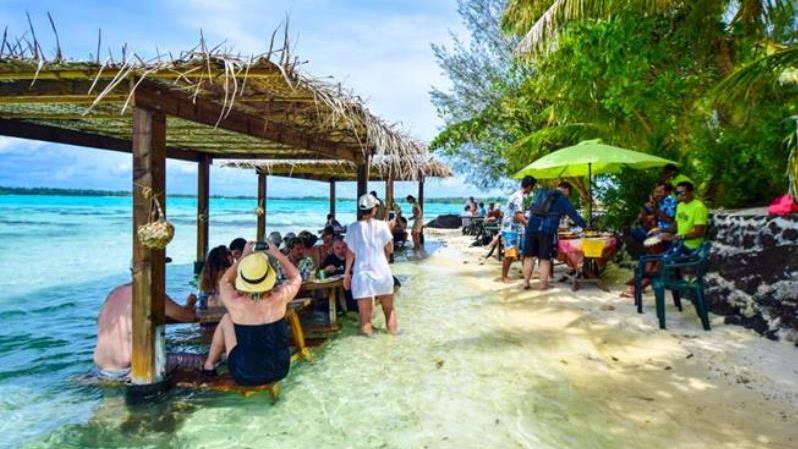
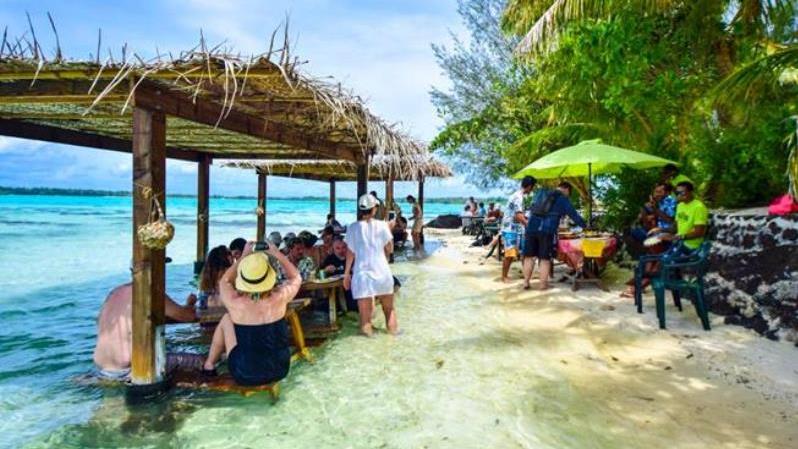
Spending a full day on Bora Bora's lagoon opens access to sites that half-day trips rarely reach — particularly the outer reef passages, the shallow motu beaches on the atoll's northern and eastern sides, and the deeper coral gardens where larger marine life concentrates. A typical full-day itinerary includes multiple snorkelling stops, a beach break on one of the uninhabited motus, and lunch either on board or at a motu-side setting with unobstructed lagoon views. The shifting light across the day transforms the water's colour palette, with the late afternoon turning the lagoon a deeper shade of gold and amber. For those whose primary reason for visiting Bora Bora is the underwater world, a full day removes the compromises that shorter formats require.
Land and Sea in a Single Day — Island Circuit Combined with Lagoon Time
Combining a land circuit with lagoon time in a single day gives visitors a more complete picture of Bora Bora than either activity provides alone. Typically, a morning on the water for snorkelling gives way to an afternoon circuit of the island by vehicle, or the sequence runs in reverse depending on conditions. The contrast is striking: from inside the lagoon, the island's volcanic peaks rise sharply above the reef; from the island's higher viewpoints, the lagoon spreads out below in all its layered colour. Cultural stops at marae sites and village areas add a dimension beyond pure nature. This approach works well for cruise visitors wanting to avoid choosing between water and land, though it requires reasonable energy across a long and varied day ashore.
Private Half-Day Charter — Bora Bora's Lagoon at Your Own Pace
A private boat charter on Bora Bora's lagoon means choosing your own pace — lingering at a snorkelling site that rewards a second look, anchoring off an empty motu for a swim, or cruising across the lagoon's gradient of colour toward the base of Mount Otemanu. The lagoon's geography is large enough that private departures can avoid the established group tour circuits entirely, reaching corners of the reef and shoreline rarely touched by larger shared boats. A half-day private charter runs three to four hours on the water and covers multiple snorkelling sites alongside the island's landscape from a boat-level perspective unavailable from land. For small groups or families, the flexibility transforms what can feel like a crowded shared experience into something genuinely personal.
Full Day Private Charter — Complete Immersion in Bora Bora's Lagoon World
A full private day on Bora Bora's lagoon is the most immersive way to experience what makes this island genuinely exceptional rather than just visually famous. Eight or more hours on the water allows for early-morning calm before group tours depart, snorkelling at multiple reef systems, a beach picnic on an uninhabited motu, and a late afternoon return under low sun that turns the water gold. The silence of the outer lagoon — away from resort infrastructure and tender traffic — is its own reward. Private charters allow snorkellers to spend as long as they choose at productive sites rather than moving when a larger group is ready. For those treating this as a once-in-a-lifetime port call, a full private day on the water removes every compromise that shared formats require.
Bora Bora travel tips
Tender Lines Can Be Significant — Build in Return Time. Cruise ships anchor offshore and run tender boats to Vaitape wharf throughout the day. At the end of the day, tender queues form quickly as multiple tours return simultaneously. Allow at least 30 to 45 minutes of buffer before your ship's all-aboard time, on top of the 15-to-20-minute tender ride itself. Missing the last tender window is not a theoretical risk in a busy port.
Use Reef-Safe Sunscreen in and Around the Lagoon. French Polynesia actively discourages conventional chemical sunscreens, which damage coral reef ecosystems. Use mineral-based sunscreen — zinc oxide or titanium dioxide formulas — when entering the water. Many lagoon operators ask that chemical sunscreen not be applied near the water, and some enforce this policy. Bring your own reef-safe product if possible; options in Vaitape can be limited or expensive.
Be Honest About Your Open-Water Comfort Level Before Snorkelling. Lagoon snorkelling in Bora Bora takes place in open water over sandy bottoms and coral formations — there are no shallow entry pools or handrails. Confident swimmers find conditions manageable, but those with limited open-water experience should tell their guides beforehand. Flotation aids and life vests are typically available on request and carry no stigma.
Vaitape Is Small — Set Shopping Expectations Accordingly. Vaitape is a compact town with a handful of shops, a pharmacy, and a small market. Black pearl jewellery is available at dedicated boutiques and represents reasonable value for certified Tahitian pearls compared to resale markets elsewhere. Do not expect broad retail variety — Bora Bora's appeal is overwhelmingly natural, and the town reflects that reality rather than catering to large-scale shopping.
Morning Is the Best Time on the Lagoon — Book Early Departures. Bora Bora's lagoon is at its most visually dramatic in the morning, when lower sun angles intensify the turquoise and visibility through the water is at its clearest. Wind typically builds through the afternoon, raising chop on the lagoon surface and making snorkelling less comfortable. Morning departures also allow you to be back at the tender dock before afternoon queues peak.
Carry Cash for Vaitape's Smaller Vendors. The ATM in Vaitape dispenses XPF (CFP Francs), and many smaller vendors, market stalls, and snack vans in town operate cash only. Larger shops and pearl boutiques typically accept credit cards. Drawing some local currency before wandering independently avoids the frustration of finding a vendor who cannot process a card.
Port Facts Every Cruiser Needs To Know
Bora Bora shore excursion FAQs
Bora Bora has no deep-water cruise pier — ships anchor in the lagoon and run tender boats to Vaitape wharf on the island's western side. The tender ride takes 15 to 20 minutes each way. Tender tickets are distributed on board, and morning demand can mean a wait before your first boat departs. Factor tender time into any planning on both ends of the day.
Blacktip reef sharks are the species most commonly encountered, and they are small, non-aggressive, and fully habituated to swimmers. Incidents are extremely rare, and tour operators have decades of experience managing these encounters. Basic guidance — move calmly, do not attempt to touch — is all that is needed. The experience is far more remarkable than it is hazardous.
The summit of Mount Otemanu is not safely accessible to general visitors — the volcanic terrain is extremely steep and unstable. The mountain's lower slopes can be explored on 4x4 tracks and short jungle trails. The best full views of the peak are from the lagoon itself, particularly from the eastern and northern sides, or from elevated viewpoints along the island road.
English is spoken at resorts, tour operators, and most businesses that regularly deal with cruise visitors. In Vaitape's smaller shops and market stalls, some basic French phrases help and are appreciated, but you can manage comfortably without them. French Polynesians are generally patient and helpful with visitors navigating language differences.
Blacktip reef sharks in the shallows are nearly guaranteed. Eagle rays are common, and manta rays are possible on full-day excursions though not guaranteed. Coral gardens host surgeonfish, parrotfish, triggerfish, and occasional moray eels. The diversity and accessibility of Bora Bora's marine life — at the surface, without scuba gear — is exceptional by global standards.
Bora Bora has a reputation for high prices, driven largely by its luxury resort infrastructure. Independent visitors in Vaitape will find modest local restaurants and snack vans at affordable prices by French Polynesian standards, while sit-down restaurant meals run significantly higher. Pearl shopping varies widely depending on quality. ATM access means you are not entirely dependent on card acceptance.
Most overwater bungalow resorts are restricted to paying guests and do not offer day passes or public access to their facilities or jetties. The iconic overwater bungalow landscape is best viewed from the lagoon by boat, where the main resort complexes are clearly visible from the water. Some resort restaurants accept outside reservations, but this varies by property and is not guaranteed.
Bora Bora's lagoon stays above 26°C year-round, reaching around 29°C during the November-to-March wet season. A wetsuit is not necessary for snorkelling or swimming at any time of year, though many visitors wear a rash guard for extended time in the water — more for sun protection than warmth.
The motus — small, flat islets scattered around the outer reef — are some of Bora Bora's most peaceful spots, with white sand beaches, calm swimming, and unobstructed views back toward the main island and its volcanic peaks. They are accessible only by boat and typically included in full-day lagoon excursions. A motu beach stop offers a genuinely different experience from the main island's road circuit or the reef snorkelling sites.
Lightweight, quick-drying clothing is ideal — most of the day will involve time on or near water. A rash guard or long-sleeved swim shirt provides better sun protection than sunscreen alone and avoids reef-safe product complications in the lagoon. Bring a hat, sunglasses, and mineral sunscreen. Vaitape is entirely casual; there is no need for formal clothing anywhere ashore.
Filters
Select a filter to refine results.
Tour Type
Tour Activity
 Cart
Cart
 USD
USD GBP
GBP AUD
AUD EUR
EUR CAD
CAD