



Tours in Darwin


Cruising to Darwin in a group?
Skip the crowded ship excursion bus. One dedicated planner will design a private shore experience around exactly what your group wants — coordinated from first enquiry to the moment you're back on board. More memorable, more flexible, and more affordable than you might expect. Spend less time organising, more time enjoying.
Explore Group Travel →Cruising to Darwin
Darwin is unlike any other Australian city. Sitting at the top of the Northern Territory, it operates on its own rhythms — shaped by two seasons rather than four, by proximity to Southeast Asia, and by a living indigenous culture that predates European settlement by at least 65,000 years. The city itself is compact and relatively recent in its current form; a 1974 cyclone and wartime bombing campaigns erased much of what existed before. What remains is a city that wears its multicultural, frontier identity comfortably, with a waterfront precinct facing the Timor Sea and a food culture reflecting Southeast Asian influence as much as mainstream Australia. Beyond the city, Litchfield National Park lies 130 kilometres south — an accessible plateau of sandstone escarpment, thundering waterfalls, and magnetic termite mounds that distils the Top End's wild character into a manageable day. For visitors with limited time in northern Australia, Darwin punches considerably above its population.
Top things to do in Darwin on a cruise stopover
Litchfield National Park — Waterfalls, Swimming Holes and Magnetic Termite Mounds
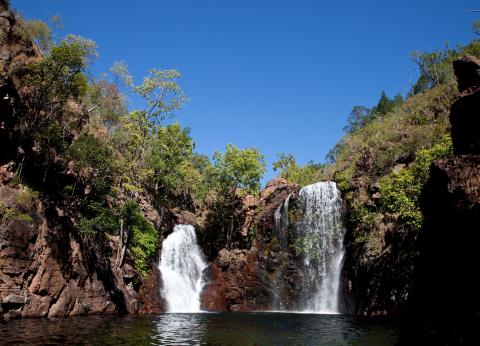
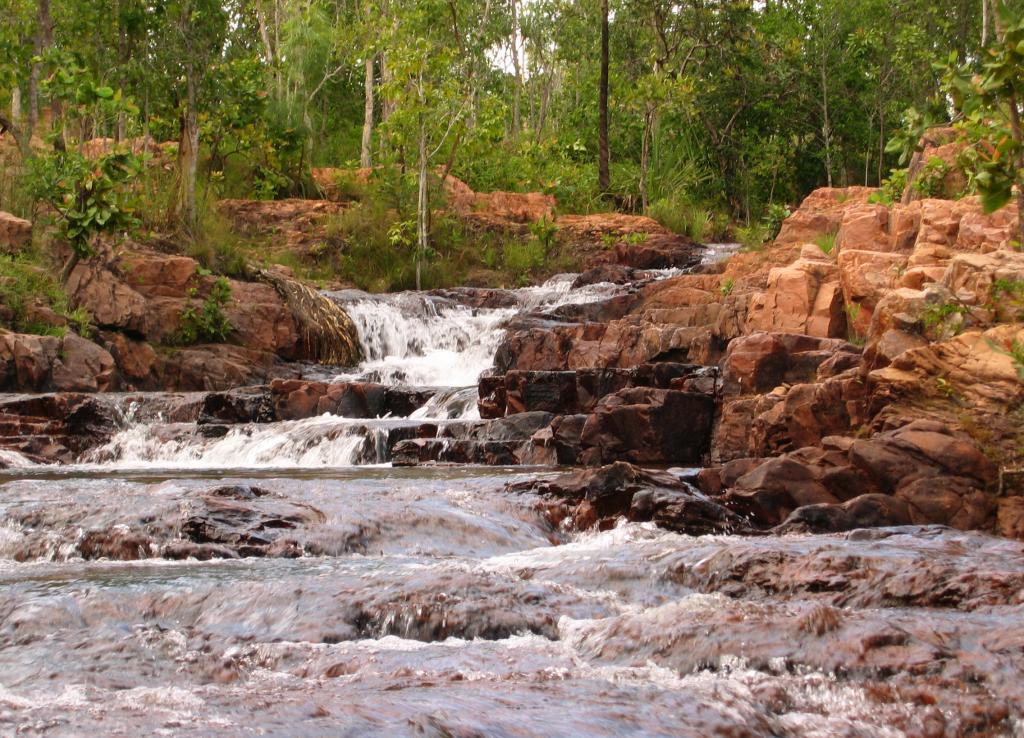
Litchfield National Park covers 1,500 square kilometres of sandstone plateau, monsoon rainforest, and tropical savannah about 130 kilometres south of Darwin. It is defined by its waterfalls — Florence, Wangi, Buley Rockhole, and Tolmer Falls among them — that drop from the Tabletop Range into clear plunge pools of varying size. Wangi Falls is large enough to swim comfortably in the dry season; Buley Rockhole offers a connected series of smaller pools that function as natural spa baths. The magnetic termite mounds near the park entrance form a separate spectacle entirely — blade-thin structures up to two metres tall, oriented precisely north-south by instinct, standing in their hundreds across open eucalyptus woodland. Few accessible parks in Australia are as immediately rewarding within a single day visit.
Indigenous Culture in the Top End — Country, Art and Living Tradition
The Northern Territory holds one of the world's oldest continuous living cultures. Darwin is surrounded by communities whose ancestors inhabited this landscape for at least 65,000 years, and that presence is felt throughout the city in its art galleries, museum collections, and guided cultural experiences. Bark painting, stone tool traditions, and bush tucker knowledge remain active practices rather than historical reconstructions. Cultural tours led by indigenous guides place the landscape in a framework that transforms what might otherwise seem like scenery into a layered, storied country — where every rock formation, bird species, and seasonal change carries accumulated meaning passed through countless generations. For many visitors, this context is the most enduring part of a Darwin port day.
Darwin City — Waterfront, Museums and the WWII Story
Darwin was bombed 64 times by Japanese forces in 1942–43 — a campaign that exceeded Pearl Harbor in terms of individual raids. The city wears this history thoroughly but lightly: the Museum and Art Gallery of the Northern Territory holds a permanent Cyclone Tracy exhibition alongside a significant collection of Aboriginal and Tiwi Islands art. The Darwin waterfront precinct sits along the Timor Sea with restaurants, a wave lagoon, and evening markets. The compact city centre — largely rebuilt after Cyclone Tracy destroyed 70% of its buildings in 1974 — is walkable within a few hours, offering a multicultural food scene and street-level character that reflects Southeast Asian and Pacific influences as much as mainland Australia.
Mindil Beach and Darwin's Sunset Market Culture
Mindil Beach Sunset Market runs on Thursday and Sunday evenings from April through October, drawing several thousand people to watch the sun drop into the Timor Sea while navigating food stalls representing more than 60 nationalities. The combination of Darwin's multicultural population and its geographic proximity to Southeast Asia produces a food culture that resists easy categorisation: laksa, barramundi, Vietnamese spring rolls, and buffalo burgers coexist within metres of each other. Outside market evenings, Mindil Beach itself is worth visiting for its distinctive northern light — the horizontal afternoon glow particular to tropical latitudes that photographers consistently respond to.
WWII Heritage — Oil Tunnels, Gun Emplacements and Military History
Darwin's wartime story is one of the least-known significant chapters in Australian history. The city endured more bombing raids than Pearl Harbor received in the entire war, and evidence of that period remains visible across the landscape. The WWII Oil Storage Tunnels — a network of underground passages built by the US Army Corps of Engineers in 1942 to protect fuel reserves — are open to visitors and provide one of the more unusual historical experiences in tropical Australia. East Point Military Museum contextualises the bombing raids and Darwin's role as an Allied staging base with original hardware and extensive archival material. The East Point reserve itself also offers views across Darwin Harbour.
Kakadu National Park — UNESCO World Heritage and Ancient Rock Art
Kakadu National Park is a UNESCO World Heritage Site combining one of the world's most significant collections of indigenous rock art with extraordinary wildlife habitat — floodplains, sandstone escarpment, and tropical woodland across nearly 20,000 square kilometres. It lies roughly three hours from Darwin by road, making it a serious commitment for a port day. The Ubirr and Nourlangie rock art sites are the primary visitor destinations, with paintings dating back thousands of years on open sandstone galleries. For many visitors travelling to northern Australia, Kakadu is the primary draw; Litchfield offers a more accessible alternative when port hours don't allow the full Kakadu commitment.
Darwin travel tips
Sun Protection Is Non-Negotiable in Darwin. Even in the dry season Darwin sits at a tropical latitude — temperatures regularly reach 30–34°C and UV levels are extreme. Apply SPF 50+ sunscreen before leaving the ship, carry at least 1.5 litres of water per person, and wear a wide-brimmed hat. Light, breathable clothing is appropriate; avoid synthetic fabrics that trap heat. The tropical sun is intense even under partial cloud cover.
Know the Swimming Rules in Crocodile Country. Saltwater crocodiles inhabit Darwin Harbour and the vast majority of Northern Territory waterways. In the dry season, the designated swimming areas at Litchfield — including Wangi Falls and Buley Rockhole — are regularly monitored and considered safe, but always follow posted signage on the day. Never enter any water that is not explicitly signed as safe. This rule applies without exception across the Top End.
Buying Indigenous Art — Look for Accredited Galleries. Darwin has a strong market for Aboriginal and Tiwi Islands art, but not all pieces sold in tourist retail are genuine or community-sourced. Look for galleries displaying the Indigenous Art Code certification, and ask whether the work originates from a community art centre. Purchasing through accredited channels returns revenue directly to artists and their communities — an important distinction in a region where art sales are a significant income source.
The Mindil Beach Market Operates on a Fixed Schedule. Mindil Beach Sunset Market runs Thursday and Sunday evenings from approximately April to October only. If your ship is in port on one of those evenings and departs late, this is one of the more memorable ways to spend the time. It does not operate on other days or during the wet season. Check the current calendar before building your day around it.
Darwin's Attractions Are More Spread Out Than They Appear. The city looks compact on a map, but key attractions — the waterfront precinct, the Smith Street city centre, the Museum and Art Gallery, and East Point — are spread across separate precincts that require bus travel between them. The Darwinbus network covers the main routes, but frequency is limited compared with larger Australian cities. Factor transit time into your planning rather than assuming everything is comfortably walkable.
Litchfield Requires a Genuine Full Day. Litchfield is 130 kilometres from Darwin — roughly 90 minutes each way by road — and the park itself warrants at least three hours to visit more than one waterfall or swimming area properly. Budget a minimum of six hours ashore to make the trip worthwhile, and ideally seven to eight. The park has no public transport link; access requires a vehicle or a pre-arranged excursion. Combining Litchfield with a city walkabout on the same day is possible but leaves little time for either.
Port Facts Every Cruiser Needs To Know
Darwin shore excursion FAQs
Litchfield National Park is approximately 130 kilometres from Darwin — around 90 minutes by road from the city, or slightly longer from the cruise terminal. It is a half-day to full-day commitment from the port. There is no public transport link to the park; access requires a vehicle or an organised group excursion.
The designated swimming areas at Litchfield — including Wangi Falls and Buley Rockhole — are regularly monitored during the dry season and are generally considered safe for swimming. Always follow posted signage on the day of your visit, as conditions and safety assessments can change. Never enter any water in the Top End that is not explicitly marked as safe for swimming.
Litchfield is smaller, approximately 90 minutes from Darwin, and centres on waterfalls, swimming holes, and termite mounds in a sandstone plateau setting. Kakadu is vastly larger (three hours from Darwin), a UNESCO World Heritage Site, and offers ancient rock art, diverse wildlife habitat, and extensive wetland systems. Kakadu requires a longer day or an overnight stay to appreciate properly; Litchfield is the more manageable choice for a port day.
Most cruise vessels call at Darwin during the dry season, from May to October, when weather is reliably clear, temperatures are warm but not oppressive, and national park access is unimpeded. The wet season (November to April) brings heavy rainfall, extreme humidity, and some road closures in parks — conditions that make outdoor activities significantly more challenging.
The central area around Smith Street Mall, the adjacent laneways, and the waterfront precinct is walkable within two to three hours. The city is not densely packed with traditional sightseeing landmarks, but the food scene, indigenous art galleries, and waterfront setting reward an unhurried pace. A bus is needed to reach the Museum and Art Gallery of the Northern Territory, which sits in the Fannie Bay area beyond comfortable walking distance from the centre.
The museum holds one of Australia's most significant collections of Aboriginal and Tiwi Islands art, alongside natural history exhibits focused on Top End species and marine life. Its Cyclone Tracy gallery — documenting the 1974 storm that destroyed most of Darwin in a single Christmas Eve — is both historically significant and emotionally powerful. Entry to the museum is free, and it is accessible by bus from the city centre.
Kakadu is three hours from Darwin by road, meaning a same-day visit requires at least 10–12 hours ashore to allow six hours of round-trip driving plus meaningful time in the park. Independent day-tripping to Kakadu is achievable but tight; an organised excursion with coordinated logistics is the more practical option. For many visitors, Litchfield is the better choice when port time is limited.
Darwin's Museum and Art Gallery holds a substantial indigenous art collection, and the city centre has several Aboriginal-owned and operated galleries selling work from community art centres. Cultural walking tours with Larrakia traditional owners operate through parts of the dry season, and the waterfront and park areas carry interpretive signage with indigenous heritage content. The broader Top End's indigenous experiences are most accessible through guided excursions to Litchfield and Kakadu with indigenous guiding components.
Darwin was bombed 64 times by Japanese forces between 1942 and 1943 — the largest foreign attack ever on Australian soil, exceeding Pearl Harbor in number of individual raids. The city subsequently served as a major Allied staging base for Pacific operations. In December 1974, Cyclone Tracy destroyed approximately 70% of Darwin's buildings in a single night, leading to a near-complete reconstruction. Both events are documented at specific heritage sites and museums across the city.
Pack SPF 50+ sunscreen, a wide-brimmed hat, insect repellent (particularly for park visits), and at least 1.5 litres of water per person — more if you are walking in Litchfield. Light, breathable clothing suits the tropical climate; closed-toe shoes or sturdy sandals are recommended for national park walks. Bring a swimsuit and a dry bag if you plan to swim at Litchfield's designated areas.
Filters
Select a filter to refine results.
Tour Type
Tour Activity
 Cart
Cart
 USD
USD GBP
GBP AUD
AUD EUR
EUR CAD
CAD