



Tours in Yorkeys Knob


Cruising to Yorkeys Knob in a group?
Skip the crowded ship excursion bus. One dedicated planner will design a private shore experience around exactly what your group wants — coordinated from first enquiry to the moment you're back on board. More memorable, more flexible, and more affordable than you might expect. Spend less time organising, more time enjoying.
Explore Group Travel →Cruising to Yorkeys Knob
Yorkeys Knob is a low-key beachside suburb on the northern fringe of Cairns, set against a backdrop of rainforest-covered mountains where tropical North Queensland's two great natural wonders converge: the Great Barrier Reef offshore and the ancient Daintree Rainforest just up the coast. The community itself is quiet and residential, centred on a sheltered marina and a long sandy beach on Trinity Bay. Its value as a cruise port lies in what it connects visitors to — the outer reef, the Cairns esplanade, the Kuranda rainforest village in the mountains above town, and some of Australia's most distinctive wildlife. The climate is tropical, with a warm, humid character year-round and a distinct wet season between November and April that brings heavy rainfall and marine stingers. Even outside ideal conditions, the reef and the rainforest together offer a day ashore of genuine natural substance, rarely matched elsewhere on Pacific cruise itineraries.
Top things to do in Yorkeys Knob on a cruise stopover
The Great Barrier Reef: Snorkeling and Glass-Bottom Exploration
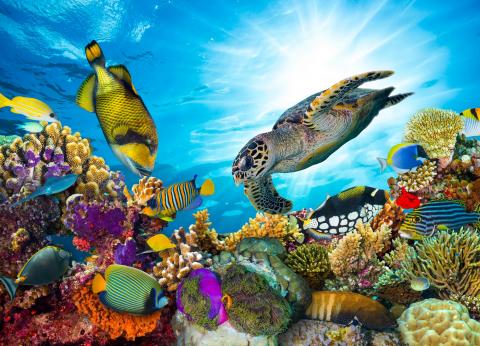
The Great Barrier Reef is the world's largest coral reef system, stretching more than 2,300 kilometres along the Queensland coast and visible from space. From the Cairns area, the outer reef is accessible by fast catamaran in approximately 90 minutes, and the experience of entering the water above it is unlike anything on most cruise itineraries. Outer reef platforms in this region typically offer visibility of 15 to 20 metres in good conditions, with coral formations supporting extraordinary diversity — sea turtles, reef sharks, giant clams, manta rays, and hundreds of fish species. Non-swimmers can participate through glass-bottom boat viewing or semi-submersible vessels. Conditions and reef health vary by site and season, but the outer reef platforms near Cairns represent some of the most accessible and well-managed reef experiences available anywhere on the system.
Daintree Rainforest and Cape Tribulation
North of Cairns, the Daintree Rainforest is the oldest continuously surviving tropical rainforest on the planet — estimated at 180 million years old — and one of the only places on Earth where two UNESCO World Heritage ecosystems meet at the coast. At Cape Tribulation, ancient rainforest tumbles directly onto a beach fringed by coral reef, creating a landscape of unusual natural drama. The region supports species found nowhere else, including the southern cassowary, Boyd's forest dragon, and hundreds of endemic plant and animal species. Day trips from Cairns typically cross the Daintree River by cable ferry and reach the cape via the sealed coastal road. The journey takes about two hours each way from Cairns, making it a full-day commitment from the port — but a genuinely singular natural experience that rewards the travel time.
Kuranda: A Rainforest Village in the Mountains Above Cairns
Perched in the rainforest-covered Atherton Tablelands above Cairns, the village of Kuranda is reached via two of Australia's most scenic transport experiences: the historic Kuranda Scenic Railway and the Skyrail Rainforest Cableway. The train follows a heritage rail line built in the 1880s, climbing through tunnels, across bridges, and past waterfalls on a 1.5-hour journey from Cairns. The Skyrail offers a contrasting perspective — a gondola ride over the rainforest canopy with two stops at stations offering walking trails and interpretive displays. Kuranda itself is a compact village with craft markets, wildlife sanctuaries housing local fauna, and forest walking tracks. Many visitors combine the train one way and Skyrail the other for a complete loop. The experience provides memorable contrast to a reef trip, showcasing the Wet Tropics' terrestrial biodiversity.
Cairns Esplanade and City Centre
Cairns city centre is a 35–45 minute bus journey from Yorkeys Knob and provides the most accessible urban experience on a day ashore. The Esplanade is the heart of visitor activity — a landscaped waterfront boardwalk running along Trinity Bay, with a large artificial swimming lagoon that serves as the city's main swimming area (the bay itself has mudflats and is not swimmable). The lagoon is free, open to the public, and surrounded by parkland. Cairns city offers reef-focused tour operators, markets, shopping, and a wide range of restaurants serving fresh barramundi, Southeast Asian cuisine, and tropical produce. The Cairns Regional Gallery and a cluster of Aboriginal art galleries add cultural depth for visitors not heading to the reef. The city's overall character is tropical, relaxed, and oriented around outdoor activity and nature access.
Palm Cove and the Northern Beaches
Between Yorkeys Knob and the Daintree lies a string of northern beach communities — Trinity Beach, Clifton Beach, and Palm Cove among them — that offer a quieter, more resort-oriented alternative to Cairns city. Palm Cove in particular has a sheltered, palm-lined esplanade fronting a calm beach with stinger net enclosures, a cluster of good restaurants, and mountain views framing the beachfront. Unlike the reef-focused atmosphere of Cairns, Palm Cove rewards visitors seeking a slower day with good food and an attractive beach setting. It sits roughly 25 minutes from Yorkeys Knob by road and provides a genuine sense of tropical Far North Queensland without requiring a full-day excursion to the reef or the rainforest. A morning here followed by a leisurely lunch makes a satisfying alternative for visitors less drawn to active outdoor experiences.
Tropical Wildlife Encounters in Far North Queensland
Far North Queensland supports wildlife found nowhere else on Earth, and visitors to the Cairns region can encounter it in both natural and managed settings. The saltwater crocodile — the world's largest living reptile — inhabits rivers, estuaries, and mangroves throughout the tropical north, and several facilities north of Cairns offer close observation. Wildlife sanctuaries in and around Cairns house cassowaries, tree kangaroos, koalas, and native birds, providing manageable introductions to Australian fauna without extended travel. For those heading to the Daintree, quiet early-morning movement on forest tracks may yield sightings of cassowaries, forest dragons, and an extraordinary range of endemic bird species. The region's birdlife alone — dozens of species found nowhere else — draws dedicated wildlife observers from around the world and rewards even casual attention during any outdoor activity.
Yorkeys Knob travel tips
Stinger Season Affects Open-Water Swimming Between November and May. Box jellyfish and Irukandji jellyfish inhabit nearshore tropical waters during the wet season months. During this period, swimming outside stinger net enclosures or without a full-body lycra stinger suit is not recommended. Reputable reef operators provide stinger suits for all snorkelers as standard practice year-round. The Cairns Esplanade lagoon is safe to swim in at any time of year as it uses enclosed, filtered water.
Book Reef Tours Well Before Your Ship Departs. Outer reef platforms from Cairns have daily visitor limits, and popular vessels fill quickly on cruise ship arrival days — particularly during the dry season peak from June through September. Booking well in advance is advisable. Note that reef trips depart from the Cairns waterfront marina, not from Yorkeys Knob itself, so factor in travel time from the port to the departure point when planning your morning schedule.
UV Levels in North Queensland Are Among the Highest in the World. Australia's tropical north receives intense solar radiation year-round, and water reflection on the reef amplifies the risk even on overcast days. SPF 50+ reef-safe sunscreen, a hat, and UV-protective clothing are standard equipment for any outdoor activity here. Most reef operators request or require reef-safe mineral sunscreen to protect the coral — check before you go and pack accordingly.
Choose One Major Destination — Combining Multiple Is Rarely Feasible. The distances between Yorkeys Knob, Cairns, Kuranda, Daintree, and the outer reef make it difficult to meaningfully visit more than one major destination in a standard cruise day ashore. A full reef trip typically occupies 6–7 hours including travel. Kuranda via the Scenic Railway is a half-day at minimum. Select the experience that matters most and allow it proper time rather than attempting to rush between multiple stops.
The Cairns Esplanade Lagoon Is Free and Open to All. If time ashore is limited or a reef trip is not on the agenda, the Cairns Esplanade Lagoon provides a genuine tropical swimming experience at no cost. The lagoon is filtered and enclosed, sitting on the waterfront in central Cairns, and is rarely overcrowded on weekday mornings. The surrounding parkland has shaded seating and is a good place to take stock of the day, eat lunch, or simply watch local life.
Do Not Enter Natural Waterways — Saltwater Crocodiles Are Present Year-Round. Saltwater crocodiles inhabit rivers, estuaries, mangroves, and some beaches throughout Far North Queensland and are not confined to wildlife parks. Warning signs are legally required and should be taken seriously. Resort pools and the Cairns Esplanade lagoon are safe; natural waterways, beaches without specific clearing, and estuarine areas are not — regardless of time of year or how calm conditions appear.
Port Facts Every Cruiser Needs To Know
Yorkeys Knob shore excursion FAQs
Cruise ships calling at Yorkeys Knob typically anchor or berth near the local marina area on the northern fringe of Cairns. The immediate area is a quiet residential community with a beach, a small marina, and limited visitor facilities. Most cruise visitors transfer to Cairns city or board reef and rainforest tours that collect from near the port area.
Cairns city centre is approximately 18 kilometres south of Yorkeys Knob, a journey of roughly 35–45 minutes by road depending on traffic. Local Sunbus services run the route, and the Cairns waterfront Esplanade and city centre are easy to navigate on foot once you arrive. Most organised tours also collect passengers from or near the port area.
For most cruise visitors, the outer reef is one of the most memorable natural experiences available on a Pacific or Australian itinerary. The outer reef platforms accessible from Cairns offer high coral diversity, excellent snorkeling in good conditions, and the chance to encounter sea turtles, reef sharks, and hundreds of species. Non-swimmers can participate via glass-bottom boat or semi-submersible viewing, making it accessible to most visitors.
The dry season — May through October — offers the best combination of calm seas, good water visibility, lower humidity, and minimal rainfall. The wet season (November through April) brings rougher conditions, reduced clarity in some inshore areas, and the presence of marine stingers. The outer reef remains accessible year-round, but dry season visits are generally more comfortable and predictable.
Yorkeys Knob Beach is a long sandy beach on Trinity Bay and is pleasant for walking year-round. Swimming is possible but subject to stinger risks during the wet season (November through May), when using a stinger net enclosure is strongly recommended. Year-round, the Cairns Esplanade lagoon is a more reliable and fully enclosed alternative for swimming.
Yes — Cairns offers several good alternatives. The Esplanade Lagoon is a free enclosed swimming area on the waterfront. The Cairns Regional Gallery, Night Markets, and Rusty's Markets (Fridays through Sundays) provide shopping and local flavour. Kuranda village, accessible by scenic train or gondola, is a half-day rainforest experience that doesn't require a full reef commitment.
Sunbus operates regular services along the northern beaches corridor between Yorkeys Knob and Cairns city centre, with the journey taking approximately 35–45 minutes. Services run at intervals throughout the day, and the Cairns city centre is flat and straightforward to walk once you arrive. Check current Sunbus timetables before disembarking as frequency varies by time of day.
Yes, but it requires most of the day. The Daintree and Cape Tribulation are approximately two hours from Cairns by road, meaning a round-trip leaves limited time at the destination. Most organised day tours from Cairns to the Daintree run 9–10 hours total. Visitors with fewer than 8 hours ashore may find the journey too tight; those with a longer port stay will find it one of Australia's most distinctive natural experiences.
The Cairns area sits within one of Australia's most biodiverse regions. Saltwater crocodiles inhabit rivers and estuaries throughout the tropical north. Cassowaries — large, helmet-crested flightless birds — are occasionally spotted in the Daintree rainforest. On the reef, sea turtles, reef sharks, manta rays, and thousands of fish species are regularly encountered. The region's birdlife is exceptional, with many endemic species visible even around Cairns itself.
Irukandji jellyfish, a small but potent stinger, can be present at the outer reef year-round, and box jellyfish are found in inshore waters during the wet season. Reputable reef operators provide full-body lycra stinger suits for all snorkelers as standard practice, significantly reducing risk. Visitors should always wear the suits provided and follow guidance from reef guides and platform lifeguards.
Filters
Select a filter to refine results.
Tour Type
Tour Activity
 Cart
Cart
 USD
USD GBP
GBP AUD
AUD EUR
EUR CAD
CAD