



Tours in Antalya


Cruising to Antalya in a group?
Skip the crowded ship excursion bus. One dedicated planner will design a private shore experience around exactly what your group wants — coordinated from first enquiry to the moment you're back on board. More memorable, more flexible, and more affordable than you might expect. Spend less time organising, more time enjoying.
Explore Group Travel →Cruising to Antalya
Antalya is Turkey's principal Mediterranean resort and cruise port, set on a sweeping bay framed by the Taurus Mountains. The city itself preserves a beautifully restored Ottoman old quarter — Kaleiçi — within Roman and Hellenistic walls, while the surrounding region contains a remarkable concentration of ancient sites. Perge, Aspendos, and Termessos rank among Turkey's most significant archaeological destinations and are all within a 50 km radius of the port. The Düden Waterfalls descend from the Taurus Mountains, with the lower falls plunging directly into the Mediterranean. Whether the focus is archaeology, old-city exploration, or natural landscapes, Antalya delivers one of the richest single-port days available in the eastern Mediterranean.
Top things to do in Antalya on a cruise stopover
Kaleiçi — Antalya's Ancient Old Quarter
Enclosed within Roman and Hellenistic walls, Antalya's Kaleiçi district is one of the finest preserved historic city centres on Turkey's Mediterranean coast. Narrow cobbled lanes wind past Ottoman mansions, Byzantine church ruins, and Seljuk minarets, all overlooking the ancient Roman harbour below. Hadrian's Gate — a triple-arched marble triumphal arch built to mark Emperor Hadrian's visit in 130 AD — stands at the main entrance to the old town, its carved stonework remarkably intact after nearly 1,900 years. The harbour district is lined with restaurants and cafés set in restored Ottoman buildings, making Kaleiçi both an archaeological and a living neighbourhood well worth extended exploration.
Perge — A Greco-Roman City of Extraordinary Scale
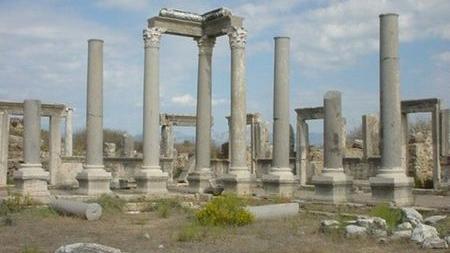
Located 18 km east of Antalya, Perge is one of the most extensively excavated ancient cities in Turkey. Founded in the Hellenistic period and reaching its zenith under Roman rule, the site preserves colonnaded avenues, a 12,000-seat stadium, a large theatre, elaborate bath complexes, and an agora spread across a substantial area. The scale of Perge gives a vivid impression of daily life in a prosperous Roman provincial city. Artefacts recovered from the site — including exceptional Hellenistic sculpture — are displayed in Antalya's Archaeological Museum. A full visit warrants 2–3 hours to cover the site's main areas meaningfully.
Aspendos — The Finest Preserved Roman Theatre in Existence
The Roman theatre at Aspendos, built during the reign of Marcus Aurelius in the 2nd century AD, is considered the best-preserved ancient theatre anywhere in the world. Unlike most Roman theatres, Aspendos retains its full stage building (scaenae frons) to near-original height, creating an architectural ensemble of extraordinary completeness. The theatre seated approximately 15,000 spectators and remains in use today for the annual Aspendos Opera and Ballet Festival. The site also encompasses a substantial Roman aqueduct system visible from the approach road. Located 47 km east of Antalya, Aspendos is the centrepiece of any full-day archaeological excursion from the port.
Termessos — The Unconquered Mountain City
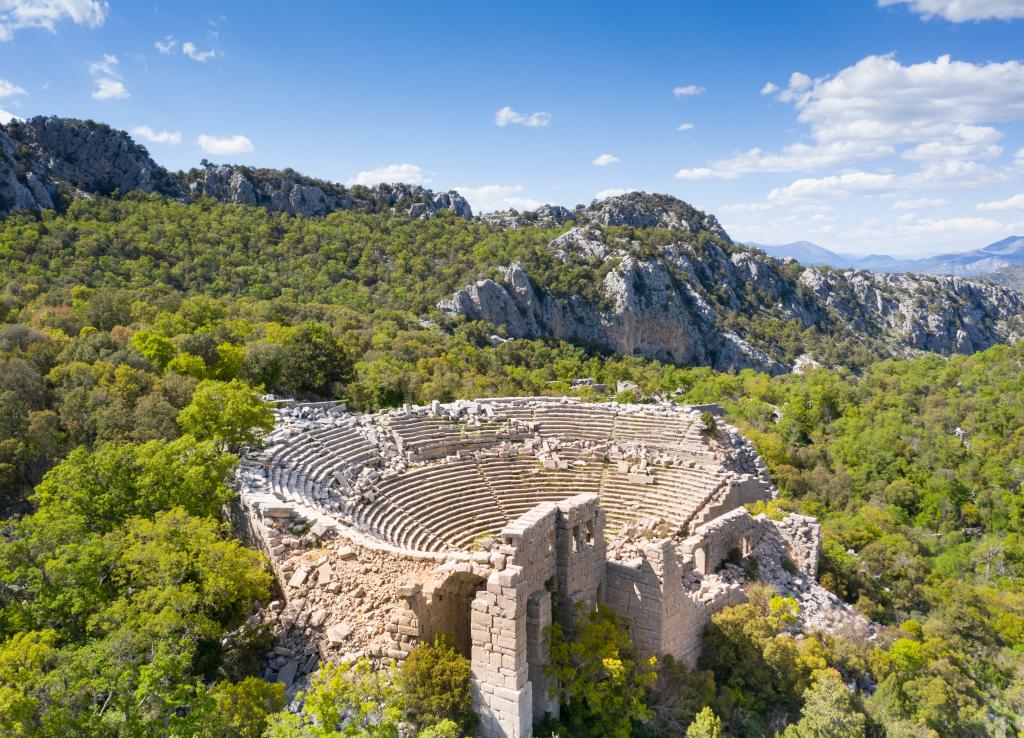
Termessos occupies a commanding position in the western Taurus Mountains at around 1,000 metres elevation, 34 km northwest of Antalya. When Alexander the Great assessed the city's fortifications in 333 BC, he concluded that besieging it was impractical and withdrew — an assessment the Termessians recorded with considerable pride. The ruins spread across pine-forested terrain within a national park: a dramatic theatre looks out over mountain valleys, a colonnaded street and gymnasium retain substantial standing walls, and an extensive necropolis of rock-cut tombs occupies the ridgelines. Reaching the main ruins involves a 20–30 minute uphill walk from the entrance on rocky terrain.
Düden Waterfalls — Where Taurus Mountains Meet the Sea
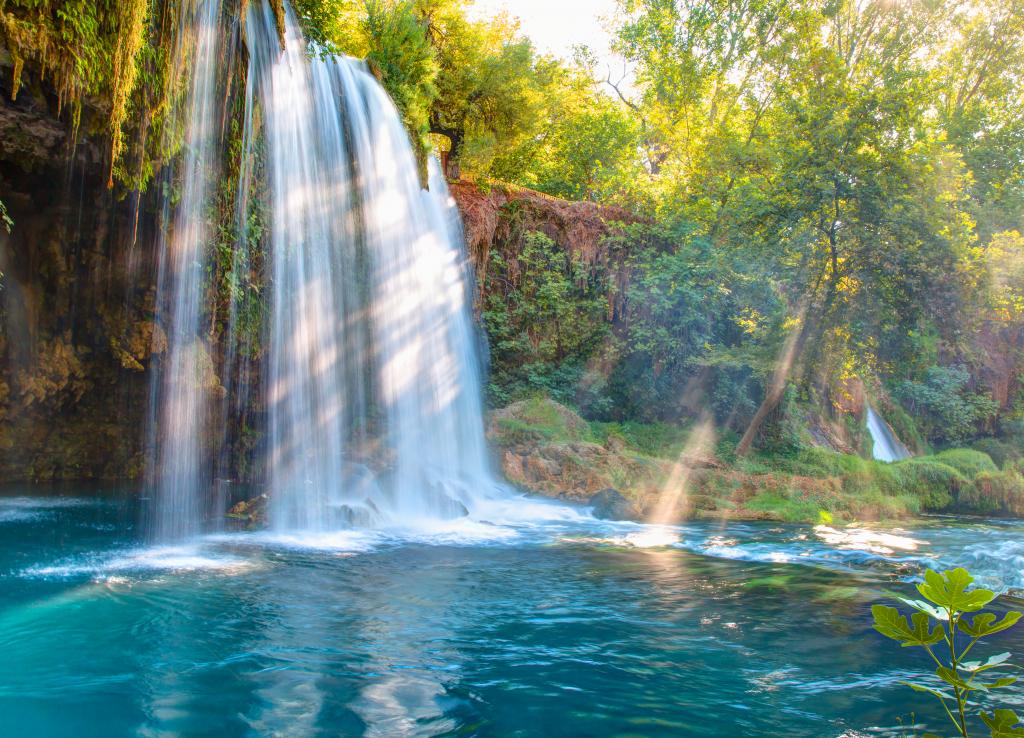
The Düden River descends from the Taurus Mountains before reaching the Mediterranean in two dramatic waterfall sequences. The Upper Düden Falls, 12 km northeast of Antalya's centre, cascade through a wooded gorge and are accessible via a short walk through parkland. The Lower Düden Falls are more theatrically situated, plunging directly from clifftops into the sea — viewable from above at a clifftop park or from the water below. The two fall sites are commonly combined with Kaleiçi old town sightseeing in a single half-day excursion. Spring visits (March–May), when Taurus snowmelt swells the river, offer the most impressive water volumes.
Antalya Full Day — Perge, Aspendos, and the Old City
Antalya's combination of an accessible, walkable old city and some of the Mediterranean's finest ancient ruins within 50 km makes it one of the most substantive archaeological day-tour ports in the eastern Mediterranean. A structured full-day excursion combining the colonnaded streets of Perge, the towering Roman theatre at Aspendos, and time exploring Kaleiçi's Ottoman lanes and Roman harbour provides an overview of over 2,500 years of continuous settlement along this stretch of coast — from Hellenistic foundation through Roman prosperity, Byzantine continuity, and Ottoman revival. Few ports offer this depth of archaeological variety within a single day.
Antalya travel tips
Visit Archaeological Sites in the Morning. Perge, Aspendos, and Termessos are largely exposed sites with minimal shade. In July and August, temperatures regularly exceed 35°C by mid-morning and can reach 40°C at midday. Arriving at opening time — typically 8:00–8:30 AM — makes a significant difference to comfort and energy levels, particularly at Termessos where the approach involves a sustained uphill walk. Carry at least one litre of water per person and apply sun protection before leaving the ship.
Footwear and Clothing for Termessos. Termessos is physically demanding compared to Perge or Aspendos. The path from the ticket gate to the main ruins involves a 20–30 minute steep climb on an uneven rocky trail, and the ruins spread across wide, uneven terrain. Sturdy closed-toe shoes with grip are required — sandals or flat-soled shoes are not suitable. The site sits at around 1,000 metres elevation, making it noticeably cooler than the coast even in summer, and afternoon winds can be significant.
The Antalya Archaeological Museum Contextualises the Sites. The Antalya Archaeological Museum (Antalya Müzesi) houses one of Turkey's finest collections of Hellenistic and Roman sculpture, with major artefacts recovered from Perge, Aspendos, and surrounding sites. Visiting the museum either before or after the ruins provides context that dramatically enriches the site experiences — particularly the Perge sculpture galleries, which display works that were in situ in the city's baths and public spaces. The museum is located a short distance west of Kaleiçi and is a worthwhile addition to any city-focused itinerary.
Dress Modestly for Kaleiçi's Active Religious Sites. Kaleiçi contains several active mosques and religious sites alongside its ancient monuments. When visiting mosques — including the Yivli Minaret complex — women should carry a scarf to cover their hair and shoulders, and both men and women should wear clothing that covers the knees. Shoes must be removed before entering mosque interiors. The old town's tourist restaurants and café terraces have no dress restrictions, but modest attire is respectful throughout the historic quarter.
Currency Exchange in Antalya. Currency exchange offices (döviz bürosu) in Antalya's city centre and tourist areas offer competitive rates for Turkish Lira. Euros and US dollars are informally accepted in many tourist-facing shops and restaurants, though change will typically be returned in Lira at the vendor's rate. Having some Turkish Lira available is useful for street food, local cafés, market stalls, and smaller purchases. ATMs are widely distributed throughout the city centre and at the port.
See the Lower Düden Falls from the Water. The Lower Düden Falls — where the river plunges directly from coastal cliffs into the Mediterranean — can be viewed both from the clifftop park above and from boat trips along the coast that pass the base of the falls. The water-level view is arguably more dramatic. If the falls are part of an excursion itinerary, confirm in advance which vantage point is included. The falls are most impressive in spring (March to May) when river flow is at its peak from Taurus snowmelt.
Port Facts Every Cruiser Needs To Know
Antalya shore excursion FAQs
Antalya's cruise terminal is approximately 12 km from Kaleiçi old town and the city centre. The journey takes 20–30 minutes depending on traffic. The tram serves central city routes, though most visitors to the main archaeological sites use organised transport given the distances involved.
Yes. A full-day excursion can cover both Perge (18 km east of Antalya) and Aspendos (47 km east), though each site warrants 2–3 hours for a meaningful visit. Adding city sightseeing in Kaleiçi to this combination is very ambitious for an 8-hour day. Those with strong archaeological focus should consider the two ruins as the primary day's content.
Termessos is not suitable for visitors with mobility limitations. The path from the entrance to the main theatre involves a sustained 20–30 minute uphill climb on rocky terrain, and the ruins spread across uneven mountain ground. Sturdy footwear is essential. For visitors comfortable with moderate hiking, the physical effort is rewarded by dramatically atmospheric ruins and views that far exceed those of the more accessible sites.
Aspendos is widely considered the most visually striking single site, thanks to its extraordinary Roman theatre — the best preserved in the world. Perge offers greater variety across a larger site with a stadium, colonnaded streets, and bath complexes. Termessos provides the most dramatic setting and atmosphere. The right choice depends on the visitor's interests, physical fitness, and available time ashore.
Tap water in Antalya is heavily treated and most residents and visitors drink bottled water instead. Bottled water is widely available, inexpensive, and recommended, particularly during summer heat when hydration is important during archaeological site visits. Carry adequate water for site visits as facilities can be limited.
Turkish Lira (TRY) is the official currency and most useful for street food, local restaurants, and market purchases. Euros and US dollars are accepted informally in tourist areas, though change is typically returned in Lira. Currency exchange offices in the city centre offer competitive rates. Major credit cards are accepted in hotels and larger restaurants.
Hadrian's Gate (Hadriyanüs Kapısı) is a Roman triumphal arch built in 130 AD to mark Emperor Hadrian's official visit to the city. It stands at the main entrance to Kaleiçi old town and is one of the best-preserved Roman gates in Turkey, retaining three arched bays with elaborate carved stonework. It remains the most iconic landmark on Antalya's ancient streetscape.
The Düden Waterfalls are most impressive in spring (March to May), when snowmelt from the Taurus Mountains swells the river to its maximum flow. By late summer (August–September), water levels drop noticeably. Cruise guests visiting in spring will encounter the most dramatic waterfall conditions, while summer visitors will see a reduced but still scenic flow.
Kaleiçi can be explored meaningfully in 2–3 hours at a comfortable walking pace. The main sights — Hadrian's Gate, the Roman harbour, the Yivli Minaret, Kesik Minaret ruins, and the Ottoman mansion lanes — are compact and interconnected. Allow extra time for the Archaeological Museum (a 20-minute walk west of the old town) if archaeology is a priority.
When Alexander the Great arrived at Termessos in 333 BC, he assessed the city's position — perched on steep mountain terrain at around 1,000 metres elevation with strong natural defences on all sides — and concluded that the cost of a siege outweighed the strategic benefit. He reportedly called it an 'eagle's nest' and withdrew. The city remained unconquered and retained its independence throughout the Hellenistic and Roman periods, which is a primary reason it is sometimes described as the city that defeated Alexander.
Filters
Select a filter to refine results.
Tour Type
Tour Activity
 Cart
Cart
 USD
USD GBP
GBP AUD
AUD EUR
EUR CAD
CAD