



Tours in Haugesund
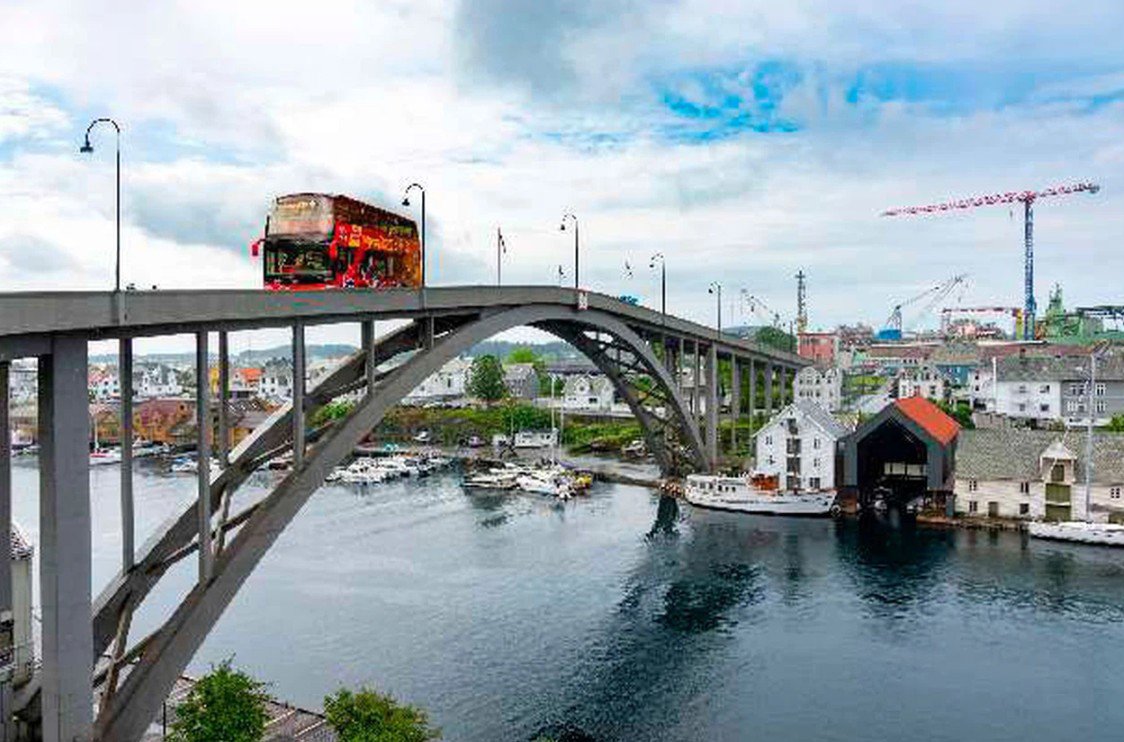


Cruising to Haugesund in a group?
Skip the crowded ship excursion bus. One dedicated planner will design a private shore experience around exactly what your group wants — coordinated from first enquiry to the moment you're back on board. More memorable, more flexible, and more affordable than you might expect. Spend less time organising, more time enjoying.
Explore Group Travel →Cruising to Haugesund
Haugesund sits on the Karmsund strait in western Norway, roughly halfway between Bergen and Stavanger, and carries a significance disproportionate to its modest size. It was here, according to Norse tradition, that King Harald Fairhair unified Norway into a single kingdom in 872 AD — a claim commemorated by the towering Haraldshaugen national monument just outside the city centre. For visitors arriving by cruise ship, this historical weight combines with a thoroughly modern and welcoming Norwegian town to create a port day that feels genuinely authentic rather than curated for tourists.
The heart of the city is defined by the Smedasundet canal, a narrow waterway flanked by colourful wooden buildings, pavement cafés, and a lively pedestrian promenade. Locals stroll here in the long northern evenings, and the atmosphere is relaxed and convivial. Haugesund's maritime past — built largely on the herring trade, which once made the city famous across Europe — is woven into the fabric of the streetscape, with preserved merchant houses and a proud harbour front.
Despite being one of the less-visited Norwegian cruise ports, Haugesund offers a genuinely satisfying day ashore. The city is small enough to feel navigable and unhurried, yet substantial enough to reward exploration. A hop-on hop-off sightseeing service links the key landmarks, making it straightforward to take in both the historical highlights and the everyday pleasures of Norwegian coastal life.
Cruise passengers who simply want to wander will find Haraldsgata, the main pedestrian shopping street, lined with independent shops and good coffee. Those drawn to history can follow the Haraldshaugen monument trail. And those who want nothing more than to sit beside the canal with a plate of locally cured fish and watch Norwegian life go by will find Haugesund entirely obliging.
Top things to do in Haugesund on a cruise stopover
Haraldshaugen: The Birthplace of a Nation
Haugesund's most significant landmark is Haraldshaugen, the national monument erected in 1872 to mark the millennium of Norway's unification under King Harald Fairhair. The centrepiece is a tall granite obelisk surrounded by 29 smaller stones, each representing a chieftain who fought at the decisive Battle of Hafrsfjord in 872 AD. The monument stands on a hilltop just north of the city centre and is a stop on the hop-on hop-off sightseeing route. The site carries genuine historical weight — this is where Norwegians commemorate the founding of their nation — and the views across the Karmsund strait and surrounding landscape are considerable. Even without deep knowledge of Norse history, the scale and solemnity of the memorial make it one of the most memorable stops in any Norwegian port.
Smedasundet Canal: The Living Heart of the City
The Smedasundet canal runs through central Haugesund, flanked by preserved 19th-century merchant buildings and lively cafés and restaurants. The canal-side promenade is where local life plays out most vividly — morning coffee drinkers, lunchtime strollers, and evening crowds fill the waterside terraces throughout summer. The colourful painted facades are distinctly Norwegian in character, and their reflection in the still water makes for an immediately photogenic scene. This is Haugesund at its most relaxed, and it rewards slow exploration rather than a quick pass-through. The hop-on hop-off sightseeing circuit passes through this central area, making it easy to alight and spend time at leisure.
Haraldsgata: Haugesund's Pedestrian Main Street
Haraldsgata is the main pedestrian thoroughfare through Haugesund's city centre, running parallel to the canal and connecting the harbour area with the upper part of town. Unlike the souvenir-heavy main streets of some Norwegian tourist ports, Haraldsgata is primarily a functioning Norwegian high street with local shops, bakeries, bookshops, and independent retailers alongside well-regarded cafés. It is ideal for browsing without a specific agenda. The street is served by the hop-on hop-off route and provides a natural spine for exploring the surrounding area on foot. Those interested in Norwegian design and craft will find interesting options among the independent stores, and the bakeries are worth a stop for traditional Norwegian pastries mid-morning.
The Herring Heritage: A City Built on Fish
Haugesund's prosperity was built almost entirely on herring. From the mid-19th century, vast shoals of Atlantic herring were netted in the surrounding waters, salted, and exported across Europe — a trade that made 'Hauga sild' a recognised brand from Britain to the Mediterranean. The city's elegant merchant houses, ornate church, and ambitious civic buildings all reflect the wealth generated by fish. This history is embedded in the city's identity and visible throughout the centre. The harbour front retains the character of a working fishing port, and local restaurants still celebrate the herring tradition. Understanding this context transforms a walk through Haugesund from a pleasant stroll into a genuine encounter with Norwegian economic and social history.
Haugesund's Harbour Front and Maritime Character
The harbour area is both the arrival point for cruise visitors and a destination in its own right. Fishing vessels, leisure craft, and coastal ferries share the quays, giving the harbour an authentic working character that contrasts pleasantly with more commercialised Norwegian ports. A walk along the waterfront from the cruise terminal to the canal mouth takes in the full sweep of the city's relationship with the sea: historic boathouses, modern marina facilities, and the Karmsund strait stretching towards the island of Karmøy. The harbour is served by the hop-on hop-off bus and is the natural starting and ending point for a self-guided walking tour of the city centre.
Vår Frelsers kirke: Haugesund's Landmark Church
The Church of Our Saviour (Vår Frelsers kirke) is Haugesund's most architecturally prominent building — a large neo-Gothic church that dominates the city skyline and reflects the confidence of the herring-era prosperity that funded its construction in the late 19th century. The interior is notable for its scale, fine woodwork, and quality stained glass. The church sits at the upper end of the city centre and is a natural landmark on any walking tour. The hop-on hop-off sightseeing route passes through the city centre area, making it easily accessible. The surrounding neighbourhood, with its well-preserved historic buildings and quiet residential streets, gives a more intimate sense of everyday Haugesund.
Haugesund travel tips
Start at the Canal, Not the Ship. The Smedasundet canal is just a few minutes' walk from the cruise berth and is far the most atmospheric part of the city. Rather than heading straight to a specific sight, begin your day with a slow walk along the canal from south to north, taking in the buildings, café terraces, and the pace of Norwegian morning life. This gives you a feel for the city before committing to any direction. The canal promenade is one of the finest things Haugesund has to offer, and the hop-on hop-off bus stop nearby provides a convenient starting point for a more structured sightseeing circuit afterwards.
The Monument is Worth the Effort. Haraldshaugen sits slightly outside the immediate city centre and some visitors skip it in favour of staying near the canal and shops. This is a mistake. The monument is the entire historical reason Haugesund matters on the Norwegian national stage, and seeing it in person — with its solemnity, its scale, and its views — provides genuine context for everything else you see in the city. The hop-on hop-off sightseeing bus serves the monument, so there is no need to walk the full distance. Allow at least 30 minutes at the site to appreciate it properly.
Norwegian Bakeries Are Not Optional. A good Norwegian bakery (bakeri) is one of the quiet pleasures of any Norwegian port day, and Haugesund has several worth seeking out along Haraldsgata and the surrounding streets. Norwegian cardamom buns (skillingsbolle), cinnamon twists (kanelbolle), and freshly baked rye bread are consistently excellent and remarkably affordable by Norwegian standards. Picking up something from a local bakery mid-morning, rather than eating aboard or at a tourist-facing restaurant, is both cheaper and far more in keeping with how Norwegians actually live. Look for queues of locals as a reliable quality indicator.
Pack a Layer Even in Summer. Western Norway's weather is famously changeable. Even in July and August, a bright morning can turn breezy and damp within an hour, particularly near the water. A light waterproof jacket takes up minimal space and eliminates the risk of a sudden shower derailing your plans. The long summer daylight also means UV levels can be surprisingly high even when the sky appears overcast — sunscreen is worth applying regardless of how the day looks at breakfast. Comfortable walking shoes matter too: cobblestones near the historic harbour area can be uneven.
Photography: The Canal at Golden Hour. Haugesund's most photogenic hour is the long northern golden hour that stretches through late afternoon and early evening in summer. The reflected light on the Smedasundet canal, with coloured building facades doubled in the still water, provides exceptional material. If your ship departs late enough to allow a late-afternoon return to the canal, the photographic reward is considerably better than mid-morning. Haraldshaugen photographs best in direct sunlight with the Karmsund strait visible in the background — aim for mid-morning when the light falls from the right direction.
Cards Are King — But Watch the Currency Setting. Norway is one of the most cashless societies in the world, and Haugesund is no exception. Virtually every business accepts card payment. There is generally no need to carry Norwegian Krone in cash. However, if paying by a non-European bank card, be aware that dynamic currency conversion (DCC) — where the terminal offers to charge you in your home currency — almost always produces a worse rate. Always choose to pay in NOK and let your own bank handle the conversion.
Port Facts Every Cruiser Needs To Know
Haugesund shore excursion FAQs
Haugesund is a docking port. Cruise ships berth directly at the city quay in the centre of town, and passengers walk off the ship into the heart of the city. No tender service is required, which makes embarkation and return straightforward and saves significant time compared to tender ports.
Haraldshaugen is approximately 2 kilometres from the city centre cruise berth — a manageable but moderately long walk. Most visitors reach it via the hop-on hop-off sightseeing bus, which includes the monument on its circuit. The site is well signposted, and the bus stop makes it easy to alight, visit, and reboard for the return journey.
Haugesund is primarily associated with the unification of Norway under King Harald Fairhair in 872 AD. The king is traditionally said to be buried at Haraldshaugen, and the national monument erected there in 1872 commemorates the founding of the Norwegian kingdom. The city is also historically significant for its herring fishing industry, which drove economic growth through the 19th and early 20th centuries and gave it a prosperity unusual for a coastal town of its size.
The immediate city centre — including the Smedasundet canal, Haraldsgata shopping street, the harbour front, and the main church — is entirely walkable and compact. A leisurely walking circuit of the central area takes around 90 minutes. Haraldshaugen is slightly further out and best reached by the hop-on hop-off bus, which covers most key sites beyond easy walking distance.
The currency is the Norwegian Krone (NOK). Card payments are accepted almost universally — in shops, restaurants, cafés, and on public transport. Carrying cash is generally unnecessary. If you do need NOK, ATMs in the city centre dispense local currency at standard bank rates.
The Haugesund City Sightseeing Hop On Hop Off Tour is a guided bus service looping around the city's main points of interest, including the city centre, Haraldshaugen, and surrounding neighbourhoods. Passengers can board and alight at marked stops throughout the circuit. It is the most practical way to see the full spread of Haugesund's sights without extensive walking, and the commentary provides historical and cultural context for each stop.
Haugesund has a strong seafood tradition rooted in its herring heritage. Look for fresh and cured fish dishes at harbour-front restaurants, particularly smørbrød (open-faced sandwiches) with salmon, shrimp, or herring. Norwegian waffles served with brunost (brown goat cheese) and sour cream are a classic local treat. For drinks, try locally brewed craft beer or a glass of aquavit, Norway's traditional spirit. The city's bakeries are excellent for mid-morning pastries.
Yes. English is spoken confidently and widely throughout Haugesund. In shops, restaurants, the tourist office, and at historical sites, English communication is essentially universal. You will have no difficulty navigating the city, asking for directions, or ordering food without any knowledge of Norwegian, though a few words of greeting — hei for hello, takk for thank you — are always appreciated by locals.
The city centre canal area and Haraldsgata shopping street are mostly flat and accessible. The cruise berth is level and close to the main sights. Some cobblestone sections near the historic harbour can be uneven underfoot. Haraldshaugen involves gentle uphill walking to reach the monument fully. The hop-on hop-off bus provides seating and covers most key sites, making it a good option for those who prefer not to walk extended distances.
The main cruise season — June through August — brings mild temperatures typically ranging from 14°C to 20°C. Sunshine is common in midsummer and long daylight hours (up to 18–19 hours in June) are one of the season's great pleasures. However, western Norway is known for quickly changing weather, and brief showers can occur even on otherwise fine days. A light waterproof layer is recommended regardless of the morning forecast.
Filters
Select a filter to refine results.
Tour Type
Tour Activity
 Cart
Cart
 USD
USD GBP
GBP AUD
AUD EUR
EUR CAD
CAD