



Tours in Honolulu (Oahu) Hawaii


Cruising to Honolulu (Oahu) Hawaii in a group?
Skip the crowded ship excursion bus. One dedicated planner will design a private shore experience around exactly what your group wants — coordinated from first enquiry to the moment you're back on board. More memorable, more flexible, and more affordable than you might expect. Spend less time organising, more time enjoying.
Explore Group Travel →Cruising to Honolulu (Oahu) Hawaii
Honolulu sits at the intersection of American history and Polynesian culture, compressed into one of the Pacific's most layered port cities. Pearl Harbor — site of the 1941 attack that drew the United States into World War II — lies eight miles west of the cruise terminal, and the memorials and museums there carry a gravity that stands apart from the surrounding city's energy. East of downtown, Waikiki's famous reef runs parallel to one of the world's most recognized shorelines, with Diamond Head's volcanic silhouette anchoring the horizon. Oahu's waters host spinner dolphins, green sea turtles, and — at an offshore site called Turtle Canyon — reliably calm conditions for snorkeling. The city's cultural fabric is genuinely layered: the luau tradition remains alive in its original ceremonial spirit, the aloha spirit has real meaning beyond its marketing uses, and the neighborhoods carry the marks of the many groups who settled these islands over centuries of Polynesian voyaging and subsequent waves of migration.
Top things to do in Honolulu (Oahu) Hawaii on a cruise stopover
Pearl Harbor National Memorial — The USS Arizona and the Story of December 7, 1941
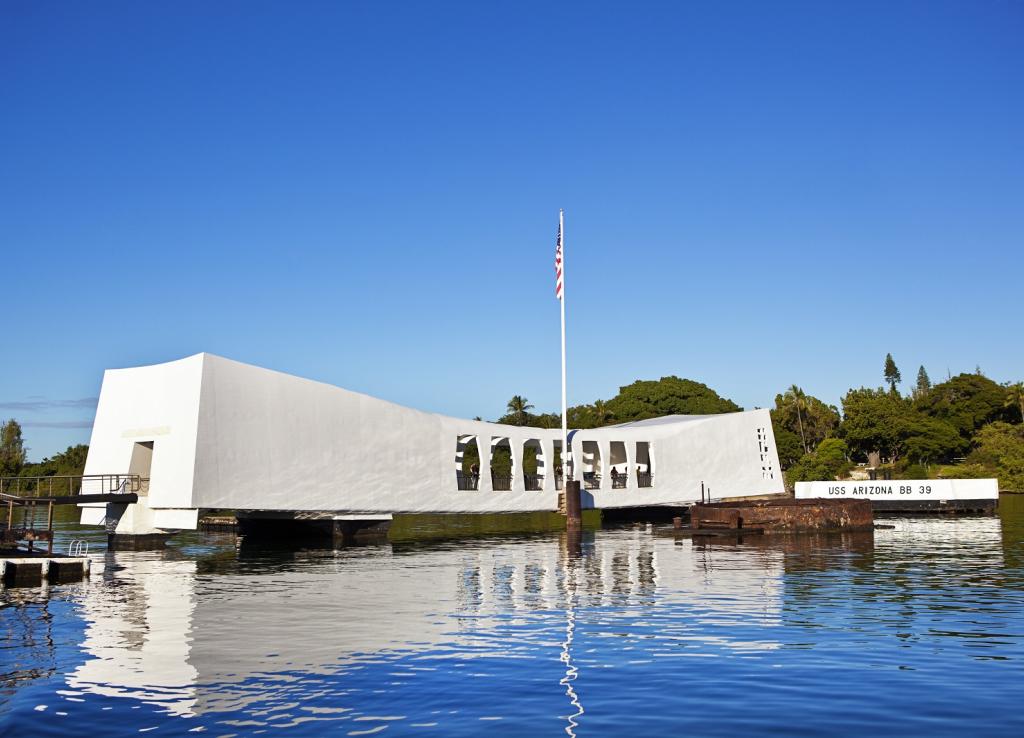
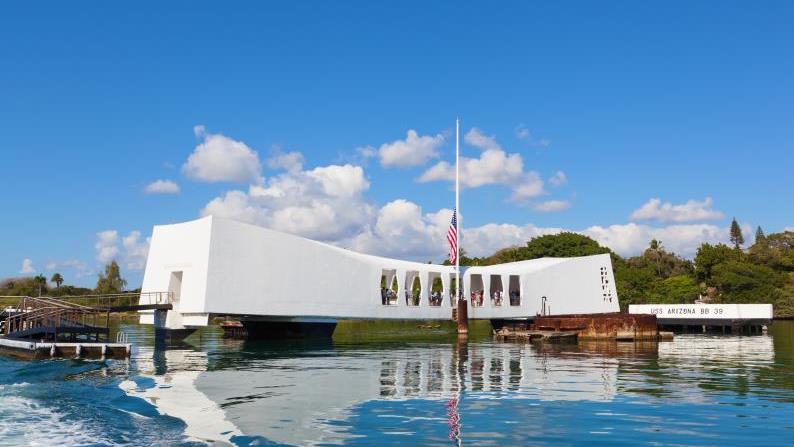
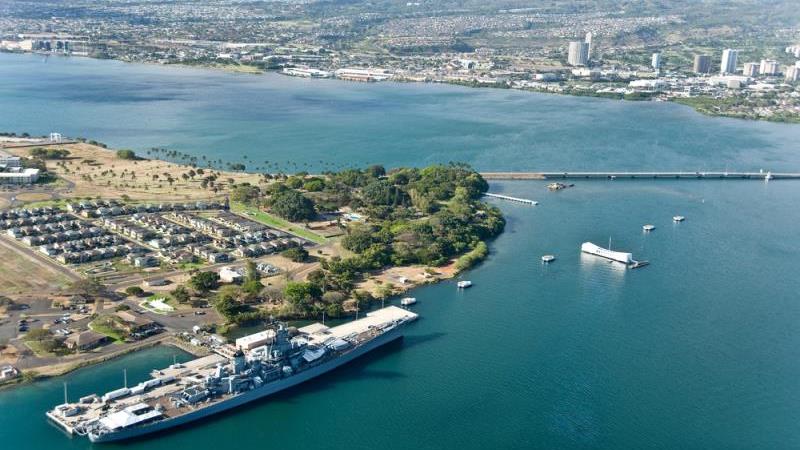
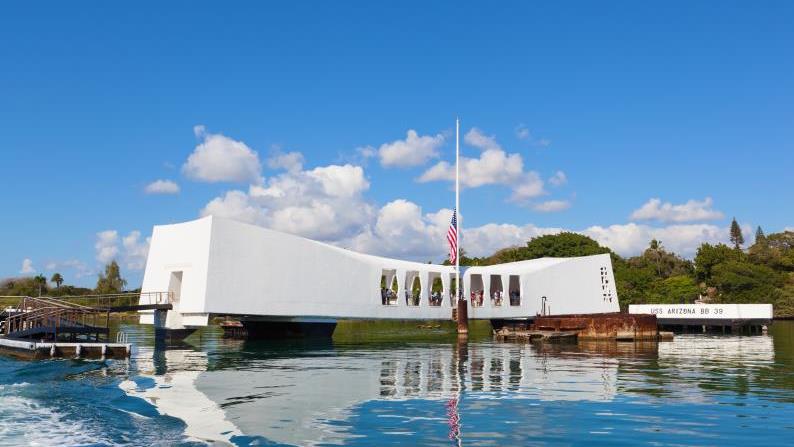
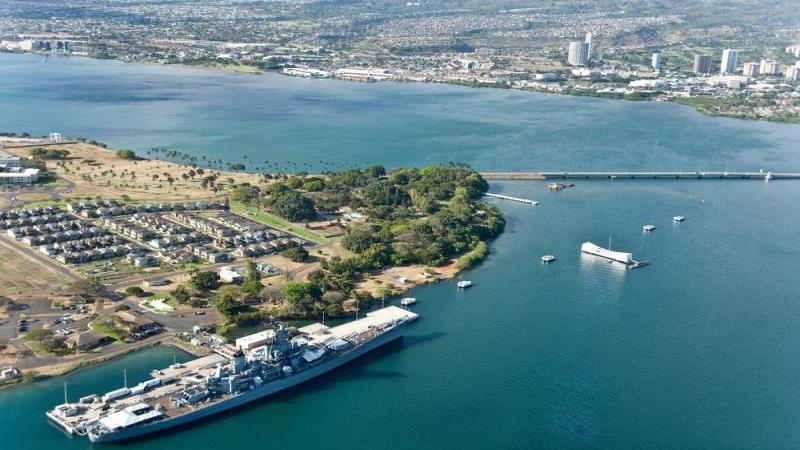
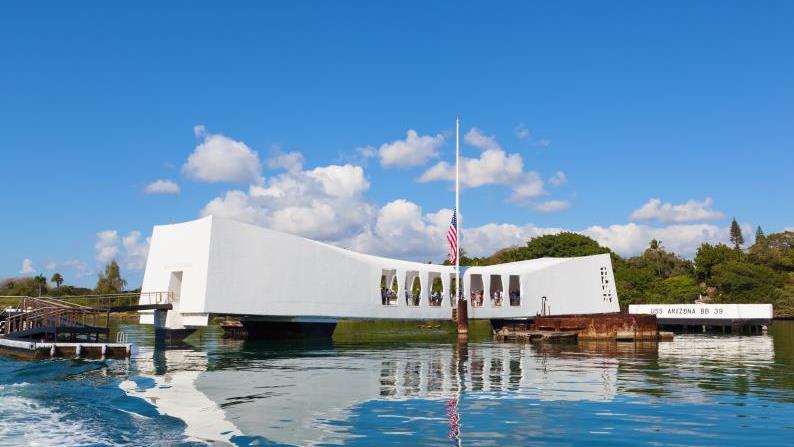
Pearl Harbor National Memorial encompasses several sites on Oahu's western shore, anchored by the USS Arizona Memorial, which spans the sunken hull of the battleship lost on December 7, 1941. Access to the memorial requires a short boat ride from the visitor center, and free timed entry passes — in high demand year-round — should be reserved well in advance through recreation.gov. The site also includes Battleship Missouri, where Japan's formal surrender was signed in September 1945, and the Pacific Aviation Museum on Ford Island, housing aircraft from both sides of the Pacific war. A full visit covering all Pearl Harbor sites takes most of a day; the USS Arizona Memorial and visitor center museum alone require a minimum of two hours. The experience is somber and historically dense in a way that remains affecting regardless of a visitor's national background.
The Hawaiian Luau — Cultural Ceremony, Traditional Food, and Living Performance
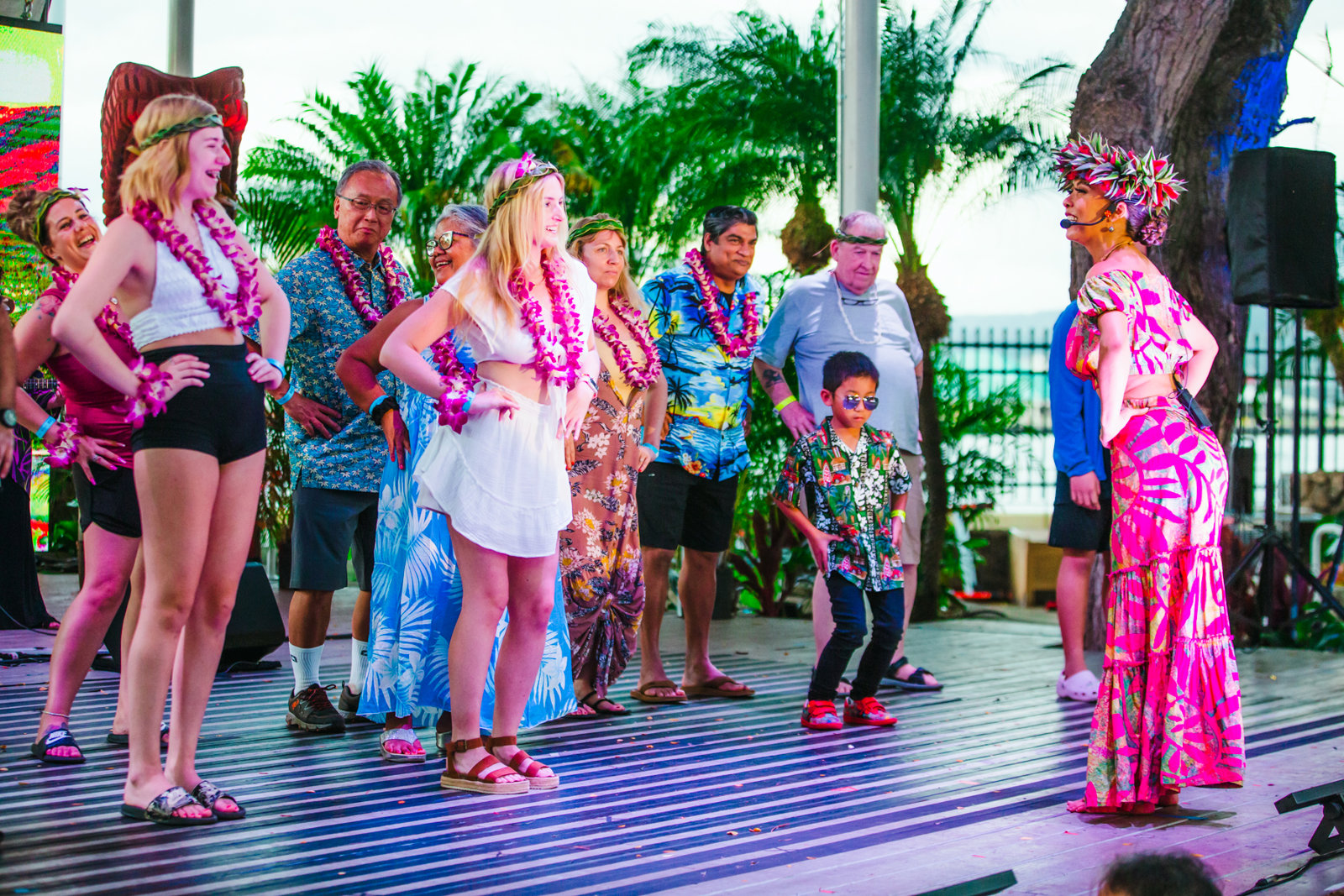
The luau is one of Hawaii's most enduring cultural traditions, rooted in the ancient Hawaiian feast called an 'aha'aina — a gathering that marked important events with food, dance, and community. Modern luaus on Oahu present this tradition in full form: imu-roasted kalua pig, poi, lomi lomi salmon, haupia, and other traditional dishes served alongside performances of hula, fire knife dance, and Pacific island music. Hula communicates stories — of creation, of gods, of love, of the land — through precise movements of hand, hip, and eye that take practitioners years to master. A well-produced luau offers one of the most direct cultural experiences available to a cruise visitor in Hawaii, provided the event centers genuine Hawaiian tradition rather than prioritizing spectacle over substance.
Sailing Oahu's South Shore — Diamond Head, Trade Winds, and the Pacific Horizon
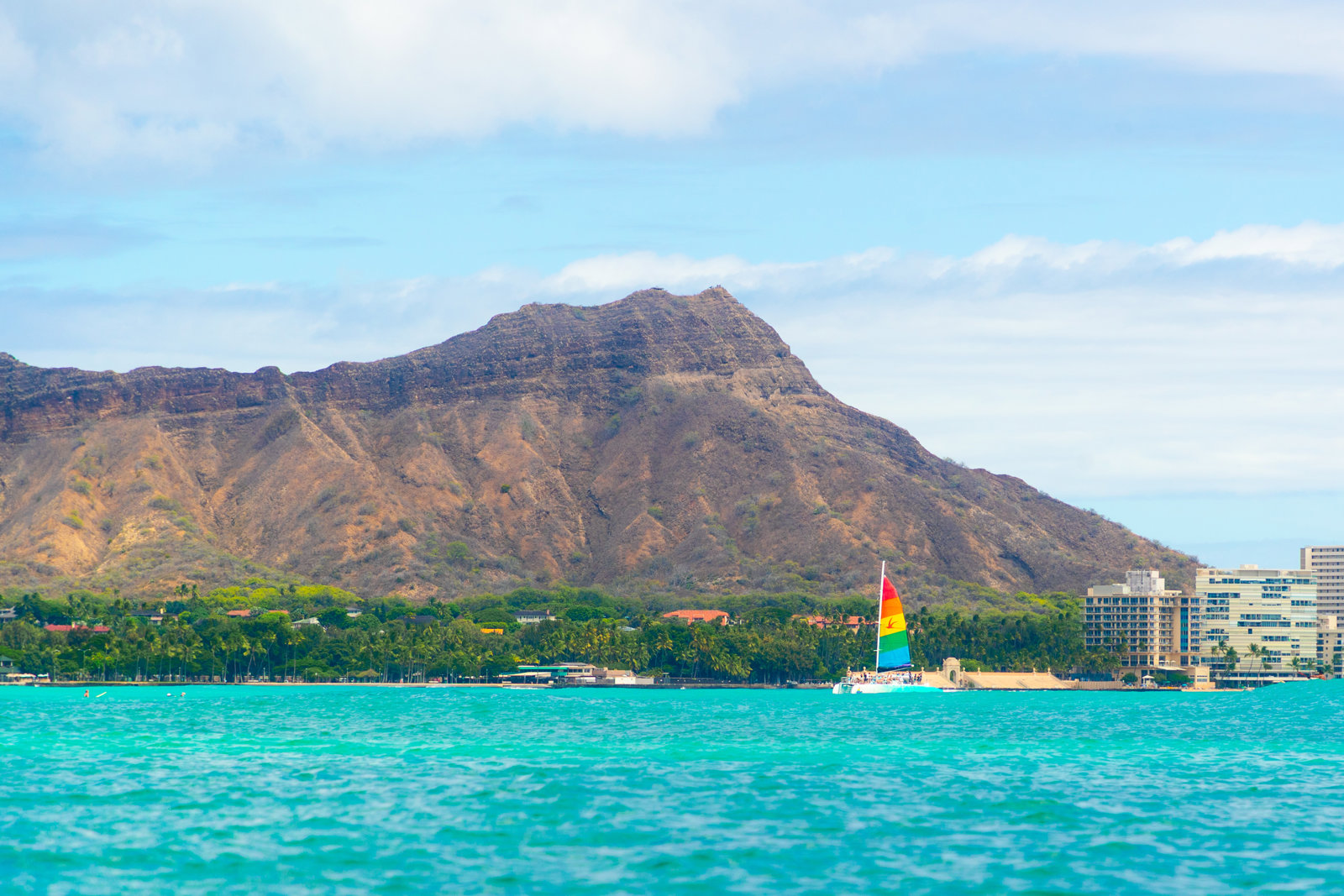
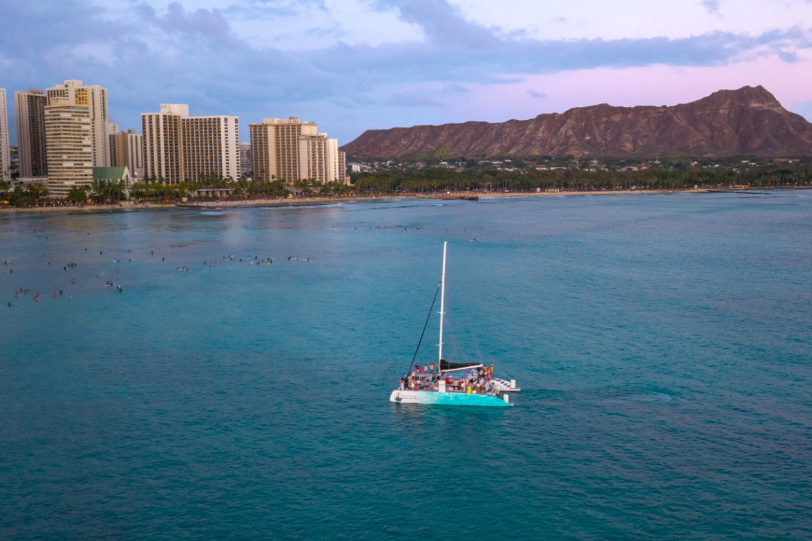
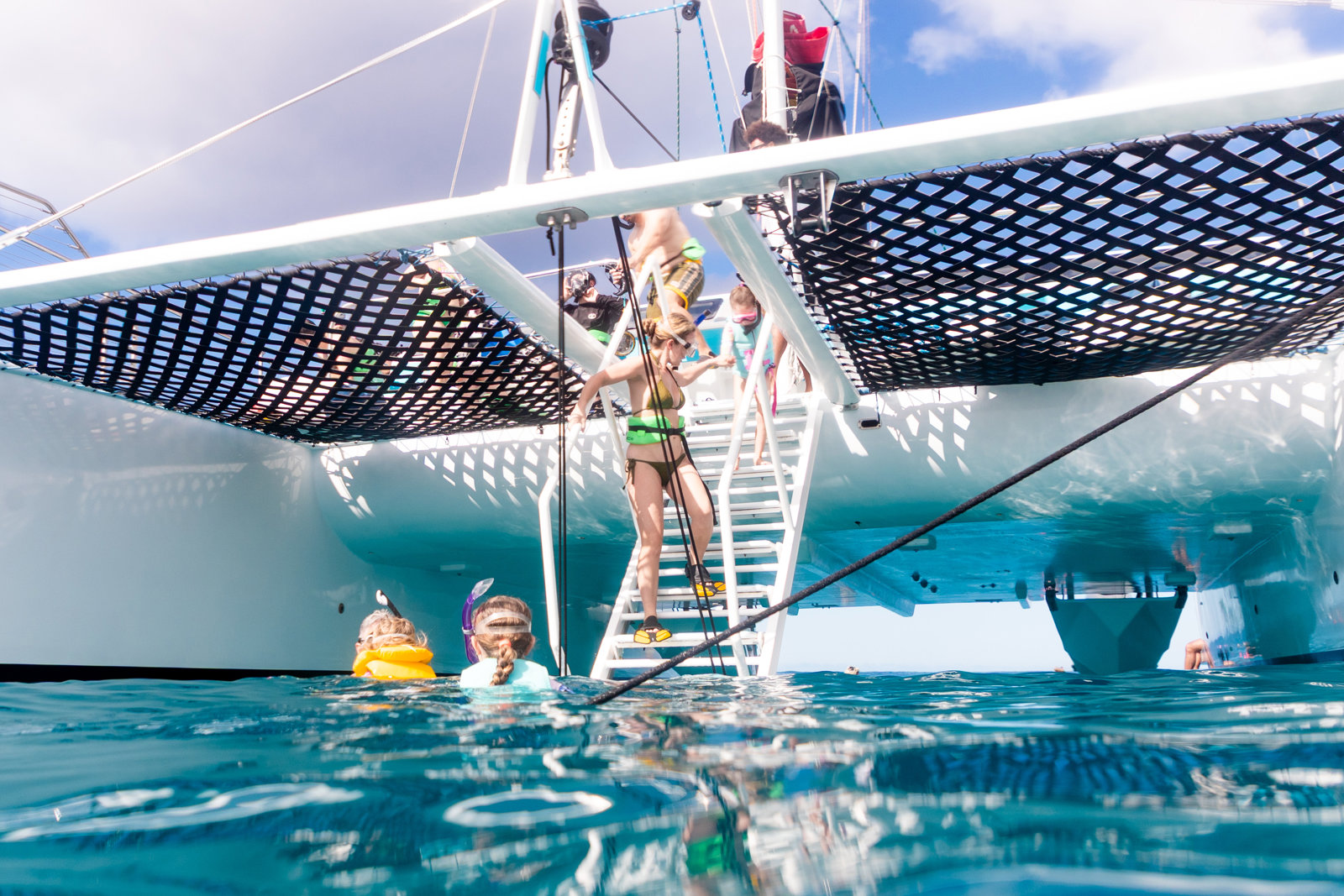
Oahu's south shore offers reliable tradewind sailing conditions, with Diamond Head serving as the most recognizable landmark on the horizon from open water. Sailing excursions from Kewalo Basin or Ala Wai Harbor range from short coastal tours to extended half-day outings reaching the waters beyond the reef. The view back toward Waikiki from open water — high-rises stepping down to the sand, Diamond Head rising at the eastern end — is a classic Pacific image that reads very differently from the sea than from the shore. Sunset sails along this stretch are among Oahu's most popular water experiences, with the late-afternoon light on Diamond Head and the Koolau mountains particularly vivid. Morning sails typically offer calmer seas and better underwater visibility for combined sailing-snorkeling excursions.
Turtle Canyon Reef — Oahu's Most Consistent Snorkeling Site and Sea Turtle Habitat
Turtle Canyon is a coral reef formation about a mile offshore from Waikiki, named for the green sea turtles that regularly rest and feed along its coral heads. Access requires a boat — the site is too far from shore for a swim — but short excursions depart regularly from Kewalo Basin specifically to reach it. Underwater visibility at Turtle Canyon is typically excellent, and the combination of calm water, accessible depths (10–30 feet over most of the reef), and reliable turtle encounters makes it one of Hawaii's most consistently rewarding snorkeling locations. The reef also hosts a variety of tropical fish, including Hawaii's state fish, the Humuhumunukunukuapua'a, alongside eels, parrotfish, and occasional schools of akule.
Pearl Harbor in Depth — Private and Small-Group Options for History Visitors
For visitors who want more than a standard Pearl Harbor experience, private and small-group arrangements allow a more flexible and detailed engagement with the site's multiple layers: the USS Arizona Memorial, the USS Bowfin submarine, Battleship Missouri, Ford Island, and the Pacific Aviation Museum. Private Oahu tours can also incorporate a broader historical context — the Pali Lookout with its sweeping Windward Coast views, the National Memorial Cemetery of the Pacific at Punchbowl, Iolani Palace, and the King Kamehameha statue in downtown Honolulu. A full-day private arrangement can cover Pearl Harbor thoroughly and still allow time for at least one other significant historical site. The National Park Service component of Pearl Harbor — the USS Arizona Memorial boat tour — is always free, though a timed pass must be reserved in advance.
Diamond Head State Monument — Inside an Extinct Volcanic Crater Above Waikiki
Diamond Head — Le'ahi in Hawaiian — is a volcanic tuff cone formed approximately 300,000 years ago, rising 760 feet above the eastern end of Waikiki. The state monument inside the crater includes a 1.6-mile roundtrip trail that climbs through World War I–era military tunnels and concrete stairs to a summit with a panoramic view of Waikiki, the Pacific, and the Koolau range. The hike is moderately strenuous — especially in Hawaii's humidity — but within reach for most fit adults in reasonable health. It is one of the few places in Honolulu where the city's relationship to its volcanic geology becomes viscerally clear: you walk inside an extinct crater, ascending past military fortifications, to emerge at a summit that has served as a navigational landmark since the earliest European contact with these islands.
Honolulu (Oahu) Hawaii travel tips
Reserve USS Arizona Memorial Passes Well Before Your Cruise Departure Date. Free timed entry passes for the USS Arizona Memorial boat tour are required and must be reserved in advance through recreation.gov. Walk-up availability is extremely limited, especially during peak months — some days sell out within minutes of the reservation window opening. Passes typically become available 60 days ahead. Book as early as possible and confirm your ship's port schedule before selecting a time slot, accounting for travel time from the cruise terminal.
Use Reef-Safe Sunscreen — Hawaii Law Prohibits Chemical Sunscreen Sales. Hawaii state law bans the sale of sunscreens containing oxybenzone and octinoxate, both of which are harmful to coral reef ecosystems. Use mineral-based sunscreens with zinc oxide or titanium dioxide when swimming or snorkeling. Many Honolulu retailers carry compliant products, but bringing reef-safe sunscreen from the ship saves time and avoids paying higher prices in tourist-area shops near Waikiki.
Waikiki Beach Is Crowded — Early Arrival or Heading East Reduces the Congestion. Waikiki is one of the world's most visited beaches, and the central stretch between the major hotels can be extremely congested during mid-morning and afternoon hours. Arriving before 9:00 a.m. offers the best experience. Heading slightly east toward Sans Souci beach, near the Kapiolani Park end of the shoreline, reduces the crowd significantly while still offering excellent swimming and good reef access.
Choose a Luau Based on Cultural Authenticity, Not Just Hotel Proximity. Honolulu and surrounding Oahu host a wide range of luau experiences that vary significantly in cultural depth and production quality. Look for events featuring genuine Hawaiian hula — not only Polynesian revue performances — and traditional foods prepared in an imu pit. Many hotel luaus are designed primarily for international tour groups; smaller, more culturally grounded events sometimes take place outside the immediate Waikiki area but are worth the short journey.
At Turtle Canyon and All Hawaiian Reefs — Keep a Safe Distance From Sea Turtles. Hawaiian green sea turtles are protected under both federal and state law. Approaching within six feet of a resting or swimming turtle can constitute harassment under the Endangered Species Act. Allow turtles to approach on their own terms rather than swimming toward them, and never touch, ride, or block their path to the surface for air. Responsible behavior keeps these populations healthy and preserves access to reef sites for future visitors.
Honolulu's Historic Downtown Rewards the Few Cruise Visitors Who Explore Beyond Waikiki. The cruise terminal in downtown Honolulu puts several significant historical sites within walking distance that most visitors skip in favor of heading straight to the beach. Iolani Palace — the only royal palace on United States soil, where Queen Liliuokalani was imprisoned after the 1893 overthrow of the Hawaiian monarchy — is about a 15-minute walk from the pier. The Kawaiahao Church, the Hawaii State Capitol, and the King Kamehameha statue are all nearby and offer a meaningful counterpoint to Pearl Harbor for visitors interested in Hawaiian political history.
Port Facts Every Cruiser Needs To Know
Honolulu (Oahu) Hawaii shore excursion FAQs
Pearl Harbor National Memorial is approximately eight miles west of the cruise piers, a drive of 20–30 minutes depending on traffic conditions on the H-1 freeway. Morning traffic near Honolulu can be congested, so plan for more travel time than the distance alone suggests, especially if you have a reserved timed entry for the USS Arizona Memorial early in the day.
Free timed entry passes for the USS Arizona Memorial boat tour are strongly recommended and should be reserved well in advance through recreation.gov. Walk-up passes are issued in very limited numbers and are often exhausted within the first hour the visitor center opens. Cruise visitors should book as soon as the reservation window opens — typically 60 days ahead — and verify their ship's schedule before selecting a time slot.
The walk from the downtown cruise piers to Waikiki is approximately 2.5 to 3 miles along Ala Moana Boulevard, taking about 45 to 60 minutes on foot along a flat, walkable route. The midday heat and humidity can make this uncomfortable. TheBus offers direct service along the same corridor and is a practical and inexpensive alternative.
Turtle Canyon is a coral reef about one mile offshore from Waikiki, named for its reliable population of green sea turtles and known for consistently good underwater visibility. Because it requires a boat to reach, the reef experiences less human traffic than shore-accessible sites and remains in relatively good condition. It is one of the most consistent locations in Hawaii for snorkelers of all experience levels to encounter sea turtles in their natural habitat.
A traditional Hawaiian luau — historically called an 'aha'aina — is a feast combining food, dance, and communal gathering to mark an occasion or honor guests. It typically includes kalua pig slow-roasted in an underground imu pit, poi, lomi lomi salmon, poke, haupia (coconut pudding), and tropical fruit. Hula performances and Hawaiian music accompany the meal, and many events include fire knife dance from Samoan tradition as part of a broader Pacific cultural presentation.
Both sites are on Ford Island at Pearl Harbor and together span the arc of the Pacific War — from the 1941 attack (Arizona) to the 1945 surrender ceremony (Missouri). Combined with the visitor center's museum, a thorough visit to both takes four to five hours. Cruise visitors with a full day in port and strong interest in the history can accomplish both; those combining Pearl Harbor with other Oahu activities should prioritize the USS Arizona Memorial and visitor center over attempting everything.
The Pearl Harbor Visitor Center typically operates from 7:00 a.m. to 5:00 p.m., with the last boat departure for the USS Arizona Memorial generally in mid-afternoon. Exact times vary by season and operational conditions. Verify current hours through the National Park Service website before your visit, and plan to arrive well before the last departure time if you want to take the memorial boat tour.
TheBus is Oahu's public transit system and covers most of Honolulu reliably at low cost. Routes connect the cruise terminal to Waikiki, Ala Moana Center, and areas near Pearl Harbor. However, the nearest bus stop to the Pearl Harbor Visitor Center requires a half-mile walk. Schedules are regular on most routes, and the system is straightforward for visitors comfortable navigating urban transit.
Sunset sails along Oahu's south shore typically depart in the late afternoon — usually between 4:30 and 5:30 p.m. — to catch the last hour of light and the transition to dusk. The late-afternoon light on Diamond Head and the Koolau mountains is particularly vivid. Confirm that your ship's all-aboard time allows for an evening departure before booking; some cruise schedules make sunset timing difficult.
The USS Arizona Memorial is an active national memorial and the final resting place of sailors who died aboard the ship. Visitors are asked to maintain a respectful, quiet demeanor during the boat tour and inside the memorial structure. Photography is permitted at most outdoor locations throughout the site but is restricted inside the memorial itself. Modest, comfortable clothing is appropriate — the site is outdoors and involves walking, but the atmosphere is contemplative rather than casual.
Filters
Select a filter to refine results.
Tour Type
Tour Activity
 Cart
Cart
 USD
USD GBP
GBP AUD
AUD EUR
EUR CAD
CAD