



Tours in Canakkale (Kepez)


Cruising to Canakkale (Kepez) in a group?
Skip the crowded ship excursion bus. One dedicated planner will design a private shore experience around exactly what your group wants — coordinated from first enquiry to the moment you're back on board. More memorable, more flexible, and more affordable than you might expect. Spend less time organising, more time enjoying.
Explore Group Travel →Cruising to Canakkale (Kepez)
Canakkale sits at the narrowest point of the Dardanelles Strait, the legendary waterway separating Europe from Asia. The port at Kepez serves as the gateway to one of antiquity's greatest mysteries — the ancient city of Troy, immortalised in Homer's Iliad and now a UNESCO World Heritage Site. Thirty kilometres south of the city, the archaeological layers at Hisarlik span nearly 5,000 years of continuous habitation. The city itself is a lively university town with a handsome waterfront promenade, a strong archaeological museum, and a distinctly Turkish character — tea houses, covered bazaars, and fresh seafood restaurants lining the harbour. Cruise days here tend to be rich in history and surprisingly manageable for those who plan the timing with care.
Top things to do in Canakkale (Kepez) on a cruise stopover
Ancient City of Troy
The ruins at Hisarlik represent not one Troy but at least nine successive cities built on the same strategic hilltop over millennia. Excavations begun by Heinrich Schliemann in the 1870s and continued by international teams today have peeled back layers from the Bronze Age through the Roman era. Visitors walk among walls, ramps, and gateways that informed the greatest epic poem of the ancient world. A site museum opened in 2018 provides essential context for the layered ruins, and the replica wooden horse at the entrance has become an iconic landmark. The site is open year-round; early morning visits allow meaningful exploration before the midday heat intensifies.
Canakkale Waterfront Promenade
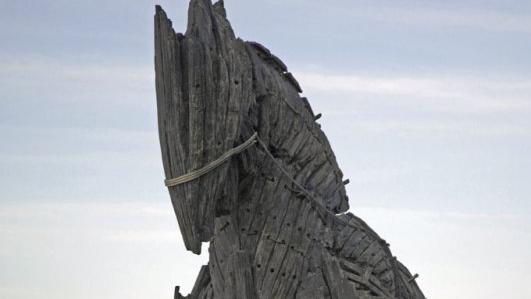
The kordon, or waterfront promenade, stretches along the Dardanelles and forms the social heart of the city. Clock towers, tea gardens, and seafood restaurants line the quay, with views across the strait to the European shore. The promenade is animated at all hours — university students, fishermen, and day-trippers share the same pleasant stretch of harbourfront. At the northern end stands the replica Trojan Horse used in the 2004 film Troy, now a popular landmark. The atmosphere is relaxed and distinctly local, offering a welcome contrast to the historical weight of the archaeological sites nearby.
The Trojan Horse Replica
The large wooden horse displayed on Canakkale's waterfront is the original prop constructed for Wolfgang Petersen's 2004 film Troy, donated to the city after production concluded. It has become one of the most photographed landmarks in the region. The interior is hollow and can be entered via a ladder, offering a vantage point over the strait. While clearly a modern construction rather than an ancient artefact, it serves as a playful and evocative introduction to the mythology that defines this region. It sits in a public square directly on the promenade, easily visited during a short city walk.
Canakkale Archaeological Museum
One of Turkey's most important regional museums, the Canakkale Archaeological Museum holds extensive collections from Troy and other local excavation sites spanning the Bronze Age through the Ottoman period. Key exhibits include gold jewellery, ceramics, funerary objects, and sculpture recovered from Hisarlik. The museum provides essential context for visitors who have already walked the Troy ruins — the artefacts bring the abstract stratigraphy of the site to life. The museum grounds contain an outdoor sculpture garden with larger finds. Entrance fees are modest and the visit typically takes 45 minutes to an hour.
The Dardanelles Strait
The Dardanelles — known in antiquity as the Hellespont — is one of the world's most historically significant waterways. At its narrowest point opposite Canakkale, it measures barely 1.2 kilometres across, and the sight of massive container ships and tankers threading through this ancient passage is genuinely arresting. The strait has been contested since antiquity: Xerxes bridged it to invade Greece, and the 1915 Gallipoli campaign was fought for control of its shores. Watching the maritime traffic from the Canakkale waterfront provides a vivid sense of the strait's enduring strategic and commercial importance across five millennia.
Canakkale's Old Bazaar Quarter
Behind the waterfront promenade, Canakkale's covered bazaar and surrounding market streets offer a genuinely local browsing and shopping experience. Stalls sell spices, dried fruits, hand-woven textiles, copper goods, and the region's distinctive pottery. The atmosphere is unhurried compared to Istanbul's grand bazaars — vendors are less insistent and prices tend to be more straightforward. Several small cafés tucked into the bazaar lanes serve traditional Turkish breakfasts well into the late morning. The area is compact enough to explore in under an hour and sits within easy walking distance of the waterfront promenade.
Canakkale (Kepez) travel tips
Start with Troy, Finish in the City. Plan the day in reverse order of distance — head to the Troy archaeological site first, when energy levels and morning temperatures are at their best, then return to Canakkale city for the museum and waterfront in the afternoon. The site museum at Troy is relatively new and air-conditioned, providing welcome relief during summer months. Arriving at Troy before mid-morning avoids the worst of both the heat and the tour group congestion that builds toward midday.
Sun Protection is Essential at Troy. The archaeological site at Troy is almost entirely exposed to the elements, with minimal tree cover or shade structures over the ruins themselves. In summer months particularly, the hilltop site can become extremely hot by mid-morning. Bring a wide-brimmed hat, high-SPF sunscreen, and more water than you think you'll need. Comfortable, enclosed walking shoes are essential — the terrain is uneven, with ancient paving stones, wooden boardwalks over sensitive areas, and loose gravel paths throughout.
Visit the Museum After the Ruins. The sequence matters: visiting the Canakkale Archaeological Museum after the Troy ruins, rather than before, allows the artefacts to serve their most useful function — clarifying and enriching what you've just seen in the field. The museum labels are in both Turkish and English, and the Bronze Age collection is particularly strong. Budget roughly 45 minutes for a focused visit. The museum is located about 1.5 kilometres south of the city centre waterfront, an easy walk from the promenade.
Carry Some Turkish Lira in Cash. While larger restaurants and shops accept international cards, smaller vendors in the bazaar, tea houses, and local minibuses (dolmuş) typically operate on a cash-only basis. Currency exchange offices are straightforward to use in the city centre, and rates in town are generally reasonable. Having a modest amount of Turkish Lira on hand from arrival makes the dolmuş journey and bazaar browsing considerably more convenient throughout the day.
Turkish Tea Culture: Embrace the Ritual. Accepting a glass of çay (Turkish tea) when offered in a shop or restaurant is a social custom, not a purchase obligation. Tea is served in small tulip-shaped glasses, typically very hot, with sugar cubes on the side. Taking a short tea break at a waterfront tea garden is one of the more pleasantly local experiences in Canakkale — the setting, looking out over the Dardanelles, is genuinely memorable. Turkish coffee is also excellent, served thick and strong in small cups at most cafés and restaurants.
Photography at Troy: Patience Rewards. The most evocative photography at Troy comes in the quieter early-morning window before tour groups arrive in numbers. The wooden walkways and reconstructed sections photograph well in morning light, and the views across the Troad plain toward the Aegean are clearest before midday haze develops. The site is large enough that patient walkers can find quieter sections even during busy periods. The Great Tower area and the Scaean Gate tend to be most crowded — arrive at opening time if these are priorities.
Port Facts Every Cruiser Needs To Know
Canakkale (Kepez) shore excursion FAQs
Troy (Truva) is approximately 30 kilometres south of Canakkale city centre, making the total journey from Kepez port around 35 kilometres. By road, the drive takes approximately 35–40 minutes. The site is well signposted from the main highway south of Canakkale, and the entrance includes a large car park and visitor facilities.
Yes, for travellers with an interest in ancient history, Troy is one of the most compelling archaeological sites in the Mediterranean. The UNESCO-listed site has been substantially improved in recent years with new boardwalks, a well-designed on-site museum, and better interpretive signage. Allow at least two hours at the site itself for a meaningful visit, more if you want to read the interpretive panels in detail.
Turkey uses the Turkish Lira (TRY). Credit and debit cards are accepted at most mid-range restaurants and larger shops in Canakkale, and at the Troy site entrance and museum. Smaller vendors, bazaar stalls, tea houses, and local transport (dolmuş minibuses) typically prefer or require cash. Currency exchange offices are available in the city centre and operate during standard business hours.
Kepez cruise port is about 4 kilometres north of the city centre waterfront — a distance most travellers will cover by dolmuş (shared minibus) rather than on foot, particularly given cruise day time constraints. The city centre itself, once reached, is compact and very walkable, with the waterfront promenade, bazaar, and museum all accessible on foot from a central point.
The Troy site is generally open daily from 08:00 to 19:00 in summer (April–October) and 08:00 to 17:00 in winter (November–March), though hours can vary. The on-site Troy Museum keeps similar hours. It is advisable to check current opening times before your visit, as national holidays and seasonal adjustments can affect access.
Yes — a combined visit is the standard approach for cruise passengers and is entirely feasible with a reasonably early start. Troy ideally receives two to two-and-a-half hours; travel time from port to Troy and back to the city is approximately 40–45 minutes each way. That leaves adequate time for the Archaeological Museum and a walk along the Canakkale waterfront before a late-afternoon ship departure.
Comfortable walking shoes with good grip are essential — the site has uneven ancient paving, wooden boardwalks, and loose gravel paths. In summer months, a hat and high-SPF sunscreen are strongly recommended as shade on the hilltop site is minimal. There are no religious dress requirements at the archaeological site, though modest attire is appreciated in the city if visiting any mosque or traditional neighbourhood.
A small cluster of restaurants and snack vendors operates at the Troy site entrance, serving straightforward Turkish dishes, gözleme (stuffed flatbreads), and cold drinks. Quality is functional rather than exceptional. Most visitors prefer to eat a proper meal back in Canakkale city, where the harbour-front restaurants offer fresh Aegean seafood and more varied menus at reasonable prices.
Yes — the Gallipoli Peninsula lies directly across the Dardanelles from Canakkale, and ferries cross to Eceabat, the closest town to the main battle sites. However, the Gallipoli sites are extensive and do justice only when given several hours. Combining a meaningful Gallipoli visit with Troy on a single cruise day is generally not feasible. Troy is the more practical focus for a one-day port call from Kepez.
The Canakkale Archaeological Museum is a well-regarded regional museum holding artefacts from Troy and surrounding excavation sites, spanning the Bronze Age through the Ottoman period. Collections include jewellery, ceramics, funerary objects, and sculpture. It is particularly rewarding when visited after the Troy ruins, as the objects give tangible context to the site's stratigraphy. A focused visit takes around 45 minutes and entrance fees are modest.
Filters
Select a filter to refine results.
Tour Type
Tour Activity
 Cart
Cart
 USD
USD GBP
GBP AUD
AUD EUR
EUR CAD
CAD