



Tours in Izmir


Cruising to Izmir in a group?
Skip the crowded ship excursion bus. One dedicated planner will design a private shore experience around exactly what your group wants — coordinated from first enquiry to the moment you're back on board. More memorable, more flexible, and more affordable than you might expect. Spend less time organising, more time enjoying.
Explore Group Travel →Cruising to Izmir
Izmir is Turkey's third-largest city, a cosmopolitan Aegean port with a long seafront promenade and a lively bazaar quarter, but for cruise guests its primary significance lies in what surrounds it. Within a 90-minute drive lies one of the ancient world's most complete and evocative city sites: Ephesus, the great Greco-Roman metropolis that once held a population of 250,000 and housed one of the Seven Wonders of the Ancient World in its Temple of Artemis. The Terrace Houses within the Ephesus site reveal domestic life in extraordinary detail. Nearby, the House of the Virgin Mary is a site of Christian pilgrimage believed to be where Mary spent her final years. To the east, the ancient city of Sardis — capital of the Lydian Empire and home of legendary King Croesus — offers an altogether different perspective on antiquity. Together these sites make Izmir one of the richest archaeological ports in the Mediterranean.
Top things to do in Izmir on a cruise stopover
Ancient Ephesus: One of the Best-Preserved Cities of Antiquity
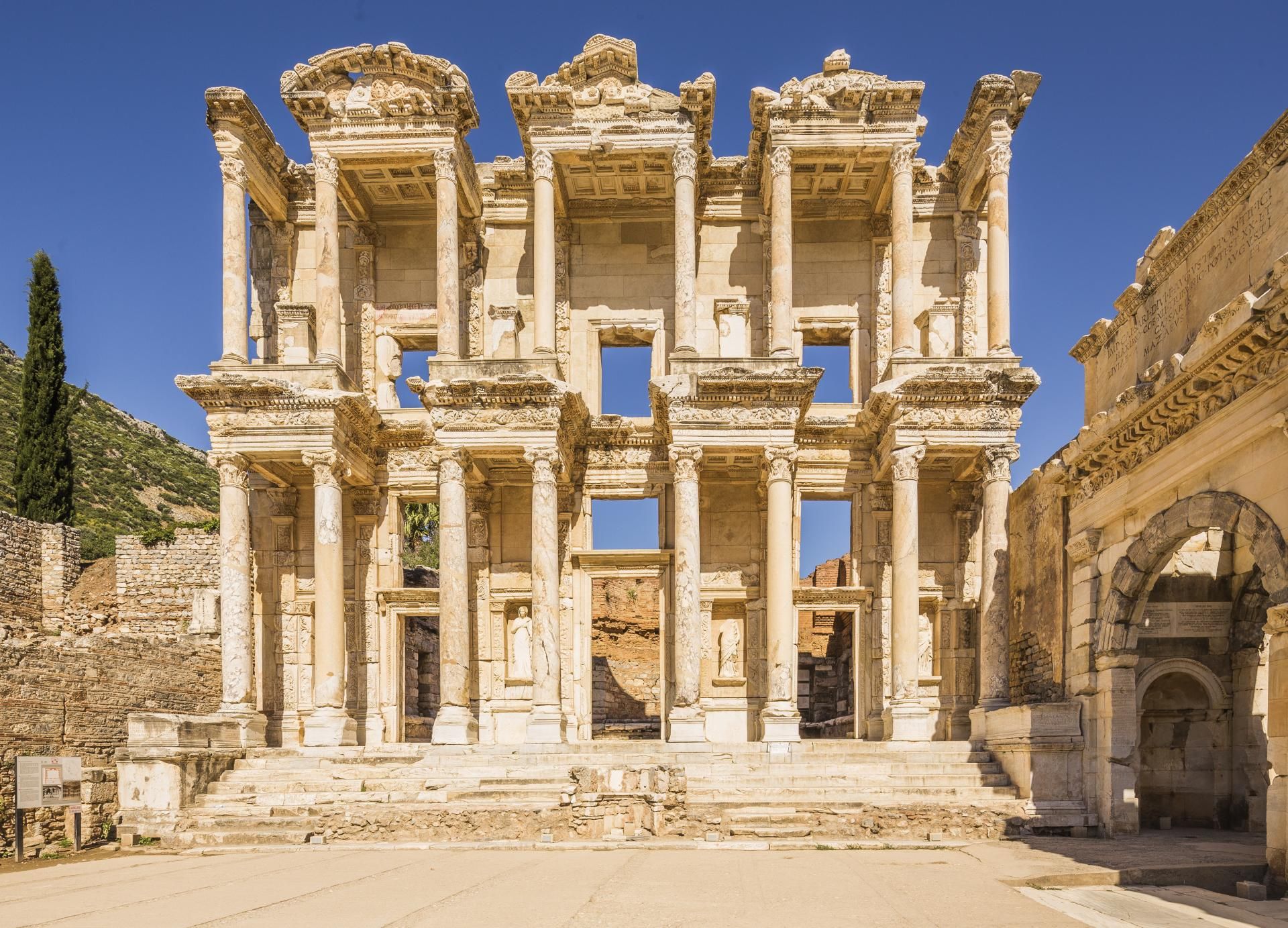
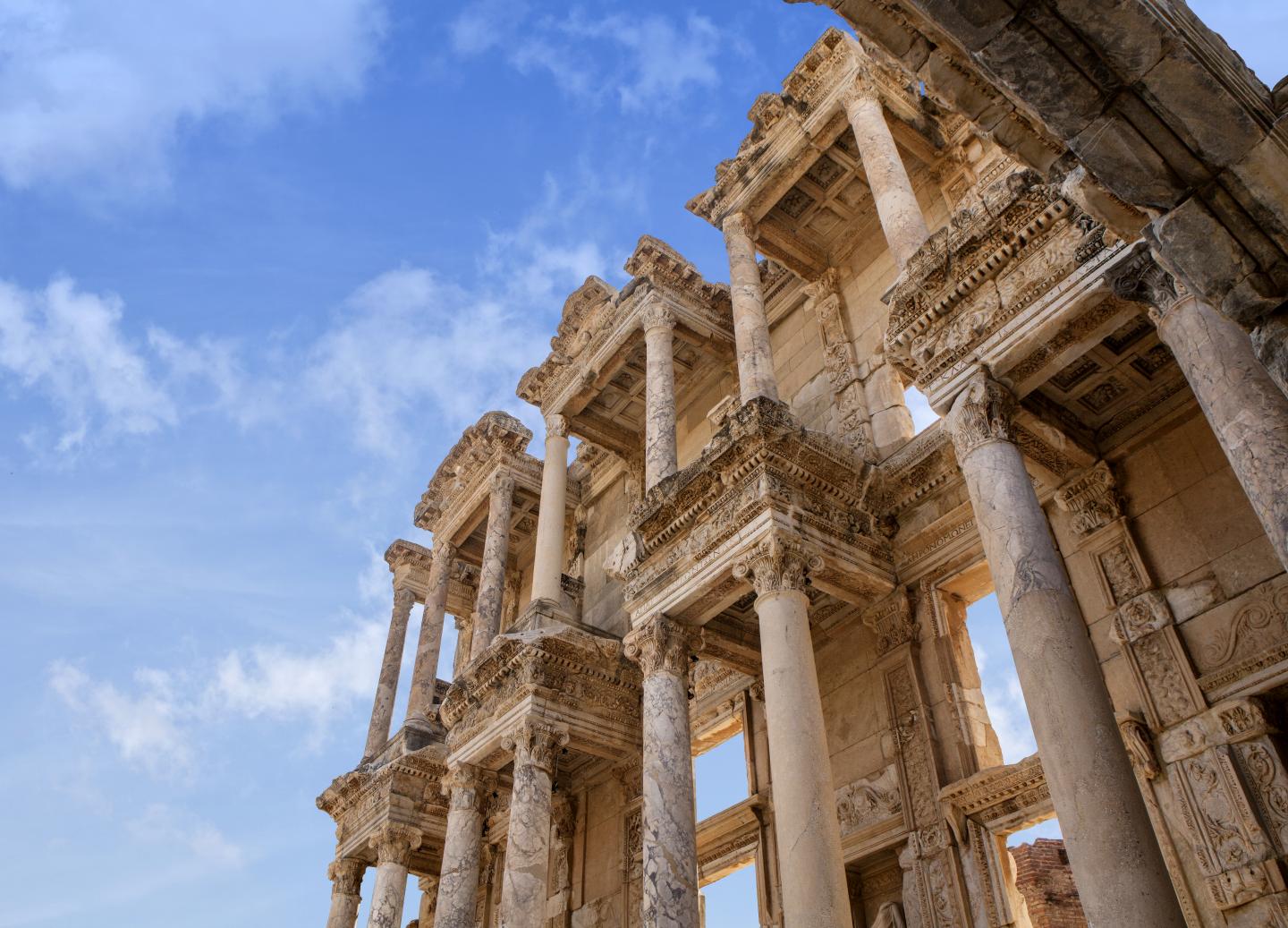
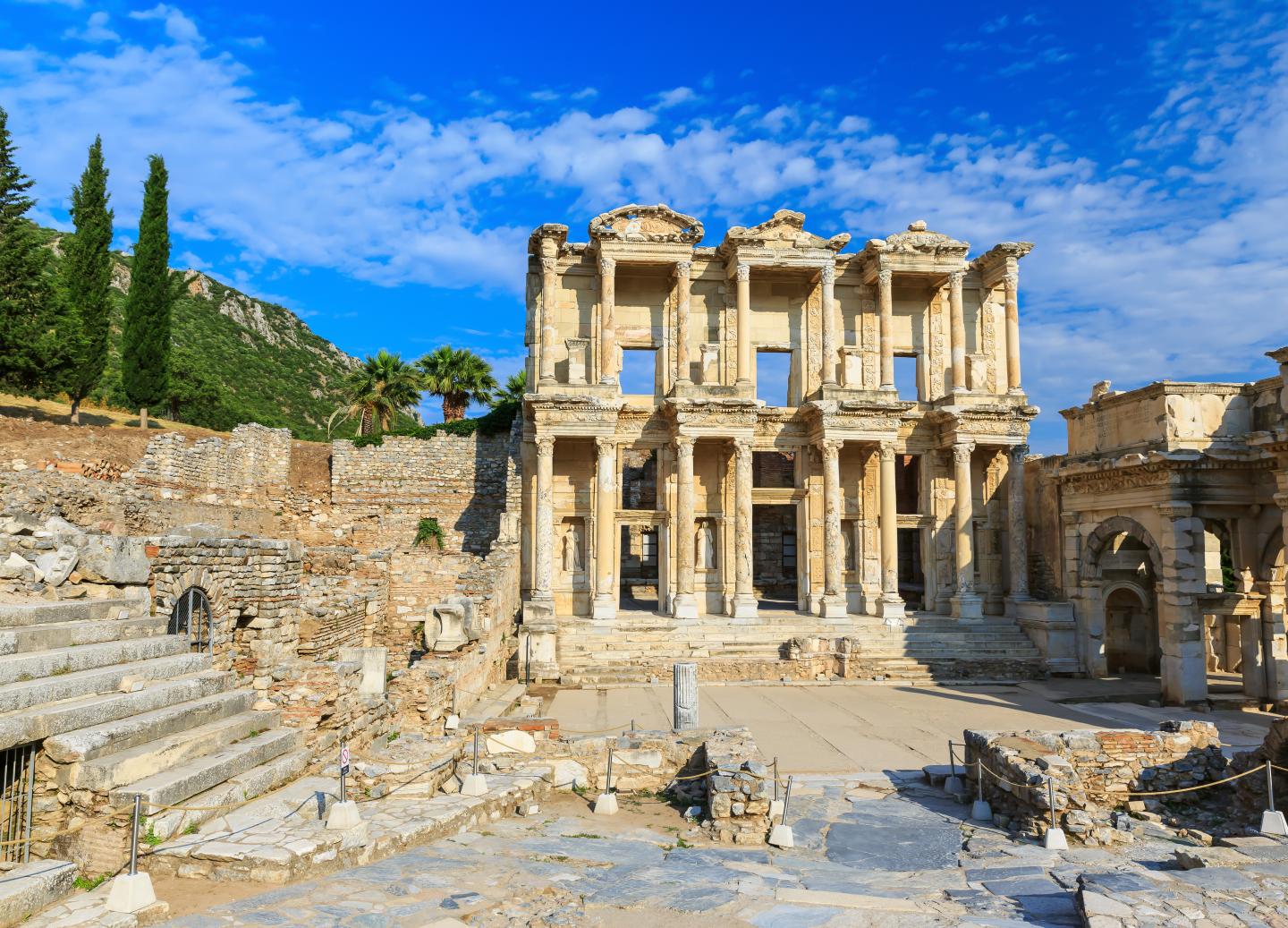
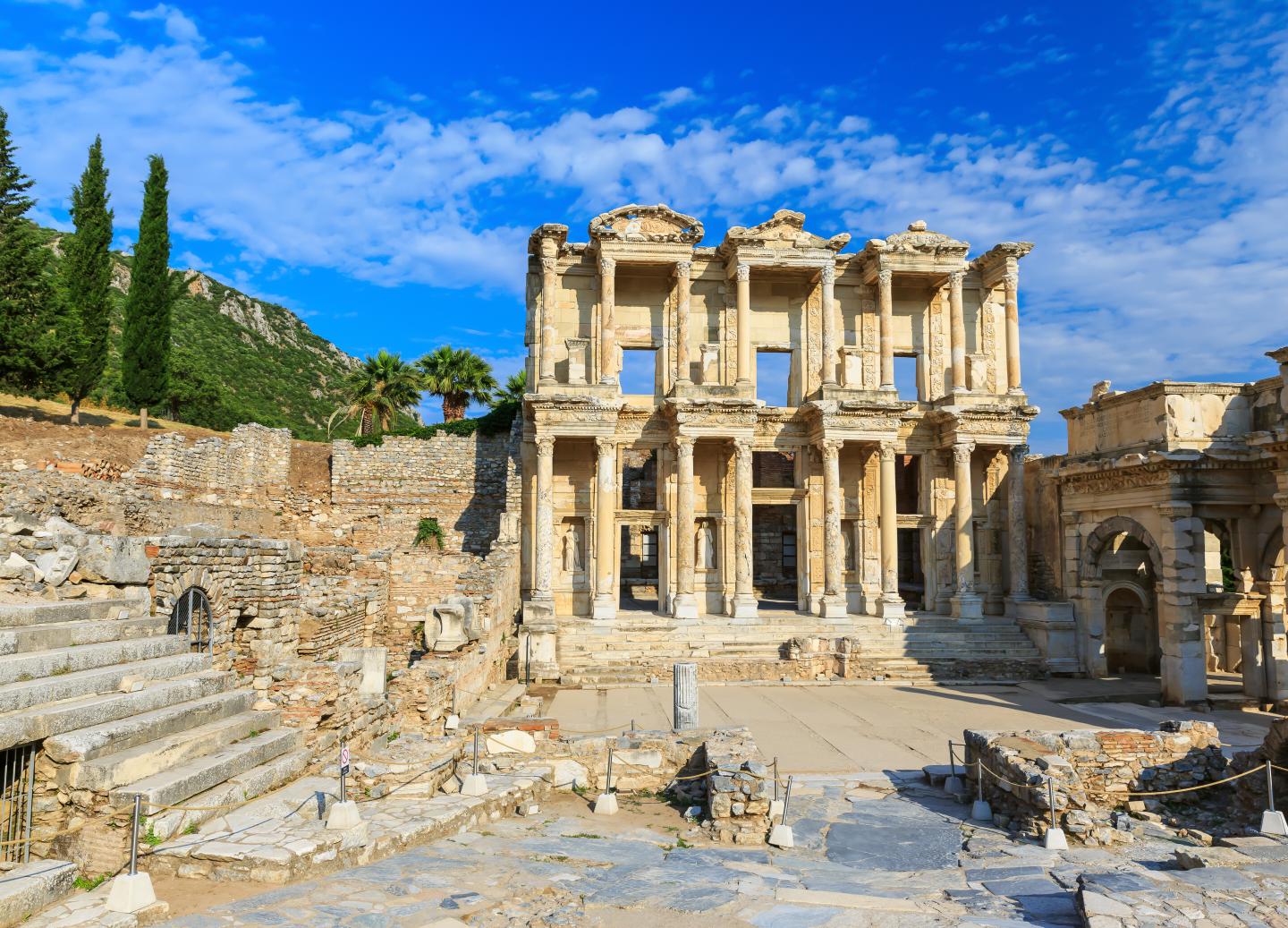
Ephesus is among the most extensively excavated Greco-Roman cities in the world, and walking its marble-paved streets remains genuinely astonishing. The Library of Celsus — its ornate facade reconstructed from original fragments — stands at one end of the colonnaded commercial agora. The Great Theatre seats 25,000 and still hosts occasional performances. The Curetes Street marble road is flanked by column fragments, reliefs, and the ruins of temples, fountains, and civic buildings that speak to the enormous wealth this city commanded as the commercial capital of Roman Asia. VA operates multiple excursions to Ephesus, both guided group tours and private alternatives, allowing different levels of depth and flexibility.
Temple of Artemis: One of the Seven Wonders of the Ancient World
The Temple of Artemis at Ephesus was, in its prime, four times the size of the Parthenon in Athens and listed among the Seven Wonders of the Ancient World. What remains today is a single reconstructed column rising from a marshy field near Selcuk, a stark but evocative fragment of what was once one of the largest temples ever built in the ancient world. The contrast between the site's modest present state and its historical significance makes it thought-provoking for visitors with an interest in antiquity. VA includes the Temple of Artemis in several of its Ephesus private tour itineraries, combining it with the main city site and other highlights.
House of the Virgin Mary: A Site of Pilgrimage and History
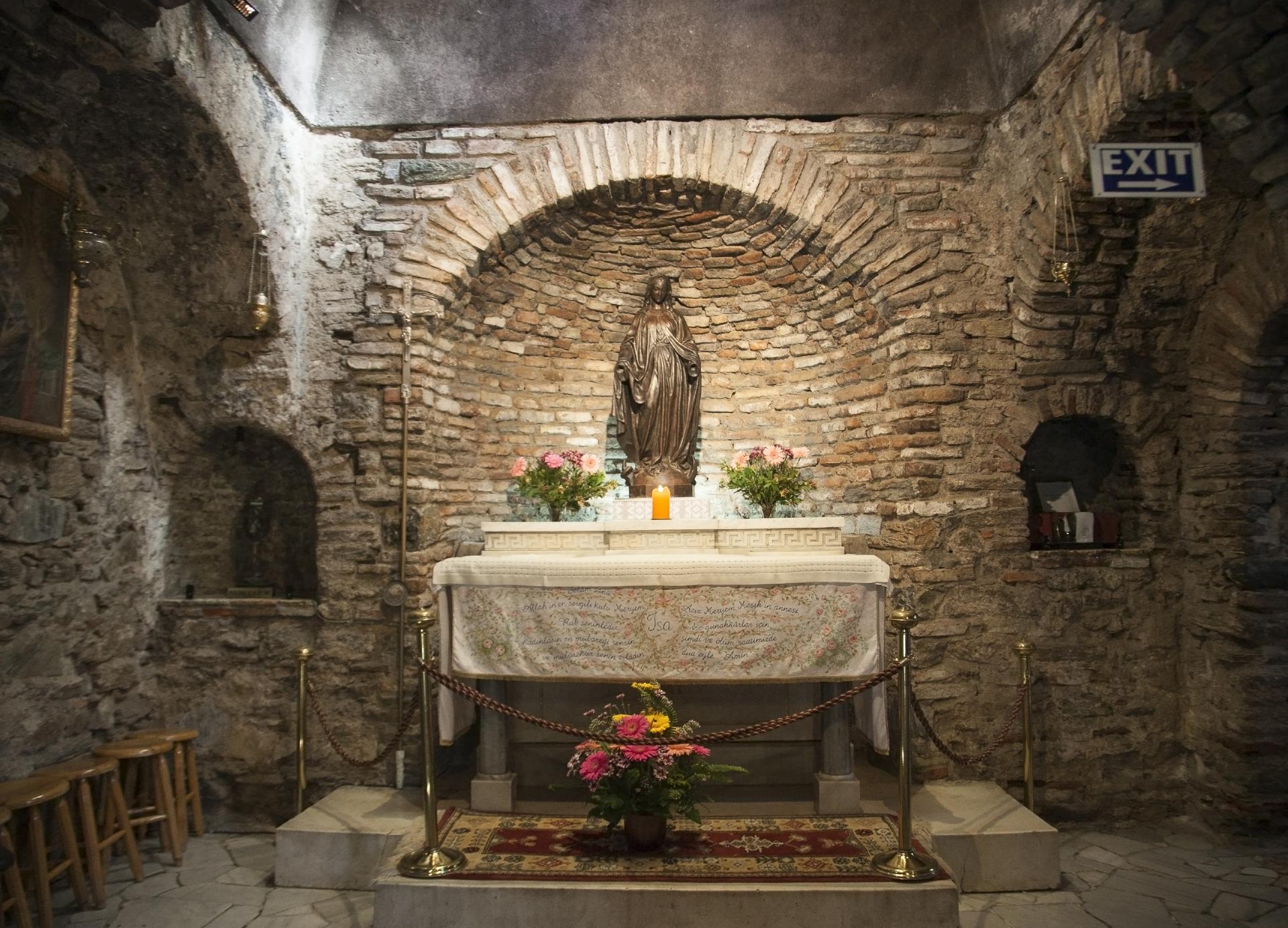
Set on the forested slopes of Bülbül Dagi mountain above Ephesus, the House of the Virgin Mary (Meryem Ana Evi) is a place of Christian pilgrimage believed to be where Mary, mother of Jesus, spent her final years. The belief is supported by 19th-century visions described by a German mystic and subsequently confirmed by several popes. The stone house, a small chapel today, draws pilgrims of multiple faiths, including many Muslims for whom Mary also holds spiritual significance. The setting is peaceful, shaded, and distinctly different in atmosphere from the archaeological sites below. A wishing wall near the entrance is covered in prayers and messages. VA's tours include this site as part of several Ephesus combinations.
St. John's Basilica: Imperial Christianity at the Edge of the Ancient World
On the hill of Ayasuluk above Selcuk, the Basilica of St. John was built by Emperor Justinian in the 6th century over what tradition holds to be the tomb of the Apostle John, who is believed to have come to Ephesus with the Virgin Mary and written his Gospel here. The basilica was once among the largest churches in the Byzantine world, rivalling Hagia Sophia in scale. Though now largely in ruins, the site's scale remains impressive, with marble columns, floor mosaics, and the tomb chamber still clearly legible within the excavated foundations. VA includes St. John's Basilica as a stop on its private Artemis Temple and St. John's tour.
Terrace Houses: The Private World of Ephesus's Elite
The Terrace Houses of Ephesus, covered under a protective shelter on the slopes above Curetes Street, represent one of the most remarkable archaeological experiences at the site. These multi-storey residential dwellings — occupied from the 1st century BC through the 7th century AD — preserve mosaics, frescoes, marble floors, and even underfloor heating systems in extraordinary detail. They reveal how Ephesus's wealthiest residents actually lived, far more intimately than the civic monuments outside. Entry requires a separate ticket beyond the main Ephesus admission. VA's luxury Ephesus tour includes the Terrace Houses as part of a comprehensive exploration of the site with lunch.
Sardis: Capital of the Lydian Empire and Home of King Croesus
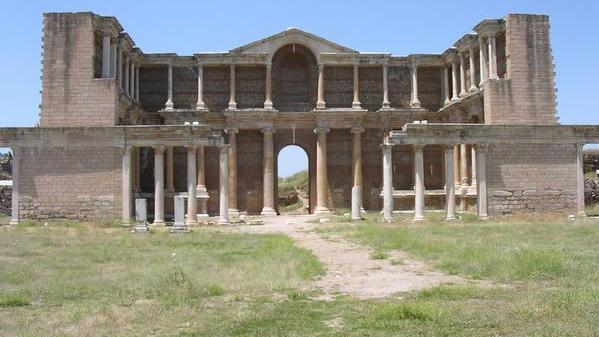
East of Izmir, the ancient city of Sardis was once the capital of the Lydian Empire under King Croesus — the ruler whose name became synonymous with wealth, and in whose kingdom coinage is said to have been invented. The site today includes an impressively reconstructed gymnasium-and-bath complex, an extraordinary synagogue (one of the largest ancient synagogues ever found), and a temple of Artemis whose massive Ionic columns stand in the shadow of a Byzantine-era village. The site receives far fewer visitors than Ephesus, lending it an atmosphere of genuine archaeological discovery. VA operates a dedicated private tour to Sardis that includes a typical Turkish lunch.
Izmir travel tips
Start at Ephesus Early — the Heat and Crowds Build Quickly. Ephesus is an exposed site with limited shade, and by late morning in summer the marble radiates intense heat. Crowds also build significantly after 10am when day-trip coaches arrive from the coastal resorts. Entering the site at opening time — typically 8am — allows a far more comfortable and less congested experience. Carry at least 1.5 litres of water per person; vendors sell water within the site but at a premium.
Wear Sturdy, Flat-Soled Footwear — Not Sandals. The marble paving at Ephesus is ancient, uneven, and highly polished — it becomes slippery even without rain, and many surfaces have gaps and ridges that can catch thin-soled or open shoes. Closed-toe, flat-soled shoes with grip are strongly recommended. The Terrace Houses include ramps, walkways, and narrow passages where secure footing matters. The House of the Virgin Mary involves a short uphill walk on a paved forest path.
The Terrace Houses Require a Separate Ticket — Budget for It. Entry to the Terrace Houses (Slope Houses) at Ephesus is not included in the standard Ephesus site ticket and requires an additional purchase at the entrance gate. The supplement is significant but most archaeologists and guides consider them the finest domestic archaeology in the entire site. If you have any interest in Roman daily life, mosaics, or fresco painting, the extra cost is considered worthwhile by the great majority of visitors who include them.
Dress Respectfully at the House of the Virgin Mary. The House of the Virgin Mary is an active site of religious pilgrimage for both Christians and Muslims. Shoulders and knees should be covered when visiting the chapel — scarves or wraps are usually available at the entrance for those who need them. The atmosphere is contemplative rather than touristic; speaking quietly and being respectful of those praying or lighting candles is appreciated. Photography is generally permitted outside the chapel but check current rules inside.
Sardis is Significantly Less Visited Than Ephesus. While Ephesus draws hundreds of thousands of visitors annually, Sardis receives a fraction of that number despite being a site of comparable historical significance. Guests who choose the Sardis excursion often find they have major monuments almost entirely to themselves. The gymnasium complex and synagogue have been substantially restored and are visually impressive. The rural Aegean landscape around the site — olive groves, vineyards, and mountain backdrops — adds to the experience.
Turkish Lira, Cash, and Tipping Etiquette. While many tourist businesses near Ephesus accept euros or dollars, exchange rates offered on the spot are typically unfavourable compared to withdrawing Turkish Lira from an ATM in Izmir. A small amount of local currency is useful for refreshments, small purchases, and tips. Tipping is appreciated but not obligatory in Turkey: 10% at restaurants and a small amount for guides or drivers who have provided good service is the general norm.
Port Facts Every Cruiser Needs To Know
Izmir shore excursion FAQs
Ephesus is approximately 70–80 km south of Izmir port, depending on the exact entrance used. By road, the journey takes around 1 hour to 1 hour 20 minutes. The nearest town, Selcuk, is the base for most Ephesus visits. Allow a full day for the round trip if combining Ephesus with the Temple of Artemis and House of the Virgin Mary.
Independent travel to Ephesus is possible via the IZBAN commuter train from Izmir to Selcuk (around 60–75 minutes), followed by a local bus or dolmus to the site entrance. However, the journey is time-consuming and requires navigating connections in Turkish. Given the distance and the limited time on a port call, many guests find it more practical to join an organised excursion that handles all transport logistics.
The House of the Virgin Mary (Meryem Ana Evi) is a small stone building on the forested slopes above Ephesus, believed to be where Mary spent her final years after leaving Jerusalem. The site has been recognised by several popes as a place of pilgrimage. It is sacred to both Christians and Muslims — the Quran holds Mary in deep veneration — and the site attracts visitors of all faiths as well as those interested in the historical and archaeological context of early Christianity in this region.
Most visitors and archaeologists consider the Terrace Houses among the finest domestic archaeology visible anywhere in the ancient world. The preserved mosaics, frescoes, and floor plans give an intimate sense of how wealthy Roman citizens actually lived that the public monuments of Ephesus cannot match. The separate entry fee is in addition to the main Ephesus ticket. VA's luxury Ephesus tour includes the Terrace Houses within a comprehensive itinerary.
The Temple of Artemis was one of the Seven Wonders of the Ancient World — larger than the Parthenon and one of the most celebrated temples of antiquity. It was built and rebuilt several times, with the greatest version completed around 550 BC. Only a single reconstructed column survives today, but the site's significance in ancient history makes it a compelling addition to any Ephesus visit. VA includes it in several of its private tour itineraries.
Sardis was the capital of the ancient Lydian Empire, famous as the kingdom of King Croesus and credited with inventing coinage. Unlike the Greek and Roman character of Ephesus, Sardis reflects Lydian, Persian, Greek, and Roman layers. Its highlights include a magnificently restored gymnasium-bath complex and one of the largest ancient synagogues ever excavated. Sardis receives far fewer visitors than Ephesus, offering a quieter and often more personally rewarding experience. VA operates a private tour to Sardis that includes lunch.
Izmir is a modern, cosmopolitan city with a pleasant waterfront promenade (the Kordon), a historic bazaar quarter (Kemeralti), and an Archaeological Museum containing finds from Ephesus and other regional sites. For guests who have previously visited Ephesus, or who prefer a city experience to an archaeological one, Izmir's centre is accessible directly from the Alsancak port and can fill a half-day comfortably with walking, local food, and market browsing.
Light, breathable clothing is recommended for summer visits; long sleeves and trousers or skirts provide some protection against sun exposure on the exposed marble paths. The House of the Virgin Mary requires shoulders and knees to be covered as a place of active pilgrimage. Closed-toe shoes with flat, grippy soles are essential for Ephesus — sandals and heels are inappropriate for the uneven marble surfaces. A sun hat, sunscreen, and plenty of water are essentials in any season.
The main Ephesus site warrants a minimum of 2 to 2.5 hours for a thorough visit; adding the Terrace Houses extends this by 45–60 minutes. Combining Ephesus with the Temple of Artemis, the House of the Virgin Mary, and St. John's Basilica makes for a full day of 5–6 hours at the sites, plus travel time from and back to the Izmir port. VA's tour itineraries are structured around these realistic time allocations.
St. John's Basilica is a genuinely significant Byzantine monument — it was one of the great churches of the early Christian world, built over what tradition identifies as the Apostle John's tomb. While it is largely ruined, the scale of the site and the quality of its remaining architectural details make it rewarding for visitors with an interest in Byzantine history or early Christianity. It is located in Selcuk close to the Temple of Artemis, making it a natural combination stop. VA includes it in its private Artemis Temple and St. John's Basilica tour.
Filters
Select a filter to refine results.
Tour Type
Tour Activity
 Cart
Cart
 USD
USD GBP
GBP AUD
AUD EUR
EUR CAD
CAD