



Tours in Khasab


Cruising to Khasab in a group?
Skip the crowded ship excursion bus. One dedicated planner will design a private shore experience around exactly what your group wants — coordinated from first enquiry to the moment you're back on board. More memorable, more flexible, and more affordable than you might expect. Spend less time organising, more time enjoying.
Explore Group Travel →Cruising to Khasab
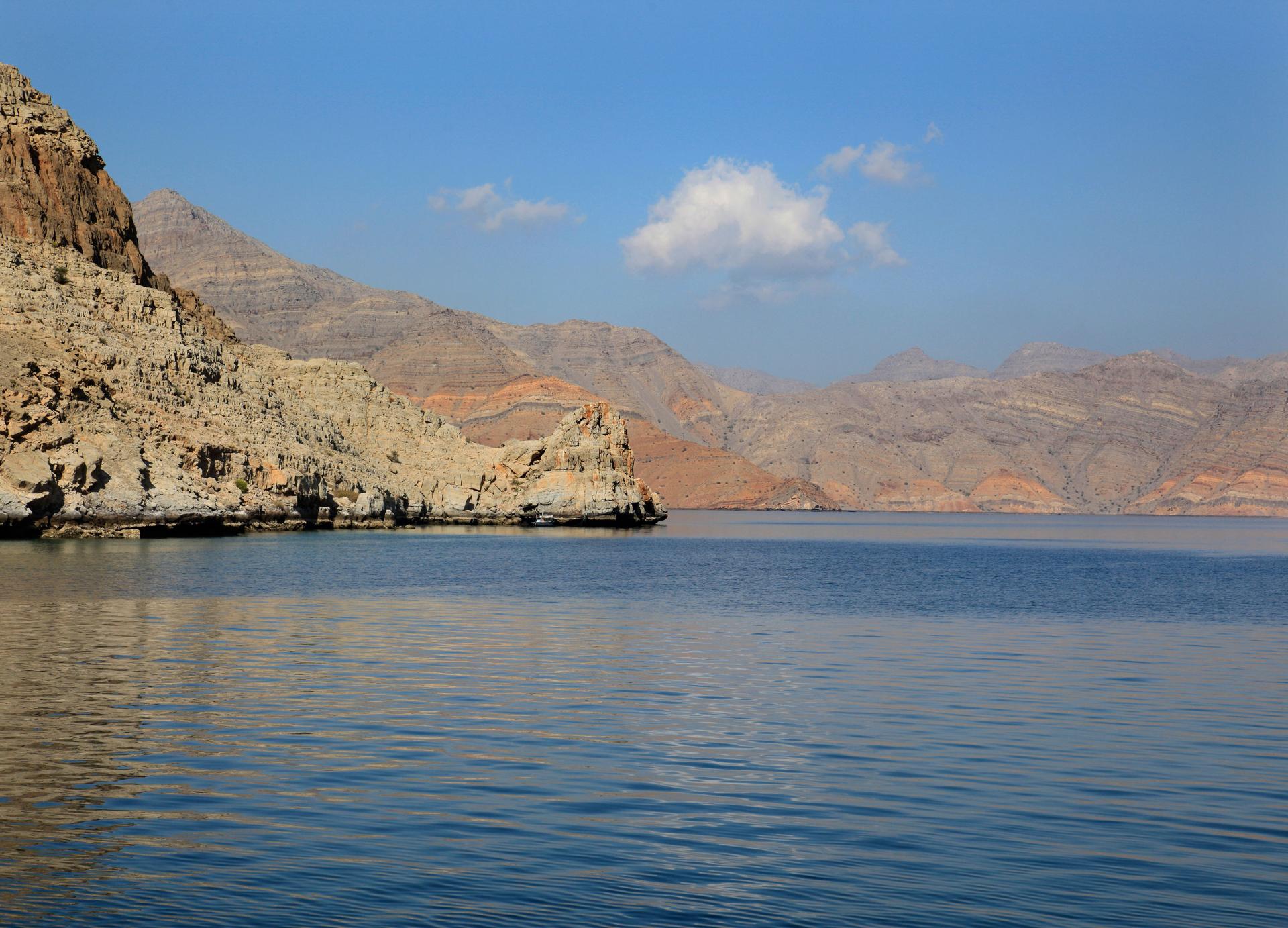
Khasab is the capital of Oman's Musandam Governorate — a geographically isolated enclave at the very tip of the Arabian Peninsula where the jagged Hajar Mountains plunge dramatically into the Strait of Hormuz. Separated from mainland Oman by the UAE, Musandam is sometimes called the Norway of Arabia, and the comparison earns its keep: deep, glassy inlets called khors cut through sheer limestone cliffs that fall vertically into turquoise water, small fishing villages cling to narrow coastal ledges, and the sea maintains a clarity that makes snorkelling feel almost surreal. For cruise visitors, the defining experience is a dhow cruise through these fjords — drifting through one of the world's most spectacular coastal landscapes aboard a traditional wooden vessel, with dolphins frequently riding the bow wave alongside. Telegraph Island, a former 19th-century British relay station marooned in a remote inlet, serves as a regular swimming and snorkelling stop. Khasab town itself is compact and friendly, anchored by a well-preserved Portuguese fort and an unhurried pace that reflects genuine remoteness. This is one of the Arabian Gulf's most singular and visually arresting port calls — a place where the scenery does all the talking.
Top things to do in Khasab on a cruise stopover
Dhow Cruise Through the Musandam Fjords
Sailing the dramatic khors aboard a traditional wooden dhow is the experience that defines a Khasab port call. Limestone cliffs drop vertically into water of improbable clarity, the silence is broken only by the engine and the occasional splash of a dolphin, and the scenery shifts with every bend in the inlet. It is one of the most visually extraordinary boat journeys available from any cruise port in the Arabian world.
Wild Dolphin Encounters
The waters of the Musandam Peninsula support large resident pods of spinner and bottlenose dolphins, and sightings during dhow cruises are consistently high. Dolphins frequently swim directly alongside the vessel and ride the bow wave at close range — the kind of wildlife encounter that requires no effort and leaves no one unmoved.
Swimming at Telegraph Island
The dhow cruise typically anchors near Telegraph Island — named for the 19th-century British undersea cable relay station once operated from this improbable outcrop — for an open swimming and snorkelling stop in sheltered, crystal-clear water. The visibility underwater is remarkable, and the setting, surrounded by cliff walls and empty sea, is unlike any beach you will find on land.
Khasab Portuguese Fort
Built in the early 17th century and later expanded under the Omani Al Bu Said dynasty, this well-preserved fort anchors the town's waterfront with thick circular towers and an inner courtyard. A modest but thoughtful museum inside explores Musandam's seafaring heritage, the history of the pearl trade, and the remarkable isolation of the Kumzari people.
Mountain Village Scenery
The road climbing north from Khasab into the Hajar Mountains passes through some of Arabia's most dramatic terrain — terraced villages perched above deep khors, ancient stone watchtowers, and views that stretch across the Strait of Hormuz to Iran on a clear day. The landscape bears no resemblance to anything else in the region.
Khasab Souk and Waterfront
The town's compact souk trades in Omani frankincense, silver jewellery, dried fish, dates, and local spices in an entirely un-touristy atmosphere. The adjacent waterfront corniche, lined with traditional wooden dhows in various states of use and repair, gives an honest picture of a working fishing community that has changed relatively little in its fundamental rhythms.
Khasab travel tips
Book the Dhow Cruise Before You Arrive. Khasab is a small port with finite dhow capacity and limited alternative experiences. If a fjord cruise is your priority — and it should be — secure your booking well in advance of arrival. Last-minute availability on popular itineraries cannot be assumed, and arriving without a booking on a busy port day is a risk not worth taking.
Pack Swimwear and a Snorkel. Most dhow excursions include a swimming stop at Telegraph Island or a comparable sheltered cove. The water is warm, clean, and remarkably clear. A basic snorkel mask transforms the stop from a dip into a genuine underwater experience — worth the minimal packing effort.
Sun Protection on the Water Is More Critical Than on Land. Reflected ultraviolet light off the fjord surface significantly intensifies sun exposure during a dhow cruise. Apply high-SPF sunscreen before boarding, wear a hat and sunglasses throughout, and reapply during the cruise. The limestone cliffs provide little shade on the water, and the sitting pace of a dhow means extended, unbroken exposure.
Dress Modestly When Ashore. Oman maintains conservative social norms as a Muslim country. When walking through Khasab town, keep shoulders and knees covered. Swimwear and revealing clothing should be reserved for the dhow and its swimming stops — wearing them ashore is considered disrespectful and will draw uncomfortable attention in what is a genuine local community rather than a tourist resort.
Use Cash in the Souk. While credit cards function at larger Khasab establishments, the town's souk operates predominantly on cash. Unlike some regional markets, prices in Omani souks tend to be relatively fixed — aggressive bargaining is less culturally expected here than in neighbouring countries. Small Omani Rial notes are the practical currency for market browsing.
Calibrate Expectations for the Town. Khasab is a small, quiet administrative town with limited dining options, minimal shopping beyond the souk, and no resort infrastructure. Visitors expecting a full-day town experience will run out of things to do quickly. The extraordinary appeal of Khasab is geological and nautical — on the water and surrounded by cliffs. Plan your day with the fjords as the centrepiece and the town as an enjoyable addition, not the reverse.
Port Facts Every Cruiser Needs To Know
Khasab shore excursion FAQs
A dhow is a traditional wooden sailing vessel with a long history in Arabian maritime culture, historically used for fishing, pearl diving, and trade across the Indian Ocean. In Khasab, purpose-fitted motorized dhows carry passengers through the fjords at a leisurely pace. Expect cushioned seating on deck, shade canopies, light refreshments, and unobstructed views of the surrounding cliffs. The pace is relaxed rather than tour-like — the scenery unfolds slowly and the atmosphere is genuinely tranquil.
The Musandam Peninsula has a large resident population of spinner and bottlenose dolphins, and sighting rates on dhow cruises are consistently very high — not guaranteed by nature, but among the most reliable wildlife encounters in the region. The best sightings typically occur in calmer conditions and in the open water sections of the cruise rather than deep inside the narrow khors.
Khasab is part of Oman — specifically the Musandam Governorate, a geographically isolated Omani enclave at the northern tip of the Arabian Peninsula, separated from the rest of Oman by UAE territory. Entry requirements are Omani, not Emirati, and the two countries have distinct visa regimes. Having visited the UAE does not automatically entitle you to enter Khasab.
Visa requirements vary by nationality. Many Western passport holders can obtain an Omani e-visa in advance or are eligible for visa-on-arrival, but this is not universal. Check the current Omani entry requirements for your specific passport well before your cruise. Your cruise line will typically publish visa guidance for this port call — read it carefully, as Musandam's enclave status occasionally creates administrative complexity.
Yes — most dhow cruises include a dedicated swimming and snorkelling stop, typically at or near Telegraph Island in a sheltered section of the khor. The water is clean, warm, and clear enough for snorkelling to be genuinely rewarding. Bring your own mask and fins if you have them; availability of rental equipment on individual dhows varies.
Khasab has some accessible shoreline, but it is not a beach resort destination in any conventional sense. The best swimming experience by far is via the dhow cruise with its sheltered swimming stop in a fjord inlet. Visiting Khasab specifically for a beach day would be a mismatch of expectations — the appeal here is the dramatic fjord scenery accessible only by boat.
Most dhow cruises from Khasab run three to four hours, covering the main fjord inlets, a swimming stop near Telegraph Island, and open water for dolphin watching. This fits comfortably within a standard cruise port day, leaving time for the fort and a walk through the souk before returning to the ship. Check your ship's all-aboard time and confirm cruise duration when booking.
Telegraph Island is a small rocky islet in the Khor ash Sham inlet, named for the British telegraph relay station operated there in the 1860s as part of the undersea cable linking Britain to British India. The station was abandoned in 1869, reportedly driving its isolated operators to the edge of sanity — a historical footnote that gave rise to the English phrase 'around the bend.' Today it serves as a popular swimming and snorkelling stop on dhow cruises, with remarkably clear water surrounding the rocky outcrop.
Yes, with appropriate supervision. Children generally find the dolphin encounters and swimming stops to be memorable highlights. Ensure children have full sun protection and confirm that life vests in appropriate sizes are available on the dhow when booking. Sea conditions inside the khors are typically calm and manageable for most ages, though open water sections can be choppier depending on seasonal winds.
The Portuguese fort is a worthwhile 45-minute visit for its architecture and compact museum. The waterfront souk is a pleasant browse for frankincense, silver, and local dates. The mountain road climbing north of town offers dramatic scenery. Beyond these options, Khasab's appeal is essentially nautical and geological — the fjord cruise is not one activity among many, but the reason to come ashore. Visitors who secure a place on the water will leave with an experience genuinely unlike any other in the region.
Filters
Select a filter to refine results.
Tour Type
Tour Activity
 Cart
Cart
 USD
USD GBP
GBP AUD
AUD EUR
EUR CAD
CAD