



Tours in Salalah


Cruising to Salalah in a group?
Skip the crowded ship excursion bus. One dedicated planner will design a private shore experience around exactly what your group wants — coordinated from first enquiry to the moment you're back on board. More memorable, more flexible, and more affordable than you might expect. Spend less time organising, more time enjoying.
Explore Group Travel →Cruising to Salalah
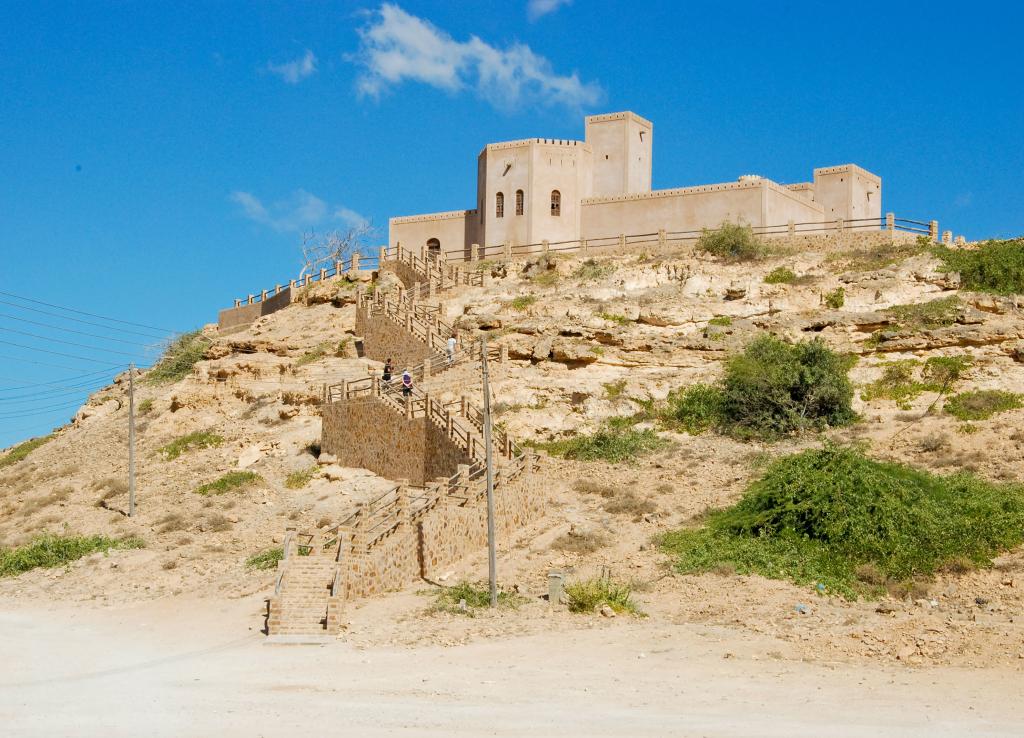
Most visitors arrive in Oman expecting golden desert and relentless sun, but Salalah quietly subverts expectations at every turn. The capital of Dhofar Governorate sits at the edge of a geographical anomaly: every summer, the khareef monsoon rolls in from the Indian Ocean and transforms the surrounding mountains and coastal plains into a vivid, misty green that looks nothing like the rest of the Arabian Peninsula — or anywhere else in Arabia, for that matter. Outside monsoon season, the landscape is drier but the light is crystalline, the ancient ruins are uncrowded, and the beaches are as pristine as they come. The frankincense trade that once made this corner of Arabia fabulously wealthy still shapes Salalah's identity in ways that are immediately felt: you'll smell it burning in the souqs, see the gnarled Boswellia trees on hillside drives, and find it pressed on you in the market stalls as vendors demonstrate why it was once worth its weight in gold. This is a port that rewards genuine curiosity over simply ticking off attractions, and the surrounding coastline, wadis, and archaeological sites offer more depth than a single day can fully exhaust.
Top things to do in Salalah on a cruise stopover
Salalah City and Surroundings Tour
A comprehensive sweep through the Dhofar region takes in the city itself alongside the landscapes that define it: frankincense tree groves on the hillsides, the ancient ruins at Al Baleed, the corniche running along the Arabian Sea, and the fertile plains that made this corner of Arabia a trading legend for millennia. It is the best single introduction to what makes Salalah unlike anywhere else in the Middle East.
Private Salalah Exploration
Salalah's sites are spread across a wide and varied landscape — archaeological ruins in one direction, dramatic coastal blowholes in another, and mist-shrouded wadi viewpoints beyond that. A private format gives the freedom to follow your own pace and priorities, spending more time where it matters to you rather than managing the logistics of a larger group.
Al Baleed Archaeological Park
Inscribed as a UNESCO World Heritage Site, Al Baleed is the ruins of an ancient port city that stood at the centre of the global frankincense trade for over a thousand years. The site is larger and more impressive than it appears from the entrance, and the on-site Museum of the Frankincense Land provides essential context — transforming a walk among old stones into a genuine encounter with one of history's great commercial civilisations.
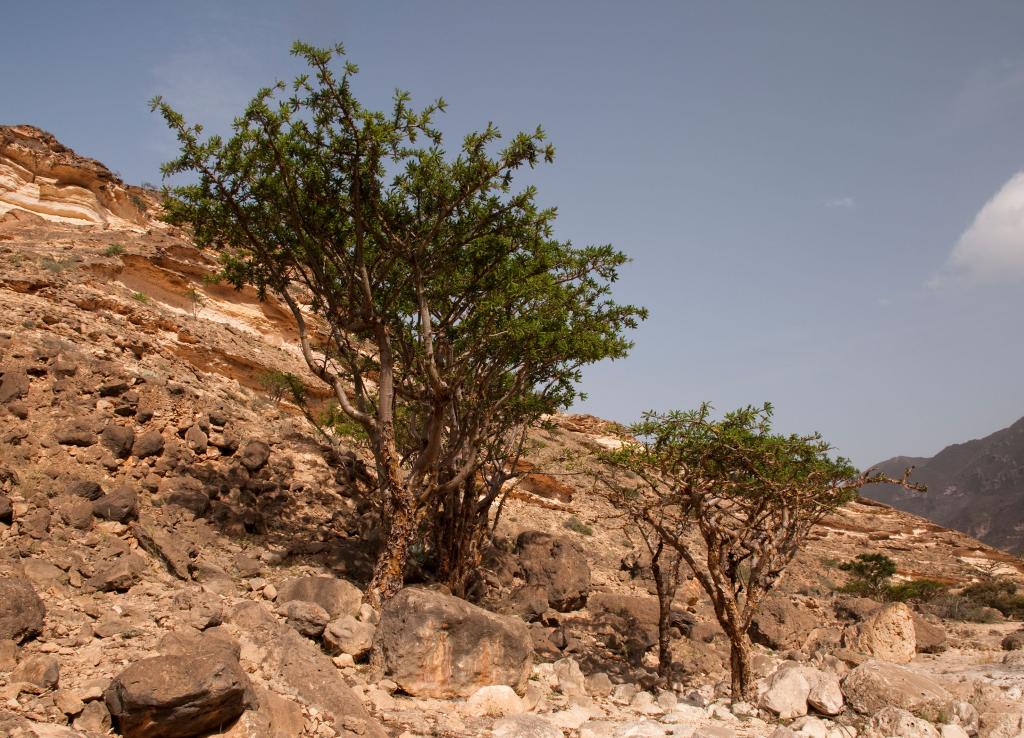
Frankincense Groves and Dhofar Landscapes
Driving through the Dhofar hills to see the Boswellia trees that produce frankincense resin is one of the more unexpected pleasures of a Salalah day. These small, stubborn trees growing from rocky limestone look almost inconsequential until you understand that they were once the source of one of the ancient world's most coveted luxury goods — and that the resin is still carefully tapped today by the same communities that have done so for thousands of years.
Mughsayl Beach and Natural Blowholes
The coastline west of Salalah reaches a dramatic climax at Al Mughsayl Beach, where the Arabian Sea meets a cliff-lined shore punctuated by natural blowholes that send jets of water erupting into the air when the swell pushes through subterranean channels. The beach itself is one of the finest on the coast — long, clean, and backed by ochre cliffs — and combining the two makes for a memorable coastal afternoon.
Al Husn Souq and Dhofari Market Culture
The traditional market in central Salalah is one of the most atmospheric souqs on the Arabian Sea coast — frankincense smoke drifts between stalls selling silver jewellery, Dhofari honey, dried fish, and hand-embroidered textiles. It's a place to slow down, engage with vendors, and bring home something genuinely local rather than mass-produced, at prices that remain reasonable by any regional comparison.
Salalah travel tips
Dress Modestly Throughout. Oman is a conservative Muslim country where modest dress is both respectful and expected — covered shoulders, covered knees, and loose-fitting clothing apply in the city, at souqs, and at all archaeological sites. Swimwear is appropriate at beach areas but should be covered when leaving. Light cotton or linen works well in the climate.
Frankincense is the Souvenir Worth Buying. Salalah is one of the world's great sources of authentic frankincense, and the Al Husn Souq is the best place to buy it. Look for raw resin pieces rather than processed products — ask specifically for dhofari frankincense, which is considered the highest grade. Quality and price vary considerably between vendors.
Check if Your Day Falls on a Friday. Friday is the main day of religious observance in Oman, and many shops, some attractions, and certain services operate on reduced hours or are closed entirely in the morning. If your port call lands on a Friday, adjust your plans accordingly and prioritise outdoor sites and archaeological parks, which are less affected.
Hydrate Even on Cooler Days. The dry heat outside monsoon season is deceptive — sea breezes can mask how much fluid you're losing during active sightseeing. Carry water on all land excursions and drink consistently, particularly when visiting inland wadi or archaeological sites where shade is limited.
Embrace the Khareef if You're Here in Summer. If your cruise arrives between June and September, lean into the monsoon experience rather than treating it as a disappointment. The green hills and seasonal waterfalls at Wadi Darbat are genuinely extraordinary — unlike anything else on the Arabian Peninsula — and temperatures are the most pleasant of the year. The beaches won't be swimmable, but the landscape more than compensates.
Allow Real Time at Al Baleed. Al Baleed Archaeological Park is more impressive and more extensive than it initially appears. Budget at least 90 minutes and begin with the Museum of the Frankincense Land — understanding the ancient trade context before walking the ruins transforms the experience considerably. Visitors who rush through in 30 minutes almost universally say they wish they'd stayed longer.
Port Facts Every Cruiser Needs To Know
Salalah shore excursion FAQs
Salalah is celebrated for three things: its ancient role at the heart of the global frankincense trade (the Dhofar region was one of the world's primary sources for millennia), its remarkable khareef monsoon season that turns the surrounding landscape dramatically green, and its pristine Arabian Sea coastline. The Al Baleed UNESCO World Heritage Site adds significant historical weight.
Oman consistently ranks among the safest countries in the Middle East for international travellers. Salalah is calm, welcoming to visitors, and low-crime by any regional measure. Standard travel precautions apply, but the overwhelming experience among visitors is one of warmth and ease.
Key sites are spread across a 30–60 kilometre radius from the port and cannot be walked between. Al Baleed Archaeological Park, Mughsayl Beach, the frankincense groves, and Wadi Darbat are all in different directions from the city. Organized excursions or a private vehicle are by far the most practical way to cover multiple sites in a day.
Yes — Salalah has beautiful coastline, including Al Mughsayl Beach with its famous blowholes. Swimming conditions are generally excellent from October through May. During the khareef monsoon (June–September), the Arabian Sea swell makes ocean swimming inadvisable, though the coastal scenery during this period is among the most dramatic in the region.
Al Baleed is the preserved ruins of an ancient port city that functioned as one of the most important frankincense trading hubs in the medieval world, with occupation dating back well over a thousand years. It is a UNESCO World Heritage Site and includes a well-curated Museum of the Frankincense Land. It is one of the most historically significant sites accessible from any cruise port on the Arabian Sea.
Frankincense is an aromatic resin tapped from Boswellia trees native to the Dhofar highlands. It has been traded from this region for over 5,000 years and was once among the most valuable commodities on earth. The Al Husn Souq in Salalah is the best place to purchase it — ask for raw dhofari resin specifically, as it is considered the finest quality.
For those who know what to expect, the khareef season (June–September) is actually one of Salalah's most rewarding times to visit. The misty green hills, seasonal waterfalls at Wadi Darbat, and cool temperatures are genuinely spectacular and completely unlike any other Arabian destination. Beaches won't be swimmable and some mountain roads may be affected by rain, but the overall experience is distinctive and memorable.
Modest dress — covered shoulders and knees — is expected throughout Salalah and is advisable at all sites. There is no strict entry dress code at Al Baleed, but respectful attire is expected as a matter of local culture. Mosques in Oman are not open to non-Muslim visitors.
The Omani Rial (OMR) is the local currency and one of the higher-valued in the world. Credit cards are accepted at larger shops, hotels, and tourist facilities. For the souq and smaller vendors, OMR cash is useful — small purchases are rarely card-friendly. Exchange facilities are available near the port and in the city centre.
A well-planned day of 7–9 hours can comfortably cover the Al Baleed Archaeological Park and museum, a drive through frankincense landscapes, and either Mughsayl Beach or the Al Husn Souq — but probably not all four without feeling rushed. A private or small-group format gives the flexibility to extend your time at the sites that interest you most.
Filters
Select a filter to refine results.
Tour Type
Tour Activity
 Cart
Cart
 USD
USD GBP
GBP AUD
AUD EUR
EUR CAD
CAD