



Tours in Saint John New Brunswick


Cruising to Saint John New Brunswick in a group?
Skip the crowded ship excursion bus. One dedicated planner will design a private shore experience around exactly what your group wants — coordinated from first enquiry to the moment you're back on board. More memorable, more flexible, and more affordable than you might expect. Spend less time organising, more time enjoying.
Explore Group Travel →Cruising to Saint John New Brunswick
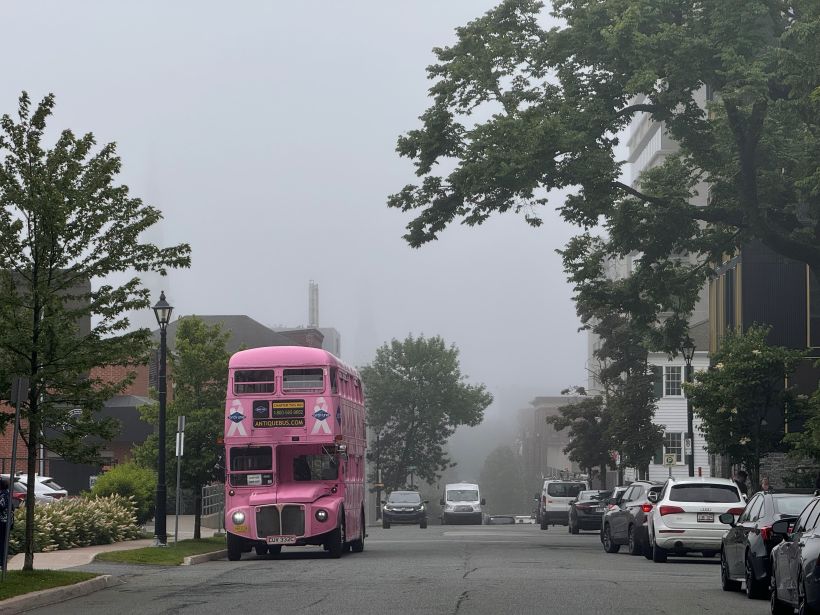
Saint John, New Brunswick's largest city and Canada's oldest incorporated municipality, sits at the mouth of the Saint John River where it meets the Bay of Fundy — one of the most extraordinary tidal environments on the planet. The bay's funnel shape amplifies Atlantic tides to heights recorded nowhere else on earth, and the effect on the surrounding landscape is transformative: tidal flats become open ocean, sea caves fill and drain within hours, and the Saint John River itself reverses its current twice daily as the incoming tide overpowers the river's downstream flow. Beyond the tidal drama, visitors find a city of genuine character — Victorian red-brick streetscapes, a farmers' market that has operated continuously since 1785, and a compact uptown that rewards walking. The dramatic coastline reaches its most theatrical expression at Hopewell Rocks, where erosion has carved towering flowerpot formations that visitors walk around at low tide and kayak past at high tide — an experience unique to this corner of Atlantic Canada.
Top things to do in Saint John New Brunswick on a cruise stopover
Bay of Fundy Tides — The World's Highest
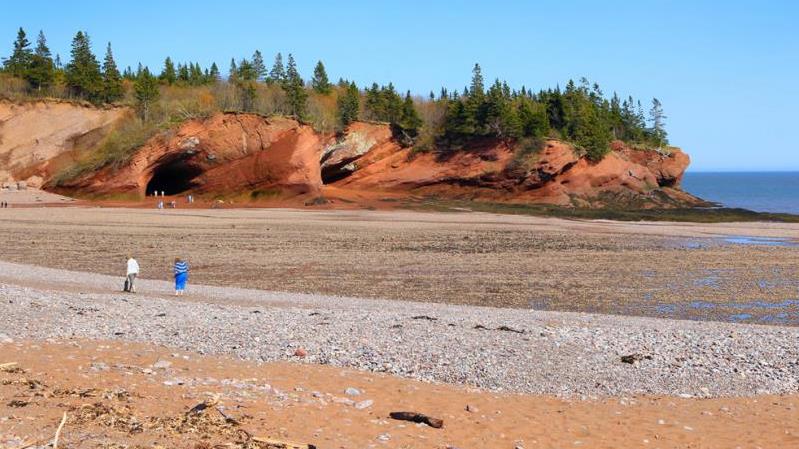
The Bay of Fundy produces the highest tides recorded anywhere on earth, with water levels rising and falling up to 16 meters in the upper reaches of the bay — the result of the bay's funnel shape amplifying the natural resonance of the Atlantic Ocean over a 12.5-hour tidal cycle. Along the shores surrounding Saint John, this drama plays out twice daily, transforming the landscape from exposed, barnacle-encrusted rock and tidal flats to full ocean depth in the span of a few hours. The Saint John Coastal Discovery experience traces these tidal shores, pairing viewpoints of dramatic bay scenery with the context to understand what makes this corner of the Atlantic genuinely unlike anywhere else. The scale of the transformation makes the physics visceral and immediate — no prior interest in geology or marine science is needed to feel the spectacle.
Saint John's Historic Uptown and City Market
Saint John's Victorian uptown district offers a compact, walkable experience anchored by the City Market, which has operated on the same site since 1785 — making it the oldest continuously operating farmers' market in Canada. The market building, with its distinctive arched ceiling modeled on an inverted ship's hull, is a heritage landmark in its own right; inside, vendors sell dulse (dried Bay of Fundy seaweed, a fiercely regional delicacy), smoked salmon, maple products, local cheeses, and handmade goods. The surrounding streets preserve one of the finest concentrations of 19th-century commercial architecture in Atlantic Canada, with carved stone facades and cast-iron detailing that speak to the city's prosperous shipbuilding era. A tour pairing the bay's natural drama with the city's Loyalist streetscape offers two very different windows into the same Atlantic Canadian culture.
Fundy Coastal Scenery — Sea Cliffs and Fishing Shores
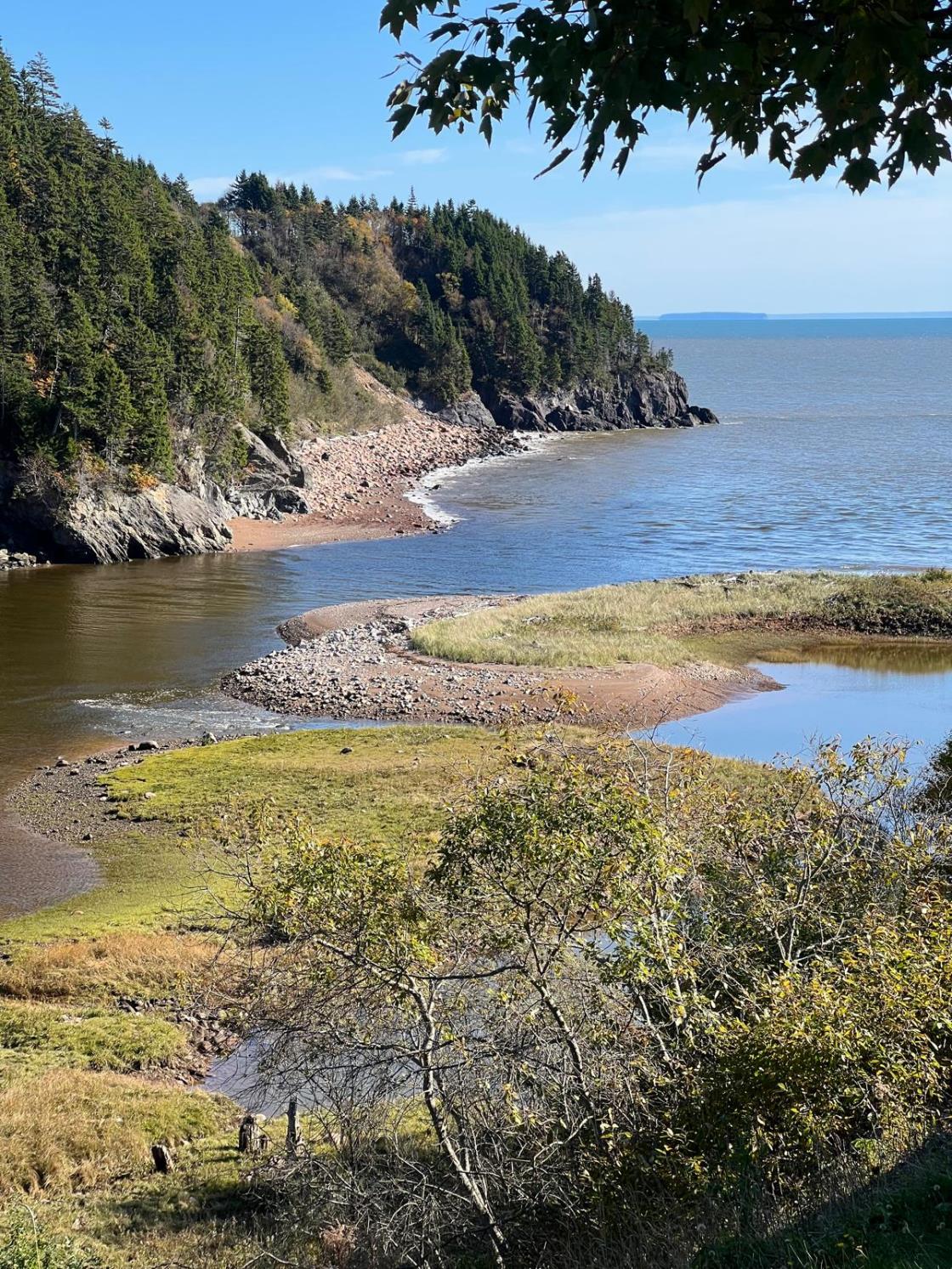
The coastline stretching along the Bay of Fundy encompasses a dramatically varied landscape of sea cliffs, working fishing coves, forested headlands, and tidal flats that change appearance with every passing hour. The Fundy Trail Parkway, east of the city, provides access to some of the most rugged and accessible coastal scenery in New Brunswick — walking trails, suspension footbridges over coastal gorges, and sweeping viewpoints above the bay where the tidal differential is visible in the exposed rock coloring on every cliff face. Fishing villages along the Fundy shore retain a working character largely unchanged from decades past: lobster traps stacked on wharves, boats settled on the tidal flats at low water, smoke from fish sheds. The contrast between the exposed seabed at low tide and the full, forceful ocean at high tide is one of the most arresting landscape phenomena on the Atlantic coast.
Hopewell Rocks — Walking on the Ocean Floor
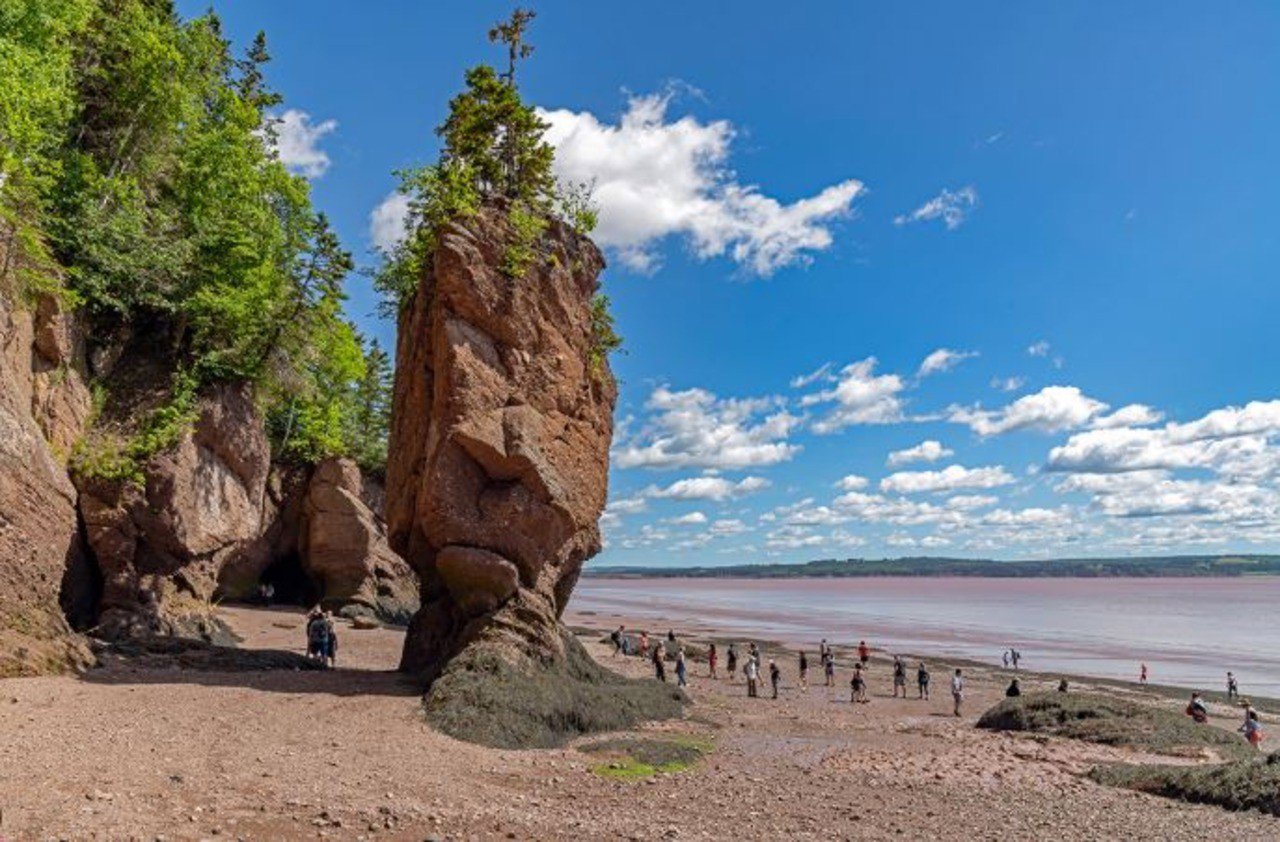
The Hopewell Rocks are among the most visually singular geological formations in Atlantic Canada — massive columns of red conglomerate rock sculpted by millennia of tidal erosion into extraordinary shapes rising up to 21 meters above the ocean floor. At low tide, visitors descend to the seabed itself, moving between the bases of the formations and exploring sea caves carved into the cliff face; at high tide, those same formations become small islands accessible only by kayak. The difference between high and low water at this site regularly exceeds 15 meters, and the tidal window for the seabed walk — roughly four hours centered on low tide — is narrow and non-negotiable. The site is managed as a New Brunswick provincial park; the experience of standing on ground that will be submerged under meters of seawater within hours is one that cruise visitors consistently describe as the most memorable of their journey.
Bay of Fundy and Historic Highlights — City and Coast Combined
The combination of Saint John's historic urban core with the natural drama of the Bay of Fundy creates an unusually varied shore day — moving between a Victorian city founded by Loyalist refugees and one of the most dynamic tidal environments on earth. The Reversing Falls, where the Saint John River narrows through a gorge and its flow reverses as the incoming tide overwhelms the current, is best observed from the falls lookout at the precise moment of tidal reversal, when the water surface momentarily stills before the river begins flowing backward. The Irving Nature Park, on a peninsula jutting into the bay, provides accessible coastal walking with consistently dramatic tidal views. Together, city and coastline offer a portrait of Atlantic Canada that is simultaneously industrial, natural, historic, and geological — a place that has shaped its inhabitants as surely as the tides have shaped its shoreline.
Saint John's Loyalist Heritage and the Reversing Falls
Saint John was founded by Loyalist refugees in 1785 — families who had sided with Britain during the American Revolution and resettled in what was then wilderness on the Bay of Fundy shore. The city's grid, its market square, its stone church spires, and the names of its streets trace directly to that founding moment, making Saint John one of the most legible examples of deliberate colonial town planning in Atlantic Canada. The New Brunswick Museum, housed in a handsome uptown building, is the oldest continuously operating public museum in Canada and holds significant collections on the province's natural and human history. The Reversing Falls remains the city's most visited natural phenomenon: the view from the falls bridge takes in both the tidal gorge and the working industrial landscape of a port city that has never stopped being useful, only evolved.
Saint John New Brunswick travel tips
The Tide Schedule Is Not Negotiable. The Bay of Fundy's tidal cycle runs approximately 12.5 hours, meaning low tide occurs at a different clock time every single day. Before planning any coastal activities — especially the Hopewell Rocks seabed walk or any shoreline exploration — check the published Bay of Fundy tide schedule for your specific port date. The window for walking on the ocean floor at Hopewell Rocks is roughly two hours either side of low tide. Arriving at or near high tide means the seabed walk is not possible; timing your visit correctly is the difference between the signature experience and a viewpoint from above.
Try Dulse. Dulse is a reddish-purple dried seaweed harvested from the Bay of Fundy and has been eaten along this coast for centuries — salty, chewy, and intensely savory with an umami depth unlike anything found elsewhere. The Saint John City Market is the best place to encounter it; vendors will offer a taste without any obligation to buy. It is an acquired flavor with genuine regional character, and even those who find it challenging the first time tend to remember it long after leaving Atlantic Canada.
Dress for the Fundy Coast. The Bay of Fundy generates its own microclimate — consistently cool, often foggy, and reliably windy along the open shore. Even on warm summer days, temperatures at a coastal viewpoint or on the Hopewell Rocks seabed can feel ten degrees colder than the city center. A windproof layer, closed-toe shoes with good grip (coastal rocks are wet and heavily barnacled), and a packable rain shell make the difference between a memorable shore day and a miserable one. Fog, while occasionally limiting views, is part of the Fundy atmosphere and rarely a reason to stay aboard.
Catching the Reversing Falls at the Right Moment. The Reversing Falls is most dramatically seen at the precise moment of tidal reversal — when the downstream river current and the incoming tide reach equilibrium, the water surface stills briefly before the river begins flowing backward upstream. This reversal happens four times daily, and the exact timing is published by the City of Saint John and posted at the falls lookout. Arriving without checking the schedule usually means missing the most striking moment; arriving at the right time makes the phenomenon genuinely jaw-dropping.
Uptown Saint John on Foot. The uptown core — from the cruise terminal to King's Square and the City Market — is compact and walkable within 15–20 minutes. Charlotte Street and Prince William Street, between the terminal and the market, pass through the most concentrated stretch of Victorian commercial architecture. The City Market is open Monday through Saturday; confirm exact hours for your port date, as seasonal schedules vary. The market closes early on Saturdays, which can catch visitors by surprise.
Photographing Hopewell Rocks. The Hopewell Rocks photograph best in overcast or diffuse light rather than direct sun — the rich reddish-brown color of the conglomerate and the fine texture of erosion channels resolve more clearly without harsh shadows. Light fog or morning mist, common along the Fundy coast in summer, adds atmosphere rather than diminishing the scene. The most distinctive perspective is from the seabed level, shooting upward at the formations against sky or cloud — an angle that no elevated viewpoint can replicate and that makes clear why arriving at low tide is so important.
Port Facts Every Cruiser Needs To Know
Saint John New Brunswick shore excursion FAQs
The Pugsley Cruise Terminal is located at the foot of the uptown district, less than a kilometer from King's Square and the Saint John City Market. Most visitors find the walk from ship to the uptown core takes 10–15 minutes on flat, paved streets — one of the more accessible and pleasant pier-to-city walks in Atlantic Canada.
The Reversing Falls is approximately 3 kilometers from the cruise terminal — a walkable distance for fit travelers (around 35–40 minutes each way on mostly flat terrain), though bus transit is also available. More importantly, what determines the quality of the experience is not how you get there but when — the tidal reversal schedule must be checked in advance, as arriving at the wrong point in the cycle means missing the phenomenon entirely.
Hopewell Rocks is located at Hopewell Cape, roughly 40 kilometers northeast of Moncton — approximately 1.5 hours by road from Saint John. Combined with time at the site and the return journey, a Hopewell Rocks visit requires at least 5–6 hours total. The seabed walk is only accessible within the tidal window around low tide, making advance planning essential; this excursion suits ships with longer port stays or well-planned excursions that account for travel time and tide timing simultaneously.
The seabed walk is possible within approximately two hours either side of low tide — a window of roughly four hours centered on each day's low water. Because the Bay of Fundy tidal cycle runs 12.5 hours rather than exactly 12, low tide time shifts by roughly 50 minutes each day. The tide schedule for Hopewell Cape is published by the Province of New Brunswick and posted at the site entrance; always check it for your specific port date, not a general approximation.
The Saint John City Market has operated on the same site since 1785, making it the oldest continuously operating farmers' market in Canada. The building itself — with its distinctive arched ceiling built to resemble a ship's hull — is a recognized heritage structure. Inside, vendors sell local produce, dulse, smoked fish, maple products, prepared foods, craft goods, and local art. It is genuinely one of the best places in Atlantic Canada to encounter regional food culture in a concentrated, unhurried setting, and well worth an hour of any port day.
The Bay of Fundy region has a food culture built around seafood. Lobster in season, bay scallops, smoked salmon, and dulse are all emblematic of the area. The City Market's food vendors offer the most accessible and genuinely local options; several uptown restaurants specialize in Maritime-style seafood prepared without pretension. New Brunswick maple products — syrup, butter, and candy — are also worth seeking from local producers rather than mass-market brands.
Yes, meaningfully so. In Saint John, the tidal influence is most dramatically visible at the Reversing Falls gorge, where the river current reverses direction, and along the bay-facing shoreline. Hopewell Rocks offers something distinct: the experience of physically standing on the seabed between geological formations, surrounded by walls of rock that will be submerged under meters of ocean within hours. If time allows only one, Hopewell Rocks provides the more singular and irreplaceable experience — provided the tidal timing makes the seabed walk accessible.
New Brunswick is Canada's only constitutionally bilingual province, with English and French as co-official languages. In Saint John specifically, English predominates in daily life, and all visitor-facing services, signage, menus, and attractions operate in English. French-speaking visitors will find the city accommodating; English-speaking visitors will encounter no language barrier.
The uptown core — City Market, King's Square, the historic streetscape, and the Reversing Falls — is entirely manageable independently, as long as you check the tidal schedule before heading to the falls. For Hopewell Rocks and the broader Fundy coastline, the distance involved and the need to optimize around a specific tidal window make organized excursions significantly more practical for cruise visitors. The coastal Fundy experience benefits from local knowledge about timing, access, and what to look for that independent travelers rarely have on a compressed schedule.
Saint John's coastal location means conditions can change quickly, and Bay of Fundy fog is a year-round feature — most frequent in June and July, less common in September and October. Summer temperatures typically range from 15–25°C (60–77°F), but coastal sites along the bay consistently feel cooler and windier than the city center. Rain gear and a windproof layer are sensible regardless of the morning forecast. Fog, while it occasionally limits views, is integral to the Fundy coastal character and rarely prevents a rewarding shore day.
Filters
Select a filter to refine results.
Tour Type
Tour Activity
 Cart
Cart
 USD
USD GBP
GBP AUD
AUD EUR
EUR CAD
CAD