



Tours in Sydney Nova Scotia




Cruising to Sydney Nova Scotia in a group?
Skip the crowded ship excursion bus. One dedicated planner will design a private shore experience around exactly what your group wants — coordinated from first enquiry to the moment you're back on board. More memorable, more flexible, and more affordable than you might expect. Spend less time organising, more time enjoying.
Explore Group Travel →Cruising to Sydney Nova Scotia
Sydney sits at the heart of Cape Breton Island, a destination that consistently ranks among the world's most beautiful islands — and the view from the cruise pier makes that case immediately. This compact port city serves as the launchpad for some of eastern Canada's most storied landscapes: the sweeping coastal bends of the Cabot Trail, the atmospheric ramparts of the Fortress of Louisbourg, and the tranquil lakeside village of Baddeck, where Alexander Graham Bell chose to spend his final decades. Cape Breton's character is shaped by centuries of Scottish and French settlement, and both legacies are immediately tangible — in the Gaelic road signs, the fiddle music drifting from pub doorways, and the kilted performers at heritage sites. For cruise visitors, the challenge is not finding things to do but choosing wisely among experiences that require real distance. The Cabot Trail alone demands a full day of driving to appreciate, while Louisbourg is a 45-minute journey in the opposite direction. Sydney's downtown waterfront, with its murals, steel-era history, and the world's largest fiddle sculpture, rewards those who prefer to stay close. However you spend your hours ashore, Cape Breton has a way of leaving visitors with the specific, nagging feeling that they need to come back.
Top things to do in Sydney Nova Scotia on a cruise stopover
The Cabot Trail: One of the World's Great Scenic Drives
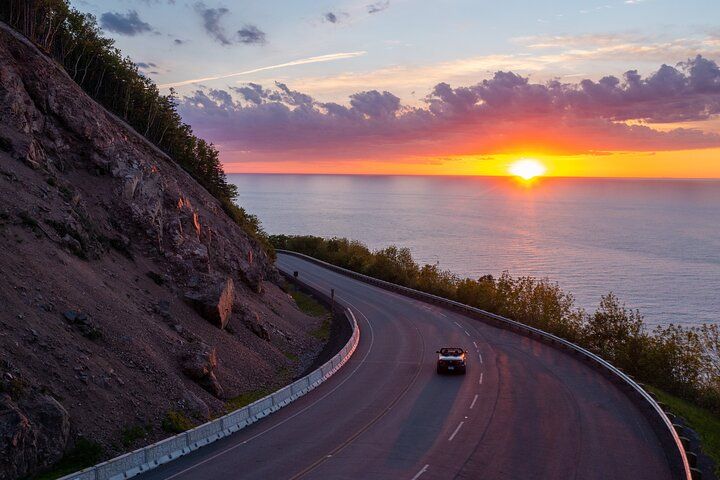
Few roads anywhere match the Cabot Trail for sustained, uninterrupted beauty. Looping around the northern tip of Cape Breton Island, this 298-kilometre route climbs through the Cape Breton Highlands, hugs precipitous coastal cliffs, and descends into sheltered fishing villages with views of the Gulf of St. Lawrence stretching to the horizon. The full loop takes a long day to drive properly, but even the sections accessible from Sydney within a shore excursion timeframe deliver the highland vistas and ocean panoramas that have made this route famous. Whales, bald eagles, and moose are regularly spotted along the way.
Fortress of Louisbourg: 18th-Century France, Reconstructed
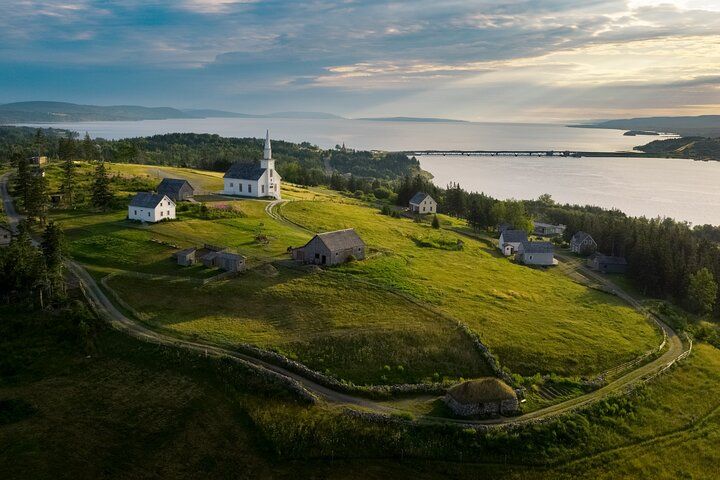
The Fortress of Louisbourg is one of the most ambitious historical reconstructions in North America. Once the largest French fortified town on the continent, it was destroyed by British forces in 1760, then painstakingly rebuilt by Parks Canada over decades beginning in the 1960s. Today, costumed interpreters re-create colonial life with striking authenticity — soldiers drill in the streets, bakers work wood-fired ovens, and the governor's apartments reflect the surprising elegance of frontier wealth. The site sits about 45 minutes from Sydney, and a half-day here is time genuinely well spent.
Baddeck and the Legacy of Alexander Graham Bell
The lakeside village of Baddeck charmed Alexander Graham Bell so completely that he made it his home for the last 37 years of his life. The Alexander Graham Bell National Historic Site holds a remarkable collection of his later inventions — including early aircraft and hydrofoil designs that most visitors never knew he worked on — alongside personal artifacts and his private laboratory. The village itself is a pleasure: a small, unhurried community on the shores of Bras d'Or Lake, Canada's only inland sea, with a waterfront that rewards a quiet walk.
Scottish Heritage and Living Gaelic Culture
Cape Breton's Scottish roots run deeper than anywhere else in Canada. The waves of Highland Scots who arrived after the 18th-century clearances brought their language, music, and traditions, and those traditions have survived here more robustly than in many parts of Scotland itself. The island's fiddle tradition is world-renowned, and Celtic music spills from venues year-round. Heritage experiences across the island explore the story of these communities — the hardships, the resilience, and the cultural legacy that persists in living Gaelic speakers and in the sound of a Cape Breton reel.
Sydney's Waterfront: Steel History and Industrial Character
Sydney's past as a steel and coal town gives the city a working-class, no-pretense character that feels refreshingly honest. The downtown waterfront is anchored by the Cossitt House, the Jost House, and a collection of heritage buildings alongside contemporary public art. The world's largest fiddle — a gleaming, 18-metre sculpture — stands at the pier as Cape Breton's most photographed landmark. The Cape Breton Centre for Craft and Design and several local galleries offer a window into contemporary island creativity, while the Esplanade makes for a pleasant stroll to orient yourself before heading further afield.
Cape Breton Highlands: Wildlife, Wilderness, and Highland Vistas
Cape Breton Highlands National Park protects 950 square kilometres of boreal plateau, river canyons, and coastline that feel genuinely remote despite being accessible from the port. The park is one of the best places in eastern Canada to spot moose, and bald eagle sightings are common along the river valleys. Numerous trailheads along the Cabot Trail lead into the highlands for walks ranging from easy coastal loops to more demanding ridge hikes. Even from the road, the scale of the landscape — the rolling plateau dropping sharply to the sea — conveys something that photographs struggle to capture.
Sydney Nova Scotia travel tips
Commit to One Direction Before You Leave the Ship. The Cabot Trail runs northeast from Sydney and Louisbourg runs southwest — they are nearly opposite directions. Attempting both in a single port day means spending most of your time in transit and shortchanging both experiences. Decide in advance which matters more to you and plan your entire day around it. Locals will tell you the same thing.
Dress in Layers, Regardless of the Morning Forecast. Cape Breton's weather shifts quickly, especially at elevation on the Cabot Trail. A sunny pier departure can give way to cool mist and wind in the highlands within an hour. A light waterproof jacket, a mid-layer, and comfortable walking shoes with some grip are the sensible baseline for any itinerary on the island.
Eat Lobster While You Have the Chance. Cape Breton is legitimate lobster country. Prices are lower here than in most North American seafood markets, and the product is genuinely fresh. Several restaurants within reach of the pier serve whole lobster, lobster rolls, and chowder at prices that will surprise visitors accustomed to urban seafood costs. If you have any interest in seafood, this is the port to indulge.
Look for Live Music, Even During the Day. Cape Breton's fiddle tradition is not a tourist performance — it is a living community practice. Informal sessions happen at pubs, community halls, and outdoor venues throughout the summer. Ask locally where music is happening that day. Stumbling into a genuine Cape Breton session is one of those travel experiences that stays with you long after the itinerary details fade.
Factor Driving Times Honestly into Your Plan. Distances on Cape Breton Island look manageable on a map but take longer than expected, particularly on the Cabot Trail where the road's curves and the temptation to stop constantly slow progress. Sydney to the Cabot Trail highlands is roughly 90 minutes each way. Sydney to Louisbourg is 45 minutes. Build buffer time and confirm your ship's all-aboard time before you commit to an itinerary.
September Visitors: Prioritize the Highland Scenery. Fall foliage arrives in the Cape Breton Highlands from mid-September, typically earlier than lower elevations. The combination of turning hardwoods against the ocean backdrop on the Cabot Trail is considered by many photographers to be among the finest autumn scenes in eastern Canada. If your cruise calls in September or early October, the highlands should be your priority, and the morning light rewards early departures from the pier.
Port Facts Every Cruiser Needs To Know
Sydney Nova Scotia shore excursion FAQs
The Cabot Trail technically begins near Baddeck, about 90 kilometres (roughly 75–90 minutes) from the Sydney cruise pier. The most dramatic sections of the trail — the coastal highlands and the clifftop lookouts — are further still. A day trip along the trail is absolutely possible from Sydney, but it requires an early start and a clear plan about which sections you want to experience, as completing the full loop in a port day is not realistic.
For visitors interested in history, it is widely considered one of the most rewarding half-day experiences in Atlantic Canada. The site is approximately 45 kilometres from the pier, about 45 minutes by road, and the level of historical reconstruction and interpretation is genuinely impressive. Allocate at least two to three hours at the fortress itself to do it justice. The combination with Baddeck in a single day is not recommended — they are in opposite directions.
Sydney's downtown waterfront offers a pleasant half-day without requiring any significant travel. The giant fiddle sculpture at the pier is the starting point, and the Esplanade runs along the waterfront with public art and heritage buildings. The Cape Breton Centre for Craft and Design, the Cossitt House Museum, and several local galleries are within easy walking distance. The dining options near the pier include excellent seafood. It is a quieter option than the island's major attractions, but not without genuine character.
Yes. Pilot whales, minke whales, and fin whales are regularly spotted from headlands and boat tours along the Cabot Trail coast, particularly from late July through September. Bald eagles are common throughout the island, especially along river corridors. Moose are frequently seen on the Cabot Trail, particularly in the early morning. Cape Breton Highlands National Park is the best single location for reliable wildlife encounters.
Cape Breton received large numbers of Scottish Highland immigrants in the late 18th and 19th centuries, particularly following the brutal Highland Clearances. The Gaelic language, music, and community traditions they brought survived here more completely than in many parts of Scotland. The connection is most tangible in the island's fiddle music tradition, in Gaelic-language signage and cultural programs, and in heritage sites that explore the story of the Scottish diaspora in the region. The village of Iona and various community Highland games events are particularly associated with this heritage.
Bell first visited Baddeck in 1885 and was so taken with the landscape and the quality of the light — which he compared favorably to his native Scotland — that he built a summer estate called Beinn Bhreagh on a headland overlooking Bras d'Or Lake. He spent increasing amounts of time there and ultimately died at Beinn Bhreagh in 1922. Much of his later experimental work, including early aviation and hydrofoil research, was conducted in Baddeck. The Alexander Graham Bell National Historic Site in the village holds the world's most comprehensive collection of his artifacts and documents.
Late June through mid-October covers the practical cruise season, but September is often considered the finest month. The summer crowds have thinned, the weather remains generally mild, the light is golden, and early fall foliage begins appearing in the highlands by mid-month. July and August offer the warmest temperatures and longest days, which suit the Cabot Trail particularly well. May and June port calls are possible but the weather is cooler and more unpredictable.
The Fortress of Louisbourg and much of Sydney's downtown waterfront are accessible, though the fortress's historic stone surfaces can be uneven in places. The most dramatic Cabot Trail scenery is visible from roadside pullouts without requiring significant walking. The Alexander Graham Bell National Historic Site in Baddeck is generally accessible. Visitors with specific mobility needs should confirm accessibility details with their chosen excursion provider before the port call.
Lobster is the headline. Cape Breton lobster is fresh, relatively affordable, and available in various preparations — whole steamed, in rolls, in chowder — at restaurants near the pier and throughout the island. Rappie pie (rapure) is an Acadian specialty unique to the region: a dense, savory casserole made from grated potato and chicken that sounds unpromising and tastes memorable. Donair, a Maritime spin on the doner kebab with a distinctive sweet sauce, is popular locally. Cape Breton ales and locally distilled spirits are increasingly available at restaurants throughout the island.
Most visitors find two to three hours at the fortress itself to be the right amount of time — enough to walk the ramparts, explore the reconstructed town streets, interact with the costumed interpreters, and visit the governor's apartments without feeling rushed. Adding travel time from the pier (approximately 45 minutes each way), a full Louisbourg excursion realistically occupies four to five hours of your port day. The site has a café and period-style dining option if you plan to eat at the fortress.
Filters
Select a filter to refine results.
Tour Type
Tour Activity
 Cart
Cart
 USD
USD GBP
GBP AUD
AUD EUR
EUR CAD
CAD