



Tours in Manaus


Cruising to Manaus in a group?
Skip the crowded ship excursion bus. One dedicated planner will design a private shore experience around exactly what your group wants — coordinated from first enquiry to the moment you're back on board. More memorable, more flexible, and more affordable than you might expect. Spend less time organising, more time enjoying.
Explore Group Travel →Cruising to Manaus
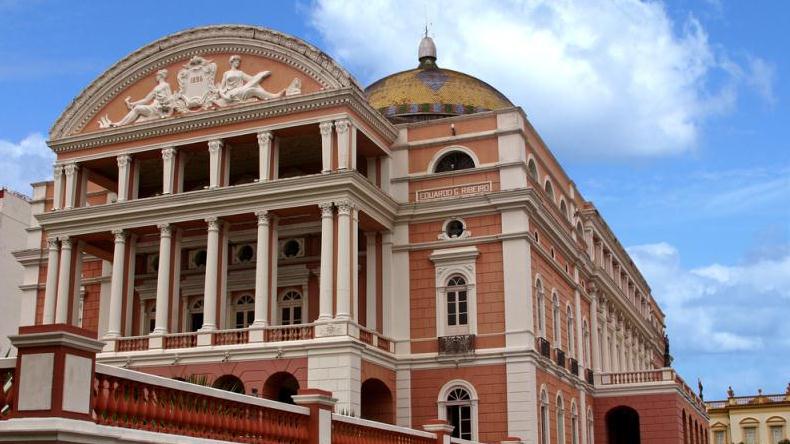
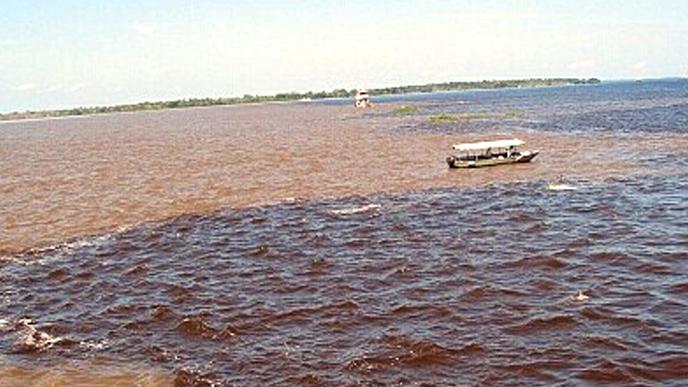
Manaus sits at the heart of the Amazon basin, a city of two million people carved from rainforest and sustained by one of the planet's most extraordinary ecosystems. Its streets tell the story of a rubber boom that transformed a remote jungle settlement into a gilded metropolis at the turn of the 20th century — the Teatro Amazonas opera house, with its Parisian-style dome sheathed in 36,000 hand-painted ceramic tiles, stands as the most dazzling testament to that improbable era of jungle wealth. Today, Manaus is the launch point for experiences that exist nowhere else on earth: the famous Meeting of the Waters, where the dark tannin-rich Rio Negro and the sandy-coloured Rio Solimões flow side by side for kilometres without mixing, is a natural phenomenon that rewards every visitor who makes the river journey. Beyond the city limits, the Amazon rainforest begins almost immediately — a vast, breathing green world of caimans, pink river dolphins, howler monkeys, and bird life of astonishing variety. Cruise visitors arriving here have access to one of travel's genuinely transformative destinations, where the boundary between the urban and the primordial dissolves within minutes of leaving the port.
Top things to do in Manaus on a cruise stopover
The Meeting of the Waters
The confluence where the dark, tannin-stained Rio Negro meets the café-au-lait Rio Solimões — and the two rivers run side by side without blending for over six kilometres — is one of the natural world's most arresting spectacles. Witnessed from a river vessel, the sharp boundary between the two streams is explained by differences in temperature, density, and flow speed, and the visual effect is every bit as dramatic as any photograph suggests.
Teatro Amazonas and the Rubber Boom Era
The 1896 opera house is one of the most improbable buildings in the Americas: a fully ornate European theatre rising from the Amazon jungle, its dome clad in ceramic tiles imported from Alsace and its interiors fitted with Venetian glass and Carrara marble. A guided city tour brings this gilded history to life through the streets, mansions, and public squares that rubber barons built during Manaus's brief, extraordinary moment of global wealth.
Mercado Municipal Adolpho Lisboa
Modelled on the iron-and-glass market halls of 19th-century Paris and opened in 1882, Manaus's riverside market is an atmospheric tangle of tropical fruits, river fish, medicinal plants, and regional crafts. It is one of the finest public markets in South America and a vivid window into the daily rhythms of a city whose life has always revolved around the river.
Amazonian River Wildlife
A journey on the Negro and Solimões delivers genuine wildlife encounters that few destinations can match. Pink and grey river dolphins frequently surface near the confluence, caimans patrol shaded riverbanks, and the bird life — herons, kingfishers, scarlet macaws, and raptors — is extraordinary even from the deck of a passing vessel. This is not a zoo: it is the Amazon in its own scale and on its own terms.
Várzea Forest and Rainforest Ecology
The Amazon rainforest begins at the city's edge, and a guided excursion into the várzea — seasonally flooded forest — opens encounters with towering trees, medicinal plant knowledge passed down through indigenous communities, and the layered sounds of a living ecosystem covering 5.5 million square kilometres. The transition from city street to jungle trail happens in minutes, and its effect is disorienting in the best possible way.
Post-Cruise City Exploration and Airport Transfer
For travellers ending their cruise in Manaus, a tour that combines the highlights of the historic centre — the opera house, the market, the colonial riverside — with a direct transfer to Eduardo Gomes International Airport offers an elegant solution to the challenge of a disembarkation day: see the city properly, without the anxiety of navigating an unfamiliar city's transport connections under time pressure.
Manaus travel tips
Insect Protection Is Non-Negotiable. Mosquito repellent containing DEET is strongly recommended for any time spent near the river or in forested areas. Long sleeves and trousers worn during dawn and dusk hours provide an important additional layer of protection, particularly on multi-hour river excursions.
Hydrate Aggressively. Manaus's equatorial heat and extreme humidity can be exhausting at a pace that surprises even experienced tropical travellers. Carry significantly more water than you expect to need, and consider electrolyte supplements or coconut water — widely available at market stalls — for any full-day outing.
Withdraw Cash Before Leaving the Port. While larger restaurants and tour operators accept credit cards, smaller vendors, market stalls, and river boat operators frequently deal in cash only. Withdraw reais from ATMs near the port area before heading out, as ATM availability diminishes further from the city centre.
Photograph the Confluence Under Overcast Skies. The colour contrast between the two rivers at the Meeting of the Waters is most dramatic under a bright but overcast sky. Harsh overhead sunlight can wash out the tonal difference. If the morning is cloudy, keep your camera ready — the conditions are often ideal for capturing the phenomenon at its most striking.
Dress for the Environment, Not the Occasion. Lightweight, moisture-wicking fabrics in neutral or earth tones are ideal. Avoid blue clothing on river excursions — certain biting insects are attracted to blue hues. Closed-toe shoes with grip are advisable for any jungle trail walking, even short walks, as riverbank terrain can be slick.
Respect Wildlife from a Distance. River dolphins, caimans, and other Amazonian wildlife are wild animals in a protected and sensitive ecosystem. Responsible guides maintain respectful distances and do not feed or bait animals. Be wary of any operator who encourages direct contact — it compromises both wildlife welfare and visitor safety.
Port Facts Every Cruiser Needs To Know
Manaus shore excursion FAQs
Visa requirements for Brazil depend on your nationality. Citizens of the United States, Canada, the United Kingdom, Australia, and most European Union countries can enter Brazil visa-free for up to 90 days. Some nationalities do require a visa in advance. Always verify current requirements with the Brazilian consulate or your country's foreign affairs ministry before departure, as regulations can change.
The rainforest begins at the edge of the city, and river excursions depart from the port area, making access relatively straightforward. That said, reaching areas of genuine ecological depth — flooded várzea forest, wildlife-rich riverbanks — requires a boat journey of at least 30 to 60 minutes from the urban waterfront. A well-structured shore excursion is the most time-efficient way to experience the forest meaningfully within a cruise day.
The Meeting of the Waters is the confluence of the Rio Negro and the Rio Solimões, where two rivers of dramatically different colour, temperature, and chemistry flow side by side for roughly six kilometres without mixing. It occurs approximately 10 kilometres downstream from Manaus, making the journey by river vessel around 45 to 90 minutes each way depending on the type of boat. It is widely considered the single most remarkable natural spectacle accessible to cruise visitors in Manaus.
Manaus is a large Brazilian city with the typical contrasts that implies. The historic centre around the Teatro Amazonas, the Mercado Municipal, and the main tourist sites is well-frequented and generally safe during daylight hours. Standard urban precautions apply: keep valuables out of sight, avoid displaying expensive electronics, and remain aware of your surroundings. Joining an organised shore excursion is the most straightforward way to navigate the city comfortably and efficiently.
Yes — wildlife sightings on the Amazon river are genuinely common rather than incidental. Pink river dolphins are frequently encountered near the Meeting of the Waters and along quieter river channels. Caimans, various heron and kingfisher species, and occasionally howler monkeys are regularly spotted even on shorter excursions. Longer boat trips with time on smaller tributaries increase the likelihood of varied sightings significantly.
Lightweight, moisture-wicking long-sleeved shirts and long trousers in neutral colours provide the best combination of sun protection, insect protection, and comfort. A wide-brimmed hat is essential. Avoid blue tones if possible, as certain biting insects are drawn to them. Closed shoes with grip are preferable to sandals if there is any possibility of walking on riverbank terrain. A lightweight waterproof layer is useful as afternoon rain showers can arrive quickly.
Absolutely. The opera house is one of the most extraordinary buildings in South America, and its interior — with Italian-painted ceiling canvases, Venetian glass chandeliers, and a main auditorium of unexpected intimacy and beauty — is arguably more impressive than the celebrated dome viewed from outside. Guided tours of the interior are available and last approximately 30 to 45 minutes. If the theatre's full season is running, attending a performance is an unforgettable experience for those with an evening in port.
Yes, and this is the most popular approach for visitors with a full day in port. A morning city tour covers the Teatro Amazonas, the Mercado Municipal, and the colonial historic centre in approximately three to four hours, leaving the afternoon for a river cruise to the Meeting of the Waters and wildlife watching. The two experiences complement each other well, offering both the cultural and natural dimensions of what makes Manaus unique. Confirm your ship's all-aboard time and plan conservatively for the river return journey.
Amazonian cuisine is genuinely distinct from the rest of Brazil and worth exploring. Tacacá — a warming broth of tucupi (fermented manioc juice), dried shrimp, and the mildly anaesthetic jambu leaf — is the city's signature street food. Pirarucu, one of the world's largest freshwater fish, appears on most restaurant menus and is exceptional when fresh. The Mercado Municipal is the best place to try tropical fruits that rarely reach international markets, including cupuaçu, bacuri, and graviola.
Travellers disembarking in Manaus have the advantage of a more relaxed pace for exploring the city, but should still plan their day carefully. Eduardo Gomes International Airport is approximately 14 kilometres from the port. A post-cruise city tour that combines historic centre highlights with a direct airport transfer is an efficient option that turns what could be a logistically stressful disembarkation day into a proper final chapter of the journey — experiencing the city's landmarks before heading home.
Filters
Select a filter to refine results.
Tour Type
Tour Activity
 Cart
Cart
 USD
USD GBP
GBP AUD
AUD EUR
EUR CAD
CAD