



Tours in Recife


Cruising to Recife in a group?
Skip the crowded ship excursion bus. One dedicated planner will design a private shore experience around exactly what your group wants — coordinated from first enquiry to the moment you're back on board. More memorable, more flexible, and more affordable than you might expect. Spend less time organising, more time enjoying.
Explore Group Travel →Cruising to Recife
Recife, the capital of Pernambuco state, is one of Brazil's most rewarding and underappreciated cruise destinations. Nicknamed the 'Venice of Brazil' for its network of rivers and bridges, Recife pairs seamlessly with the hillside colonial town of Olinda, a UNESCO World Heritage Site just minutes away. Together, they offer cruise visitors a compelling portrait of Northeastern Brazil — vivid street art, Baroque churches, African-influenced rhythms, and seafood that rivals anything on the continent. The pace is distinctly different from Rio: slower, more intimate, and deeply proud of its cultural roots. Those who step ashore here discover a city that has been generating art, music, and architecture since the 16th century, and doing so largely on its own terms.
Top things to do in Recife on a cruise stopover
Historic City Tour: Recife Antigo & Olinda Combined
The classic Recife port day pairs the waterfront colonial district of Recife Antigo with the UNESCO-listed hilltop town of Olinda in a single half-day sweep. Marco Zero Square anchors the Recife side — a lively public space surrounded by Dutch colonial architecture, street musicians, and the symbolic marker of the city's founding. From there, the short journey to Olinda reveals one of the best-preserved colonial ensembles in the Americas, its steep streets lined with Baroque churches and colorful 16th-century mansions. The two destinations tell the full story of Northeastern Brazil's colonial and cultural history in a compact, walkable package.
Olinda: A UNESCO World Heritage Hill Town
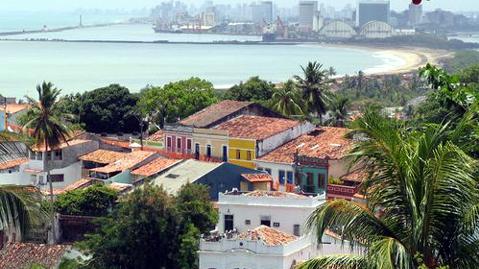
Perched on a series of hills overlooking the Atlantic, Olinda earned its UNESCO World Heritage designation in 1982 for the extraordinary concentration of Baroque architecture, sacred art, and urban planning that survived largely intact from the colonial era. Its winding alleys spill past bougainvillea-draped mansions, open-air ateliers, and more than a dozen churches, each with its own history and viewpoint over the sea. The Igreja da Sé and Convento de São Francisco offer the most commanding panoramas — and the most photogenic views of the red-tiled roofscape below.
Frevo, Maracatu & the Rhythms of the Northeast
Recife is the birthplace of frevo, a frenetic, umbrella-twirling dance tradition recognized by UNESCO as an Intangible Cultural Heritage of Humanity. It is also a center of maracatu, an Afro-Brazilian percussion and processional tradition rooted in the region's African heritage. The Museu do Frevo offers an excellent introduction, and live music is woven into the fabric of daily life around Recife Antigo. Even on an ordinary weekday, the sounds of the Northeast are never far away.
Baroque Churches & Sacred Art
The concentration of colonial religious architecture in Olinda and the older quarters of Recife rivals destinations far more famous on the international circuit. Convento de São Francisco, dating to 1585, contains some of the finest azulejo tilework in Brazil. The hilltop Igreja da Sé offers sweeping Atlantic views alongside its architectural splendor. Taken together, the sacred art and ecclesiastical architecture of this corner of Pernambuco represent one of Latin America's most significant and least-visited cultural collections.
The Flavors of Pernambuco at Mercado de São José
Northeastern Brazilian cuisine is distinct from what most international visitors expect: tapioca crepes made from cassava flour, carne de sol (sun-cured beef), moqueca nordestina, fresh crab, and coconut-based sweets dominate a culinary tradition shaped by Indigenous, African, and Portuguese influences. Brazil's oldest iron market, the Mercado de São José — built in 1875 — is the most visceral entry point into this food culture: fragrant, crowded, loud, and utterly authentic. The surrounding streets are equally good for a proper regional lunch.
Boa Viagem & Recife's Atlantic Shoreline
When time allows after the historic centers, Boa Viagem offers a broad Atlantic beach backed by a neighborhood full of restaurants, kiosks, and the easy coastal energy that characterizes Brazilian beach culture. The beachfront promenade is a pleasant place to decompress and absorb the city's more contemporary face before returning to port. Note that reef formations make swimming inadvisable at most points — the beach is best enjoyed as a walking and dining destination rather than for a swim.
Recife travel tips
Wear Proper Walking Shoes. Olinda's cobblestone streets and steep hills are best navigated on foot, and the uneven surfaces can be genuinely challenging in anything but flat, sturdy footwear. Many of the most rewarding alleys and viewpoints involve significant climbing — sandals or dress shoes will make the experience considerably less enjoyable.
Carry Cash in Small Denominations. Many artisan vendors in Olinda's markets and smaller eateries around the historic center do not have card readers, and change can be scarce at busy stalls. Having a supply of smaller Real notes ensures you can shop freely in the places that make Recife and Olinda feel most authentic.
Take the Heat Seriously. Apply sunscreen generously and carry a water bottle. The combination of tropical sun, high humidity, and sustained walking between sites can catch visitors off guard, particularly in the October-to-March wet season when heat intensifies. Hydration stops should be built into any walking itinerary here.
Learn a Few Words of Portuguese. Recife receives fewer international cruise visitors than Rio or Salvador, and English is not widely spoken outside of formal tourist contexts. Even a handful of words — obrigado (thank you), com licença (excuse me), quanto custa (how much) — opens doors and visibly changes how locals engage with you.
Go to Olinda in the Morning. The afternoon light in Olinda is exceptional for photography, but mornings are cooler and the streets are quieter. If your ship arrives early, heading to Olinda first and returning to Recife Antigo later in the day gives you the best of both rhythms — peaceful early exploration followed by the livelier waterfront atmosphere as the day builds.
Stay Alert in Crowded Spaces. Like any large Brazilian city, Recife requires standard urban awareness in busy public areas. Keep a close eye on bags, phones, and cameras particularly around Marco Zero Square and the Mercado de São José. Staying in well-trafficked areas during daylight hours and avoiding unnecessary displays of valuables makes for a smooth and enjoyable visit.
Port Facts Every Cruiser Needs To Know
Recife shore excursion FAQs
Olinda sits approximately 6 kilometers north of Recife Antigo, making it a natural and easy addition to any port day. Local buses make the journey frequently and inexpensively, with the trip taking roughly 20 to 30 minutes depending on traffic. The two destinations pair seamlessly into a single half-day or full-day itinerary.
Like any large city, Recife requires standard urban awareness. The historic districts of Recife Antigo and Olinda's tourist areas are generally considered safe during daylight hours. Staying alert in crowded public spaces, not displaying expensive electronics or jewelry, and keeping to well-trafficked streets significantly reduces any risk of petty theft.
Recife is the birthplace of frevo — a UNESCO-recognized musical and dance tradition — as well as maracatu, another Afro-Brazilian cultural form with deep roots in the region's history. The city's Carnival is widely regarded as the most authentically Brazilian in the country, distinct from the more commercialized Rio version and rooted in genuine community tradition.
Yes, Olinda is very manageable independently. Local buses connect Recife Antigo to Olinda regularly, and the UNESCO-listed historic center is small enough to explore on foot in two to three hours. Most key sights — churches, viewpoints, and artisan workshops — are free or charge only a nominal entry fee, and the street layout, while hilly, is intuitive.
Do not leave without trying tapioca — thin crepes made from cassava flour, filled with coconut, fresh cheese, or seasoned meat. Carne de sol with pirão (a savory flour porridge), fresh crab, and moqueca nordestina are all essential. The Mercado de São José and surrounding lunch restaurants serve excellent and affordable regional cuisine that is unlike anything found in southern Brazil.
Absolutely. Built in 1875, the Mercado de São José is the oldest iron market in Brazil and a living piece of the city's commercial and social history. It sells everything from regional produce, spices, and medicinal herbs to leather goods and artisan crafts. The surrounding street food scene is equally vibrant and makes for an excellent lunch stop.
The Brazilian Real (BRL) is essential for smaller purchases, local markets, and street food. While many restaurants and shops in tourist areas accept major credit cards, the cash economy dominates in local markets, artisan stalls, and traditional eateries. ATMs are available in the Recife Antigo area near the port.
Boa Viagem is the most accessible urban beach and is lined with restaurants and a pleasant waterfront promenade. However, the presence of bull sharks in the waters near the reef makes swimming inadvisable at most points along the beach. The shoreline is very enjoyable for a walk and a meal even without entering the water.
A well-organized half-day of four to five hours is sufficient to cover the key highlights of both Recife Antigo and Olinda. A full day allows for a more relaxed pace, a proper lunch, and time for additional sites such as the Museu do Frevo or the Instituto Ricardo Brennand. Most cruise itineraries provide enough time for the combined visit without feeling rushed.
The cruise terminal at Porto do Recife is adjacent to the Recife Antigo neighborhood, making it walkable in under 15 minutes. Marco Zero Square and the surrounding colonial waterfront are the natural first stop for any visitor stepping off a ship in Recife — there is no significant transfer needed to reach the heart of the historic district.
Filters
Select a filter to refine results.
Tour Type
Tour Activity
 Cart
Cart
 USD
USD GBP
GBP AUD
AUD EUR
EUR CAD
CAD