



Tours in Valparaiso (Santiago)


Cruising to Valparaiso (Santiago) in a group?
Skip the crowded ship excursion bus. One dedicated planner will design a private shore experience around exactly what your group wants — coordinated from first enquiry to the moment you're back on board. More memorable, more flexible, and more affordable than you might expect. Spend less time organising, more time enjoying.
Explore Group Travel →Cruising to Valparaiso (Santiago)
Cruise ships calling at Valparaiso deliver passengers to one of South America's most visually arresting port cities — a UNESCO World Heritage Site where Victorian-era funiculars haul visitors up improbably steep hillsides draped in murals and pastel-painted houses. Yet the port's appeal stretches well beyond its own cerros. Neighbouring Viña del Mar, Chile's premier coastal resort, sits just fifteen minutes up the coast, its broad beach boulevard and manicured casino gardens offering a striking contrast to Valparaiso's bohemian character. And for those willing to invest the journey, Santiago — a metropolis of seven million set against a snow-capped Andean skyline — lies roughly ninety minutes inland, rewarding visitors with world-class museums, lively food markets, and elegant colonial and republican architecture. The combination of three distinct destinations within a single shore day makes Valparaiso one of the most logistically rewarding ports on any South American itinerary. Ships typically arrive in the morning, and the geography means that passengers can experience Valparaiso's iconic hilltop barrios, stroll the Viña del Mar seafront, and still reach Santiago's historic core before heading to the airport or a city hotel — a seamless transition for those ending their voyage here.
Top things to do in Valparaiso (Santiago) on a cruise stopover
Valparaiso's UNESCO Hillside Barrios
The cerros of Valparaiso — particularly Cerro Alegre and Cerro Concepción — are among the most photographed urban landscapes in South America. Victorian merchant mansions share steep alleyways with street art that has made the city an open-air gallery, while panoramic viewpoints (miradores) offer sweeping harbour vistas that reward the climb.
Historic Ascensores
Valparaiso's surviving funicular elevators, some dating to the late 19th century, are living pieces of industrial heritage and the most charming way to ascend the hillsides. Riding one is both a practical shortcut and a genuine cultural experience, connecting the flat port district to the labyrinthine barrios above.
Viña del Mar's Pacific Promenade
Just north along the coast, Viña del Mar trades Valparaiso's gritty bohemia for wide sandy beaches, a famous flower clock, and the grand casino that gave the city its early glamour. The oceanfront Avenida Perú promenade is ideal for a scenic walk, and the city's neat garden squares provide a relaxed counterpoint to the morning's hilltop explorations.
Santiago's Historic Core
The Plaza de Armas anchors Santiago's colonial heart, surrounded by the Metropolitan Cathedral, the Central Post Office, and the National History Museum. A short walk away, the Mercado Central's ornate 19th-century ironwork shelters some of Chile's finest fresh seafood counters — a lunch stop that is both atmospheric and delicious.
Andean Skyline Views
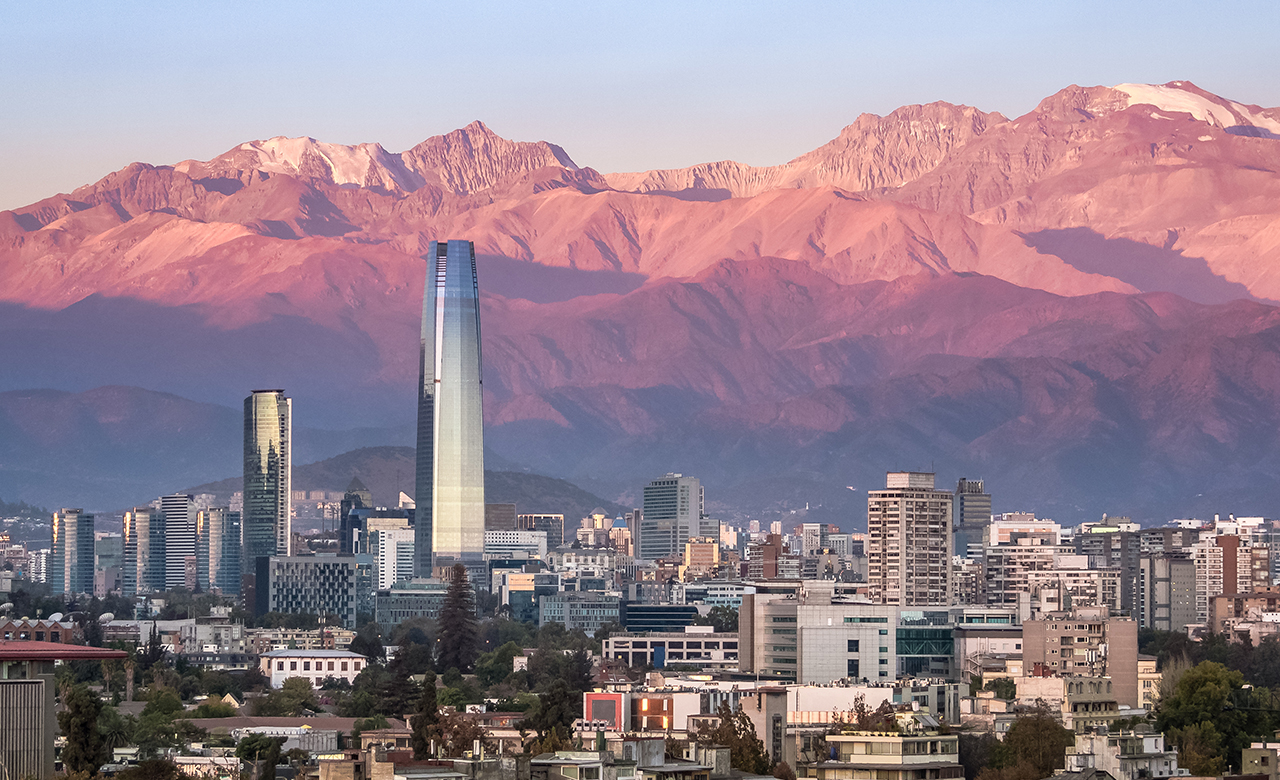
On clear days, Santiago's urban landscape is dramatically framed by the snow-dusted peaks of the Andes. Cerro Santa Lucía park in the city centre and the elevated Bellavista neighbourhood both offer memorable vantage points, making the mountain backdrop an unmistakable part of the Santiago experience for first-time visitors.
Seamless Airport or Hotel Drop-Off
For passengers ending their cruise in Chile, the ability to transition directly from a guided city tour into an airport or Santiago hotel transfer eliminates logistical stress entirely. This combined sightseeing-and-transfer format allows full use of the shore day without the anxiety of navigating an unfamiliar city independently while managing luggage.
Valparaiso (Santiago) travel tips
Wear Proper Footwear for the Cerros. Valparaiso's hillside neighbourhoods involve steep cobbled lanes, uneven staircases, and sloping alleyways. Comfortable, closed-toe shoes with grip are essential. Sandals and heeled footwear are genuinely hazardous on the steeper ascents and can turn a pleasant morning into an uncomfortable one.
Keep Belongings Secure in Busy Areas. Valparaiso's tourist barrios and Santiago's city centre, particularly around the Mercado Central and Plaza de Armas, attract petty theft. Use a cross-body bag worn in front, avoid displaying expensive cameras or phones unnecessarily, and stay aware in crowded market areas and on public transport.
Budget Time Realistically for Santiago. The road between Valparaiso and Santiago can slow considerably due to congestion, particularly on weekday mornings and Friday afternoons. If Santiago is a priority, head there earlier in the day and return to Valparaiso in the afternoon, rather than the reverse. Attempting to linger in both coastal cities before the inland drive often leaves insufficient time in the capital.
Try the Local Seafood at Lunch. Chile's Pacific coastline produces outstanding fish and shellfish. In Valparaiso, the port-adjacent Mercado Puerto offers ceviche, chupe de mariscos (shellfish chowder), and locos (abalone) at modest prices. In Santiago, the Mercado Central is the landmark destination for a seafood lunch. Both are authentic, affordable, and far more interesting than tourist-facing restaurants.
Sunscreen and a Light Layer Are Both Necessary. The coastal UV index in Chile is deceptively high even on overcast days, and the ozone layer is thinner at these latitudes. Apply sunscreen before disembarking. Simultaneously, sea breezes off the Pacific can make hilltop viewpoints genuinely chilly even in midsummer, so a packable jacket is worth carrying for the morning cerro walks.
Learn the Neighbourhood Rhythm in Valparaiso. Cerro Alegre and Cerro Concepción are liveliest late morning through mid-afternoon when cafés, galleries, and artisan shops are fully open. Arriving at the cerros early on a weekday can mean finding shuttered storefronts; Sunday mornings are similarly quiet. Mid-morning on weekdays or weekend afternoons tend to offer the most animated, photogenic street scenes.
Port Facts Every Cruiser Needs To Know
Valparaiso (Santiago) shore excursion FAQs
Cruise ships berth at the Terminal de Cruceros in Valparaiso's historic port zone, directly adjacent to the city's flat lower district (El Plan). The terminal is compact and efficient, and the city centre, including the base of the ascensores leading up to Cerro Alegre, is reachable on foot within ten to fifteen minutes of disembarkation.
Yes, though it requires early organisation and realistic expectations about time. The road journey between Valparaiso and Santiago takes 90 to 120 minutes each way depending on traffic. A well-structured tour that combines a morning in Valparaiso and Viña del Mar with an afternoon in Santiago — followed by an airport or hotel drop-off — makes this achievable without feeling rushed, provided you are not trying to visit every attraction in each city.
UNESCO inscribed the Historic Quarter of the Seaport City of Valparaiso in 2003, specifically recognising the exceptional urban development of the hillside residential neighbourhoods (cerros) during the 19th century, when the city was a major Pacific trading hub. The designation covers the vernacular architecture, the funicular systems, the street layout, and the cultural landscape of the cerros rather than the entire city.
Viña del Mar is approximately 8 kilometres (5 miles) north of central Valparaiso, a journey of roughly 15 to 25 minutes by road depending on coastal traffic. The two cities are connected by a continuous urban ribbon along the Pacific coast and are treated as a combined destination by most shore excursion itineraries.
Chilean pesos are strongly preferred for day-to-day transactions including market purchases, café bills, funicular fares, and street food. US dollars are not accepted at most local establishments. ATMs are plentiful in both Valparaiso and Santiago city centres and dispense pesos reliably; international debit and credit cards function at most ATMs. Exchange offices (casas de cambio) in Santiago's city centre typically offer competitive rates.
Valparaiso has one of Latin America's most celebrated urban mural traditions. Successive generations of Chilean and international artists have covered the retaining walls, house facades, and staircase risers of the cerros with work ranging from politically charged murals to intricate illustrative pieces. Cerro Alegre and Cerro Bellavista (home to the Museo a Cielo Abierto open-air museum) offer the highest concentrations of significant works. The murals are in constant evolution as new pieces are added and older ones repainted.
Santiago's major tourist areas — the historic centre around Plaza de Armas, Bellavista, Lastarria, and Providencia — are generally safe for daytime visitors exercising standard urban awareness. As in any large South American city, pickpocketing in crowded markets and public transport hubs is the most common concern. Staying alert, keeping valuables secured, and avoiding isolated areas after dark covers the vast majority of risk for a shore-day visitor.
The port setting makes seafood the natural priority. Look for ceviche (Chilean style tends to be milder than Peruvian), chupe de mariscos (a rich shellfish and cheese chowder), and pastel de jaiba (crab pie). In Santiago, empanadas de pino (beef, olive, egg, and raisin pastries) are the definitive local street food. Completo — a loaded Chilean hot dog — is a curious local institution worth trying. Chilean wine, produced largely in the valleys between coast and Andes, is excellent value at any sit-down restaurant.
Yes. Santiago's Arturo Merino Benítez International Airport (SCL) is a major South American hub with direct connections to North America, Europe, and destinations across Latin America. For passengers whose cruise ends in Valparaiso, arranging a combined shore excursion with a direct drop-off at the airport eliminates the need to independently manage luggage and transport on disembarkation day, making the transition from ship to flight considerably smoother.
Valparaiso's ascensores are vintage funicular elevators — some operating since the 1880s and 1890s — that connect the flat port district to the hilltop residential neighbourhoods. Roughly a dozen remain operational out of the nearly thirty that once served the city. They are an authentic experience and a practical means of reaching the cerros, though mechanical closures for maintenance occur periodically. The most consistently operational and tourist-friendly are Ascensor Concepción and Ascensor El Peral, both close to the city centre and the primary cerros of interest.
Filters
Select a filter to refine results.
Tour Type
Tour Activity
 Cart
Cart
 USD
USD GBP
GBP AUD
AUD EUR
EUR CAD
CAD