



Tours in Dunedin (Port Chalmers)


Cruising to Dunedin (Port Chalmers) in a group?
Skip the crowded ship excursion bus. One dedicated planner will design a private shore experience around exactly what your group wants — coordinated from first enquiry to the moment you're back on board. More memorable, more flexible, and more affordable than you might expect. Spend less time organising, more time enjoying.
Explore Group Travel →Cruising to Dunedin (Port Chalmers)
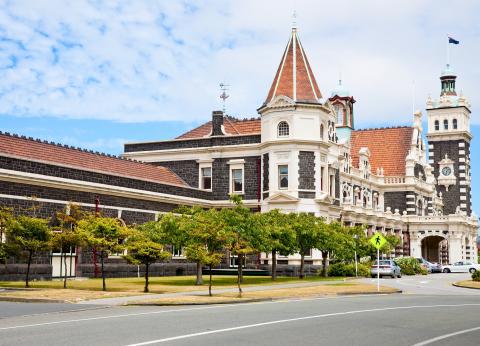
Dunedin sits at the head of Otago Harbour in the South Island of New Zealand, reached by cruise ships docking at the nearby suburb of Port Chalmers — about 20 minutes from the city centre. Founded by Scottish settlers in 1848, Dunedin grew wealthy on gold rush money and left behind a remarkably intact legacy of Victorian and Edwardian stone architecture. The railway station alone, with its mosaic-tiled floors and Flemish Renaissance facade, is worth the journey. Beyond the city, the Otago Peninsula stretches into the South Pacific, sheltering the world's only mainland royal albatross colony and populations of little blue penguins and New Zealand fur seals. Inland, the Taieri Gorge cuts through ancient schist country in a landscape that rewarded the Victorians so much they built a railway through it. Dunedin rewards visitors who look in every direction — skyward at the architecture, seaward at the wildlife, and deep inland at the gorge.
Top things to do in Dunedin (Port Chalmers) on a cruise stopover
Taieri Gorge Railway — A Victorian Engineering Marvel Through Schist Country
The Taieri Gorge Railway is one of New Zealand's great scenic rail journeys, threading 77 kilometres inland from Dunedin through a landscape of narrow gorges, stone viaducts, and ancient schist rock formations. The line climbs through tunnels blasted by Victorian engineers in the 1890s, crossing the Taieri River multiple times on bridges that seem to defy the terrain. Carriages are restored heritage stock with large windows and open observation platforms. The gorge itself feels remote and primeval — tawny grasslands give way to dramatic rock faces draped with native vegetation. The round-trip journey from Dunedin takes approximately four hours, making it a full half-day commitment that rewards passengers with some of the most cinematically striking scenery in the South Island.
Dunedin City — Scotland's Legacy in Stone at the Bottom of the World
Dunedin's city centre is a living monument to Scottish ambition, built during the gold rush era of the 1860s when Otago was briefly the wealthiest region in the Southern Hemisphere. The Dunedin Railway Station is the architectural centrepiece — a 1906 Flemish Renaissance building with a mosaic tile floor featuring 725,000 Minton tiles and intricate stonework that took three years to complete. Baldwin Street, recognised as one of the world's steepest residential streets, draws visitors to the inner suburbs. The Octagon, the city's central plaza, is flanked by the Town Hall, St Paul's Cathedral, and a statue of Scottish poet Robbie Burns — a reminder of the city's heritage. Otago Museum houses significant Māori taonga and natural history collections.
Larnach Castle — New Zealand's Only Castle and Its Commanding Peninsula Views
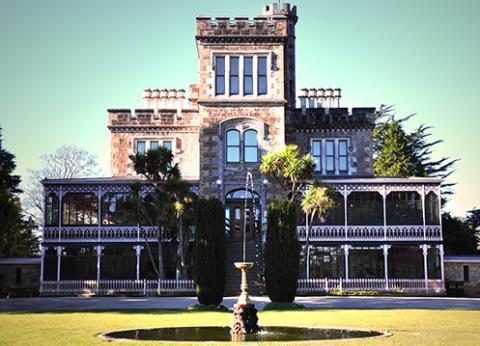
Perched on the crest of the Otago Peninsula, Larnach Castle was built between 1871 and 1887 by merchant banker William Larnach as a statement of wealth and ambition. The baronial-style mansion took 200 craftsmen working for years to complete, with a ballroom ceiling that required 12 years of labour alone. Visitors can explore the furnished rooms, turret, and surrounding gardens — the grounds cover 14 hectares with views across Otago Harbour and the Pacific. The castle's story is as dramatic as its architecture; Larnach's personal life ended in tragedy, and the building fell into disrepair before a private family restored it over decades. The surrounding garden, developed by the current owners, has been recognised among New Zealand's finest.
Otago Peninsula — Royal Albatrosses, Penguins, and Seal Colonies at Land's End
The Otago Peninsula extends 25 kilometres into the Pacific southeast of Dunedin, forming one of the most accessible wildlife corridors in Australasia. Taiaroa Head, at the peninsula's tip, hosts the world's only mainland royal albatross breeding colony — these birds have a wingspan of up to three metres and can be observed from the Royal Albatross Centre's purpose-built viewing areas. The peninsula also supports substantial populations of little blue (kororā) penguins, which come ashore at dusk, and New Zealand fur seals that haul out on rocky ledges year-round. The coastline itself is dramatically scenic, with clifftop views over breaking swells and working farms that have occupied the hillsides since the 1850s.
Dunedin's Historic Architecture Walk — From the Railway Station to the Octagon
Dunedin's compact city centre can be navigated on foot in a morning, with a concentration of Victorian and Edwardian stone buildings rarely matched outside Britain. The walk from the railway station through the warehouse quarter to the Octagon covers several blocks of bluestone facades, ornate commercial buildings, and the First Church of Otago — a Gothic Revival masterpiece completed in 1873. The University of Otago campus, New Zealand's oldest university founded in 1869, adds collegiate sandstone buildings along the Water of Leith stream. Heritage plaques throughout the city explain the gold rush origins of individual buildings. The whole route is flat and manageable, making it an excellent option for visitors who prefer exploring independently.
Port Chalmers — The Working Harbour Village at the Gateway to Dunedin
Port Chalmers itself is worth a brief explore before heading into the city. This compact historic port village served as the departure point for Antarctic expeditions led by Ernest Shackleton and Robert Falcon Scott, and its working-harbour character remains intact. A small museum covers the port's history, and the main street hosts independent cafes and galleries that have colonised the Victorian commercial buildings. The views across Otago Harbour from the port are particularly fine in the morning light. For passengers with limited time or mobility, Port Chalmers provides a pleasant hour's worth of wandering without the need to reach the city at all.
Dunedin (Port Chalmers) travel tips
Book the Taieri Gorge Railway in Advance. The scenic train is one of Dunedin's most popular experiences and carriage space is finite, especially on busy cruise days. Tickets should be secured before your ship arrives. The train departs from Dunedin's main railway station, which is a 20-minute bus or shuttle ride from Port Chalmers, so factor transfer time into your planning.
Dress in Layers Regardless of the Forecast. Dunedin's weather is famously changeable — warm sunshine can give way to cold southerly wind within an hour. The Otago Peninsula is particularly exposed, and conditions at Taiaroa Head can be raw even in midsummer. A waterproof layer and a warm mid-layer will cover most scenarios without weighing down your bag.
Time Your Peninsula Visit Around Wildlife. Royal albatrosses are present at Taiaroa Head year-round, but breeding activity peaks between November and February. Little blue penguins come ashore reliably at dusk, which in summer can be quite late in the evening — sometimes past 9pm. If your ship departs early afternoon, a dusk penguin viewing may not be realistic; focus instead on the albatross centre and daytime seal viewing.
Use the Bus Between Port Chalmers and the City. The Orbus service connecting Port Chalmers to central Dunedin is reliable and inexpensive. Purchase a Bee Card (reloadable transit card) at selected outlets, or pay cash on board. The bus runs from a stop near the cruise terminal and drops passengers near the railway station in central Dunedin, making it a practical link for independent travellers.
Baldwin Street Is a Short Detour, Not a Full Attraction. New Zealand's famously steep residential street is about 2 kilometres from the city centre in the Normanby suburb. It makes a satisfying 45-minute round-trip walk from the Octagon, but there is little to do once you arrive beyond photographing the gradient. Treat it as a brief detour on the way to or from another destination rather than a primary stop.
Allow Buffer Time for the Return to Port. On busy cruise days, traffic between Dunedin city and Port Chalmers can be heavier than usual, especially in the hour or two before all-aboard. Build at least 45 minutes of buffer into your return schedule. The bus is generally more reliable than road traffic in these conditions, as services continue regardless of congestion.
Port Facts Every Cruiser Needs To Know
Dunedin (Port Chalmers) shore excursion FAQs
Port Chalmers is approximately 12 kilometres from central Dunedin, a journey of about 20–25 minutes by road. Public bus services run regularly between the port and the city centre, stopping near Dunedin Railway Station. Allow extra time during busy cruise days when traffic on the harbour road can be heavier than usual.
Yes — Dunedin's central city is compact and largely flat, making it very walkable. The main attractions including the Railway Station, the Octagon, St Paul's Cathedral, and the University of Otago campus can all be reached on foot within 15–20 minutes of each other. The waterfront precinct and warehouse quarter are also easily accessible on foot from the city centre.
The standard round-trip journey from Dunedin to Pukerangi and back takes approximately 4.5 hours. Some services continue further to Middlemarch, which adds time. You will also need to factor in travel time between Port Chalmers and Dunedin Railway Station. Budget most of your day for the railway if you choose this experience.
During daylight hours, royal albatrosses at Taiaroa Head and New Zealand fur seals are reliably observable. The albatross centre offers structured viewing sessions with commentary. Little blue penguins typically come ashore at dusk, which in summer is often too late for cruise visitors with early all-aboard times. Check your ship's departure time before planning a penguin viewing.
Larnach Castle is about 14 kilometres from central Dunedin, situated on the ridge of the Otago Peninsula. The drive takes roughly 25–30 minutes. Allow two to three hours at the castle to explore the house, tower, and gardens properly. Combined with travel time, a castle visit comfortably fills a half-day.
The New Zealand Dollar (NZD) is the local currency. Credit and debit cards are accepted almost universally throughout Dunedin, including at cafes, shops, and major attractions. ATMs are available at Port Chalmers and throughout the city. Contactless payment is widely used and generally preferred.
The central city is relatively flat and accessible, with the Railway Station, Octagon, and main shopping streets all on even terrain. The Taieri Gorge Railway accommodates most mobility levels as it is seated travel. The Otago Peninsula involves more uneven ground, and Larnach Castle has steps inside the building, though the gardens are largely accessible. Check specific venue accessibility in advance if this is a concern.
Cruise season runs October through March, covering Dunedin's spring and summer. Temperatures typically range from 14°C to 22°C, but the city is known for changeable conditions — it is not unusual to experience all four seasons in a single day. Wind can make the Otago Peninsula feel considerably cooler than inland. Layered, weatherproof clothing is the standard recommendation regardless of the forecast.
Technically possible but tight. Larnach Castle sits on the peninsula ridge, so the two share part of the same route. However, spending adequate time at both — plus travel from Port Chalmers and back — makes for a very full day with little margin. Most visitors who attempt both feel rushed; choosing one as the focus and the other as a briefer stop is a more comfortable approach.
Port Chalmers village has a small number of cafes and eateries within walking distance of the terminal, suitable for a coffee or light meal before or after your excursions. For a wider range of dining options, Dunedin city centre offers everything from casual cafes to restaurants along the Octagon and surrounding streets. Dunedin has a well-regarded specialty coffee culture.
Filters
Select a filter to refine results.
Tour Type
Tour Activity
 Cart
Cart
 USD
USD GBP
GBP AUD
AUD EUR
EUR CAD
CAD