



Tours in Hobart Tasmania


Cruising to Hobart Tasmania in a group?
Skip the crowded ship excursion bus. One dedicated planner will design a private shore experience around exactly what your group wants — coordinated from first enquiry to the moment you're back on board. More memorable, more flexible, and more affordable than you might expect. Spend less time organising, more time enjoying.
Explore Group Travel →Cruising to Hobart Tasmania
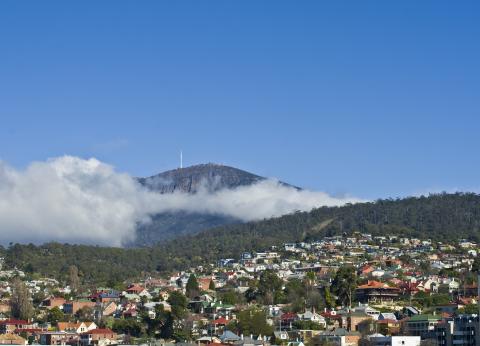
Hobart is Australia's second-oldest city, settled by British colonists in 1804 on the banks of the Derwent River at the foot of Mount Wellington. The mountain — its Aboriginal name is kunanyi — rises 1,271 metres directly behind the city and is visible from almost everywhere, its summit often draped in snow even in summer. Ships dock at the Macquarie Wharf terminal, within walking distance of the sandstone warehouses of Salamanca Place and the historic Battery Point neighbourhood. The city punches well above its size for culture: the Museum of Old and New Art (MONA), a few kilometres upriver, has genuinely shifted how people think about museums. Hobart also serves as the gateway to some of Tasmania's most accessible wilderness — the rainforest valleys around Russell Falls, the cliffs of the Tasman Peninsula, and the convict ruins of Port Arthur, which together tell a story of extraordinary natural beauty alongside a history that the island's residents have only recently begun to confront openly.
Top things to do in Hobart Tasmania on a cruise stopover
Tasmanian Wilderness — Ancient Rainforests, Waterfalls, and Native Wildlife
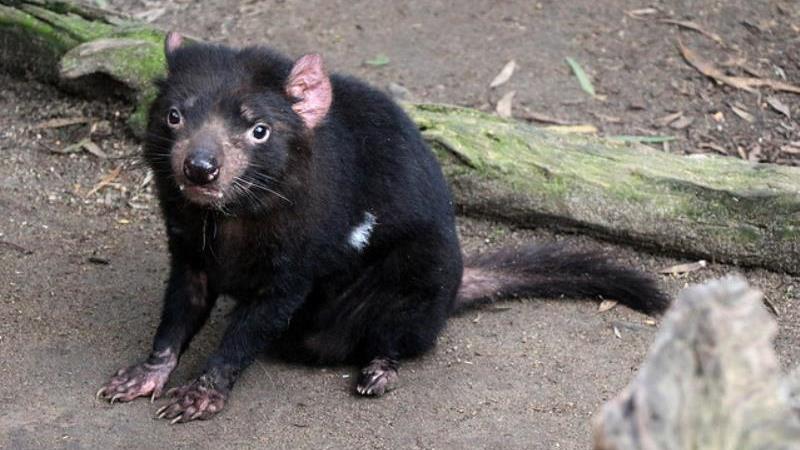
Tasmania preserves some of the world's last temperate rainforest in World Heritage-listed wilderness areas covering nearly a quarter of the island. The landscapes around the central highlands and southwest are primordial — stands of ancient myrtle and Huon pine draped in moss, fern gullies unchanged since the age of the dinosaurs, and rivers running the colour of tea from button grass tannins. Wildlife encounters in this environment feel genuinely wild: wallabies, wombats, and echidnas are commonly spotted, and the Tasmanian devil, though nocturnal and shy, can be seen at wildlife sanctuaries. The juxtaposition of dense forest, open alpine moorland, and cascading waterfalls creates a landscape of remarkable variety within a relatively compact area.
Mount Wellington (kunanyi) — The City's Dramatic Backdrop and Summit Views
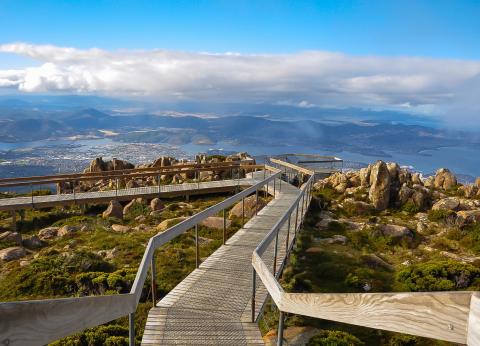
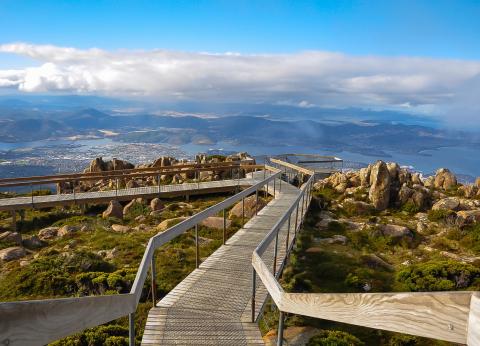
Rising abruptly behind Hobart to 1,271 metres, kunanyi/Mount Wellington is the defining feature of the city's geography and one of the most accessible alpine environments in Australia. The summit plateau is laced with walking tracks, dolerite rock formations known as the Organ Pipes, and panoramic views across Hobart, the Derwent estuary, and on clear days, the Tasman Sea. Snow can fall on the summit in any month, and temperature differences between the city and the top can be 15 degrees or more. The 21-kilometre Summit Road winds up through forest, sub-alpine scrub, and open rock. Even in summer, the summit often sits in cloud, so check conditions before committing to the drive.
Salamanca Place and Battery Point — Hobart's Historic Waterfront Heart
Salamanca Place is a row of early colonial sandstone warehouses along the waterfront, built between the 1830s and 1860s for merchants trading in whale oil, grain, and timber. Today the buildings house galleries, restaurants, boutiques, and cultural spaces that have made this strip the social and artistic heart of Hobart. The famous Salamanca Market, held every Saturday, fills the adjacent plaza with producers, artisans, and street food stalls. Behind Salamanca, Battery Point is one of Australia's best-preserved working-class colonial neighbourhoods, with narrow streets of Georgian and Victorian cottages clustering around Arthur's Circus — a tiny circular green surrounded by period houses that feels transported from an English village.
Russell Falls and Mount Field National Park — Tasmania's Oldest Protected Wilderness
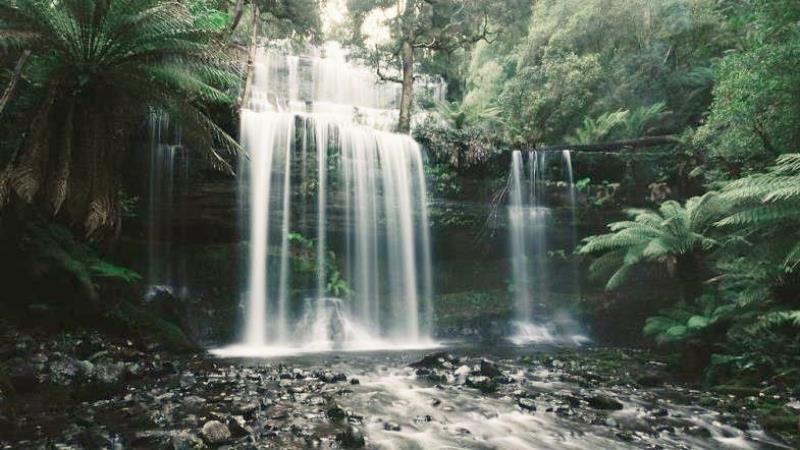
Mount Field, declared a national park in 1916, was one of Australia's first protected areas and remains among its most beautiful. Russell Falls is the centrepiece — a broad, multi-tiered waterfall set deep in a forest of giant tree ferns, swamp gums reaching over 80 metres, and ancient myrtle. The walk to the falls from the park entrance takes about 20 minutes on a well-formed track, and the surrounding forest creates a humid, cathedral-like atmosphere even on busy days. Further up the mountain, the alpine zone opens onto landscapes of pencil pines, tarns, and plateau moorland. The park is home to wombats, wallabies, and platypus in the river flats, and birdlife is exceptional.
Port Arthur and the Tasman Peninsula — Australia's Most Complete Convict Ruin
Port Arthur Convict Settlement, 100 kilometres southeast of Hobart on the Tasman Peninsula, operated from 1833 to 1877 as the principal secondary punishment site of the British Empire — a place from which escape was considered impossible, hemmed in by sea and a guarded isthmus. The ruins extend across a broad, surprisingly picturesque harbour, including the roofless Penitentiary, the Gothic church, the Model Prison — where sensory deprivation replaced flogging — and dozens of other structures in various states of preservation. Entry includes a guided walking tour and a harbour cruise past the Isle of the Dead. The site is a place for reflection as much as sightseeing, and it repays patient exploration. The Tasman Peninsula around it offers extraordinary coastal scenery including sea cliffs among the tallest in the Southern Hemisphere.
MONA and the Derwent — Art, Wine, and Tasmania's Cultural Revolution
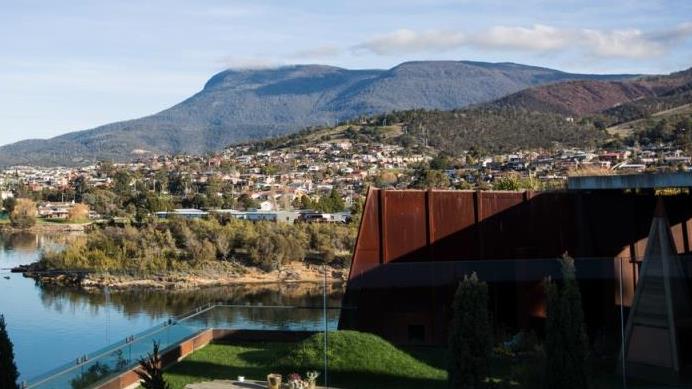
The Museum of Old and New Art opened in 2011 on a vineyard peninsula upriver from Hobart and immediately became one of the most discussed art institutions in the world. Built into the dolerite rock face below a working winery, the museum displays private collector David Walsh's eclectic acquisition — ancient Egyptian mummies alongside provocative contemporary works, curiosities alongside masterpieces, all presented without conventional labels or hierarchy. The MONA ROMA ferry from Brooke Street Pier makes the river journey part of the experience. The surrounding Moorilla Estate produces wines available at the on-site cellar door. The Derwent Valley upstream also offers some of Tasmania's most celebrated cool-climate wineries and the Coal River Valley wine region within easy reach of the city.
Hobart Tasmania travel tips
Start with Salamanca if Your Ship Docks on a Saturday. The Salamanca Market runs every Saturday from 8:30am to 3pm and is genuinely one of Australia's best farmers and artisan markets. The cruise terminal is within easy walking distance of the market. Arrive early for the best produce and to browse before crowds peak around midday. Even if you are heading out of the city later in the day, the market makes an excellent start to your morning.
Check Summit Conditions Before Driving to Mount Wellington. The summit is frequently obscured by cloud or fog, and conditions can change within minutes. The Hobart City Council operates a webcam at the summit accessible online, and the information centre at Salamanca can advise on current conditions. If the summit is socked in, the lower slopes and the Organ Pipes area are still worthwhile destinations and offer excellent walking even without the panoramic views.
Take the Ferry to MONA Rather Than the Road. The MONA ROMA ferry departs from Brooke Street Pier (a short walk from the cruise terminal) and the journey upriver is a genuine part of the MONA experience. The vessels are thoughtfully designed, and the approach to the winery peninsular is memorable. Ferry timetables should be checked in advance, and tickets are bookable online. The museum itself requires several hours to explore properly — it descends three levels into the rock and is considerably larger than it appears.
Port Arthur Requires a Full Day — Plan Accordingly. The drive from Hobart to Port Arthur takes approximately 90 minutes each way. Combined with a meaningful visit to the site — ideally including the included harbour cruise and guided tour — this is a full-day commitment. Visitors who arrive late or leave early will feel rushed at what is one of the most historically significant sites in Australia. Confirm your ship's all-aboard time and work backwards from there.
Layer Up for the Wilderness and Mountain Destinations. Even in midsummer, Tasmanian wilderness areas and mountain destinations can be significantly colder and wetter than Hobart. Mount Wellington's summit is typically 10–15°C colder than the city, and rainforest valleys like Russell Falls can be cool and humid regardless of the season. A waterproof jacket and a warm mid-layer are essential for any destination beyond the waterfront.
Battery Point Is Best Explored on Foot at a Leisurely Pace. The historic working-class neighbourhood immediately behind Salamanca is one of Australia's most intact colonial streetscapes and is best discovered by simply walking its narrow lanes. Hampden Road has a cluster of cafes and galleries; Arthur's Circus is a quiet photographic highlight. The neighbourhood sits on a small hill above Salamanca, so expect some gentle climbing. Allow 45 minutes to an hour for a thorough wander.
Port Facts Every Cruiser Needs To Know
Hobart Tasmania shore excursion FAQs
Salamanca Place is within easy walking distance of the Macquarie Wharf cruise terminal — approximately 10–15 minutes on foot along the waterfront. The route is flat and straightforward, passing through the working harbour precinct. Battery Point is a further 5–10 minutes uphill from Salamanca.
Port Arthur is widely considered one of the most significant and atmospheric historical sites in Australia, and most visitors who make the journey consider it worthwhile. The 100-kilometre drive takes approximately 90 minutes each way, so it is a serious time commitment. The site is best appreciated when you can spend at least two to three hours on the grounds, which means departing Hobart early and having a late all-aboard time.
MONA — the Museum of Old and New Art — is a private art museum built into the dolerite cliffs of a vineyard peninsula upriver from Hobart. It houses an eclectic collection ranging from ancient artefacts to provocative contemporary works, some of which are sexually explicit or confront themes of death. The museum is designed for adults and mature teenagers; the content is flagged at the entrance. Visitors who engage with it openly generally find it one of the most memorable museum experiences available anywhere.
Yes — experienced walkers can hike to the summit from the city via the Organ Pipes Track or the Zig Zag Track, a journey of roughly 10–14 kilometres one way that takes three to five hours. For cruise visitors with limited time, driving or taking organised transport to the summit is more practical. The walking tracks on the mountain are well-marked and the lower sections are suitable for casual walkers.
The Salamanca Market runs every Saturday from 8:30am to 3pm, rain or shine, on the plaza in front of the Salamanca warehouses. It hosts over 300 stalls selling fresh produce, Tasmanian food products, arts and crafts, clothing, and street food. It is one of Australia's longest-running and most visited outdoor markets. If your ship is in port on a Saturday, it is not to be missed.
Common daytime wildlife encounters in Tasmania include Bennett's wallabies, wombats, echidnas, Tasmanian pademelons, and a huge variety of birds including endemic species. Platypus can sometimes be spotted at dawn or dusk in rivers near Mount Field. Tasmanian devils are nocturnal but can be reliably seen at wildlife sanctuaries. On the coast, little penguins are present at several sites and seabirds including albatrosses can be spotted on offshore waters.
The Hobart waterfront, Salamanca Place, and the central CBD are largely flat and accessible. MONA has lifts throughout its underground levels. Mount Wellington's summit car park and viewing platform are accessible, though the terrain is rocky. Port Arthur has extensive flat pathways through the historic site and is generally well set up for visitors with mobility considerations. Wilderness destinations like Russell Falls have well-formed tracks but involve some gradient.
Hobart has developed a well-regarded food culture built on Tasmania's exceptional produce — some of Australia's finest seafood, cool-climate dairy, small-batch cheeses, and heritage-breed meats. Salamanca Place and its surrounding streets concentrate much of this in accessible restaurants and cafes. The waterfront Fish Fry Alley is a casual option for locally caught fish and chips. Tasmania is also a significant wine producer, with the Coal River Valley and Huon Valley producing cool-climate varieties.
The most enjoyable way to reach MONA is aboard the MONA ROMA ferry, which departs from Brooke Street Pier — approximately a 15-minute walk along the waterfront from the cruise terminal. The ferry journey takes about 25 minutes upstream. Timetables and tickets are available on the MONA website and should be booked in advance during the busy summer season.
This combination is not recommended. Port Arthur alone requires most of a day when factoring in the 90-minute drive each way plus time at the site. Mount Wellington similarly benefits from unhurried time at the summit and on the walking tracks. Attempting both in a single cruise day would result in a rushed experience at each. Choose one major destination and complement it with the walkable waterfront attractions near the ship.
Filters
Select a filter to refine results.
Tour Type
Tour Activity
 Cart
Cart
 USD
USD GBP
GBP AUD
AUD EUR
EUR CAD
CAD